My knowledge of music theory is limited, but thank you nonetheless! Will probably eventually read up on what this all means exactly…
you could also count it 9/8 + 6/8 alternating as there’s a 3+2 feel rather than a straight/shifting 5
2 Likes
here’s an audio thing maybe that helps
3 Likes
Super helpful, thanks a bunch!!
Does what I said about each instrument feeling like they’re timed a bit different make any sense to you as well? Like the weird trailing bass and it feels like the percussive accents here and there don’t perfectly adhere to the main time signature of the song… I’m probably using most of this terminology wrong, but does that make some sorta sense at all?
Like it all sounds fine until I hone in on a single instrument and then it feels “off” in a way I’m struggling to properly articulate… I dunno, I could just be losing my mind too from listening to the song so much, haha!
Edit (hidden for others sanity)
I think relistening to your recording, the instruments do all adhere to the time signature but what you said about them accenting the 15th beat of the measure every now and then to throw things off could be what makes it feel odd to me…
Edit 2 (apologies for further madman rambling)
alright, I don’t think I’m actually crazy cuz, just to take one example, the bass note of the piano at the very end of the song is doing some odd stuff around the count you had of the 1-2-3-4-5, where it feels like it lands on the 1 and 4 mostly but then sometimes it’s just before the 4? Like in between 3 and 4?? Does this make any sense or am I losing my mind???
Also, feel free to ignore any of this! I’m aware I’m WAY out of my depth here and you’ve already been way too gracious with your time explaining what you already have!! I probably ought to do some reading up on music theory to better educate myself…
1 Like
Yeah, what you’re describing is syncopation, which is being used as well. That means emphasizing off-beats. When the song is 1. swung (meaning it’s subdivided into 3 rather than the more traditional 4) and 2. already in the odd meter of 5, adding consistent syncopation can really throw the listener off-balance and off the beat.
But the steady 5/4 remains all the way through. I would describe this as swung 5/4 rather than 15/8, but that’s more a personal preference thing.
The piano fadeout at the very end is “out” of the rest of the song’s 5/4 pulse for sure, intentionally, they have recontextualized the beat for a kind of dreamy effect that suits the fadeout.
I like this! It’s quite nice!
2 Likes
Ah, thanks for the clarification! With the very little I already know about syncopation, what you said makes sense. Also, thanks for explaining the ending piano - that bit was especially throwing me!!
Glad you enjoyed it too, heavily recommend other bits by her as well (solo, as part of Chakra or Wha-ha-ha or… well, the list goes on!)
2 Likes
the reason i put 15/8 first is because the tune frequently places notes on the second triplet note, as well as having a pretty exact triplet swing (notably, swing feel can be quite off from a triplet feel, but in this case, it’s perfectly ambiguous). notating this, it grids up just right at 15/8 but if you need to do 5/4 swung you’ll have to alternate “straight” (triplet swung) 8th notes for the usual 1 + 2 +, etc., but you’ll have to switch to using triplets when the second triplet note is used. in a case like this where both are played with an identical rhythmic feel, it makes more sense to write it in 15/8 to me so that’s evident in that rhythms are represented the same everywhere
i still think you would count it 5 either way as a musician (i don’t think any/many would even attempt counting out 15), but you might subdivide with all 3 triplets rather than a triplet-swing baseline that frequently ventures into actual triplets (which would be notated differently in 5/4 swing)
2 Likes
Thanks for all the info!! Probably gonna spend the next while learning some music theory so I can better understand the nuances of what you’re describing. Appreciate you being so thorough!
1 Like
comparison of each time signature would look notated with an example figure that shows the “issue” with 5/4 swing when notating this
when you have to use the 2nd/3 notes of any quarter note triplet, you end up notating it different whereas 15/8 is consistent

can’t re-beam the 15/8 example exactly how i wanted it but you get the idea
2 Likes
the second example looks way better honestly so i can’t even front and it just makes sense as long as you can think in swung eighths. it’d have looked even better if i could have easily thrown it into the “jazz sheet music font”
it gets a little messier if you are specifically accenting only the second beat of a triplet, but might still be preferable in 5/4 lol
2 Likes
m83 - midnight city
2 Likes
Yeah frankly I wasn’t even thinking about writing it, as my assumption with pop music is that usually it is chartless, though who knows these could all be studio musicians who got charts. But if I was just learning it by ear I would 100% be counting 5 and thinking swing thoughts instead of trying to track 15 in my head.
2 Likes
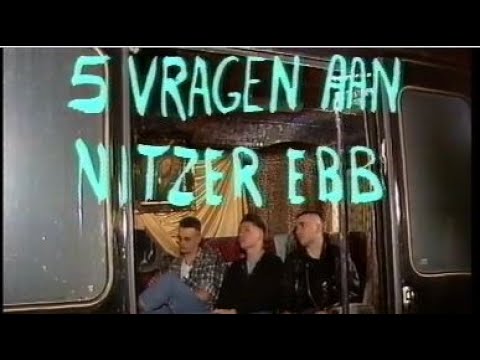
Another big music loss this week, Douglas McCarthy of Nitzer Ebb
3 Likes
it’s interesting that you use “charts” here, because that term can be rather ambiguous in this exact context
to me, this is a [chord] chart:
Cm7 | Dm9(b5) | Db7(#11) | C9
Am7(b5)/C | Dm9(b5) | Abmaj7 | Fdim7
and these are incredibly common in pop music (i use this method for teaching my bandmates my songs)
one level beyond that is a lead sheet, which has the above chords in addition to the notated melody. also pretty common in pop music with any complexity, though possibly/probably more commonly associated with “standards” and “fake books” etc.
and then we get to sheet music parts (i’d call this a “written part” most of the time i think) or scores, which are fully notated for a purpose. parts for players/sections, score for conductors. less common in popular music but not unprecedented
edit: to be clear i don’t think i’m edifying anything for you personally cuba, just riffing because i was amused at your word choice.
oh yeah the jazz band “chart” thing is also like “arrangement”, which then can be given to mean “arranged”=“charted” (e.g. benny goodman) rather than effectively improvised over the changes (e.g. louis armstrong and his hot five). this is the origin of your meaning i think… lol
1 Like
1 Like
4 Likes
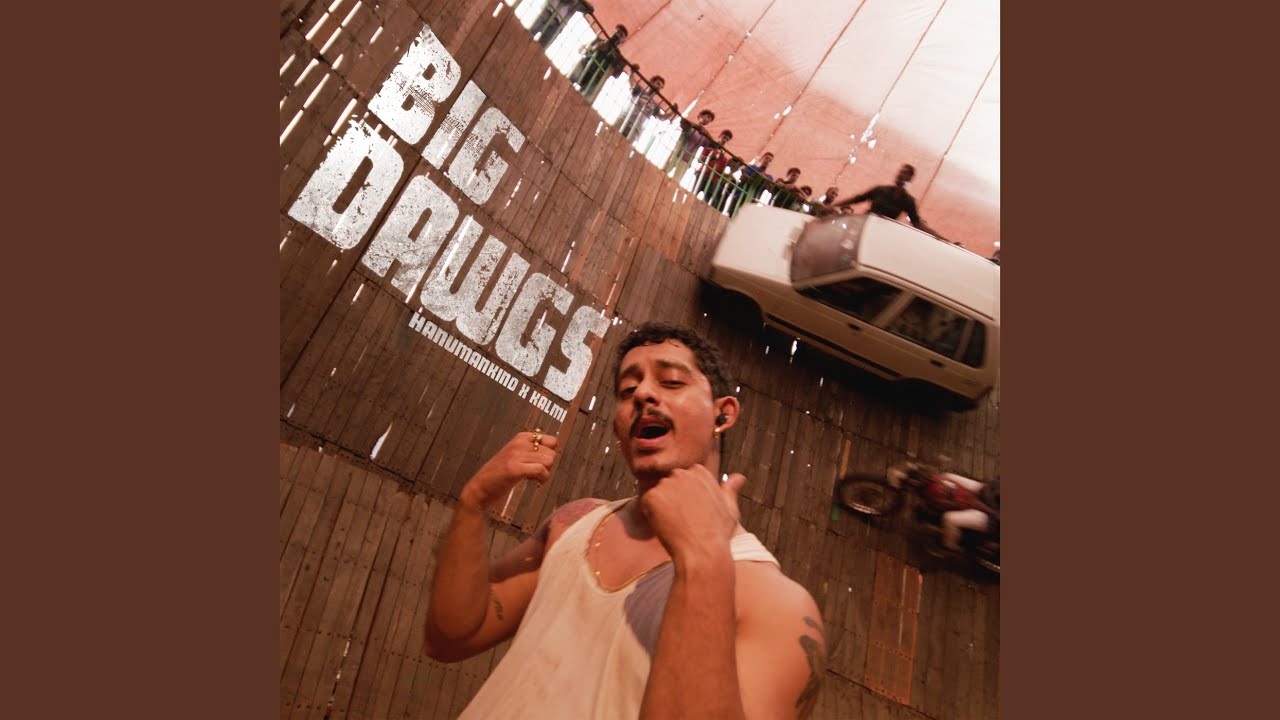
I’m mostly a hip-hop head but I tend to find songs to obsess over from the movies I watch. This French Canadian movie called Genesis (2018) put me on to this one.

3 Likes
I freely admit I was never a gigging musician so I’m not familiar with the usage of the lingo on the level of the actual workday. To me, yeah, “chart” is just the jazz term for written music, which sounds like your “lead sheet.” Especially as a drummer, love to get a good ol / / / /
I don’t think I even had a term for this, it was just “scribbled notes” or whatever. Not something worth naming, lol. That said, my rock/fusion/whatever the hell band almost never did even that much, as we wrote (well - composed. whatever) our music 95% collaboratively, and the (it turns out, to my shock when I was in my 20s) extremely common practice of “I wrote a song and brought it to my band to learn” was alien to us. So yeah it was definitely all talked out, nothing hardly ever written.
1 Like
I think this contributes to why we get along so well in ttrpg land; already well trained in collaborative improvisation
We started in 7th grade and never asked anybody how to do it. It just didn’t occur to us to do it any other way.
1 Like