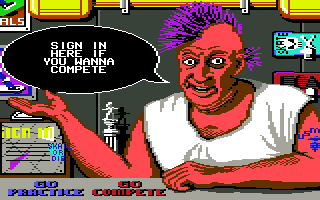
that this guy from skate or die is just rodney dangerfield with a purple mohawk.
15 Likes
All the games I’ve tried to play in years past that I couldn’t muster enthusiasm for because I was probably depressed/anxious/etc
I bet I would have loved some of them
3 Likes

Button → Awesome


imagine a world where western videogame advertisers actually played and gave a shit about the games they were meant to be selling

6 Likes

Oh, and lose the headgear. They [women] hate that too.
What the hell is this referring to?
1 Like
Glasses, I assume?
Damn I legitimately didn’t think of that. I was assuming a VR headset for some reason. This advert makes less and less sense the more I think about it.
Would assume it’s orthodontic headgear

Jess Morrissette (twitter profile link) has been doing a ton of interesting work going through old videogame ephemera of the 90s and early 2000s highlighting the outrageously chauvinistic (mostly sexist, some racist, ableist, or otherwise) stuff that got crammed into ads and magazine copy and so on.
It’s weird realizing how weird a lot of 90s youth-oriented marketing was. Videogames as a field was maybe one of the worst offenders in bizarreness (aside from misogyny and so on) but it was just a strange time for trying to pitch things to the kids and the teens as cool and edgy.
EDIT: Adding a couple links to Jess’s work:
one page article “the game journo’s guide to gamifying girlfriends”
how games marketing invented toxic gamer culture
7 Likes
That ad reminds me: Do high schools still have things like “geek week” anymore? Where cool kids wear bad fashion, pocket protectors (I doubt that’s even a stereotype anymore?), and tape on the bridges of fake glasses? My high school had that in the 90s, and that kind of punching at stereotyped nerds as hopelessly uncool and utterly unfuckable was basically super acceptable and fun for everyone.
i always thought that zell stole his goofy tribal face tattoo from mike tyson
but it’s the other way around.
Final Fantasy VIII - 1999
Mike Tyson’s Face Tattoo - 2003
In 2003, Mike Tyson did the unexpected and it had nothing to do with boxing. Tyson got a tattoo of tribal art on his face, yet that wasn’t his original plan. He wanted a tattoo, but he wanted to have hearts all over his face. “My best thinking was to have a bunch of hearts all over my eyes and face like a pirate patch,” Tyson said on The Rosie Show.
“But that’s what people do when they’re high,” he said. Originally, Tyson said he wanted his whole face done, but his tattoo artist talked him into a different tattoo, one that would cover just one side of his face.
I hope his tattoo artist showed him a photo of Zell and was like, “How about this instead?”
6 Likes
I thought about that, but I figured glasses made more sense because you can’t really just ditch the orthodontic headgear the same way you can just take off your glasses.
You can in the quest for pussy apparently
1 Like
i remember them using that last line in print ads for links awakening dx too, which would have been around the same time i think?
well duh. consoles don’t got no internet browsers with private mode
I wish the article had more research on the community itself. I don’t know how old Jess is, but anyone who played online PC games in the mid-90s could tell you that equivocating paragraphs like this (from the Vice article) really don’t need any hedging – companies were directly responding to the cultures of Quake and the first generation of eSports:
Of course, all of this suggests a fundamental chicken-or-egg problem. Did companies like Sega, Microsoft, and Sony identify a population of hyper-competitive, angry gamers and market their online services toward them, or did the marketing of these platforms model an acutely toxic mode of interaction that gamers then seized upon and imitated? The likely answer is that the two are mutually reinforcing. The toxic marketing campaigns wouldn’t have existed without the audience, but that doesn’t mean the ads didn’t continue to shape that audience once they were out in the wild.
Really, I think the author doesn’t believe their own theory (‘games marketing created online toxicity’) and keeps undermining it until the article isn’t making a strong claim at all.
I think there’s a clear throughline between the '80s game marketing, which was heavily focused on getting a high score, peripherals that granted a competitive edge, and games that might be the ultimate challenge, which morphed into the online competition advertising that promised trash-talking toxicity.
It’s my belief that PC games marketing was very distinct from the console games marketing and the real shift was the shooter and graphics accelerator era, which retargeted PC marketing from an older, softer audience to the same early-20s hypertrophied version of the Sega attitude kid Sony was targeting.
5 Likes
one thing i remember about the rise of quake is when multi-format magazines would run features about their staff playing big deathmatches together.
obviously, they all loved it, because they all worked in the same office with high-powered computers all on the same local network. but playing it in the way they played it was just totally out of reach for most people at that time.
1 Like
This just sounds like all enthusiast press to me. Streamers/influencers too come to think of it
1 Like