i really have like zero interest in sound design unless it comes in a shiny UI so like. here’s a thing i made with default synth noises
it sounds like your stereotypical wikipedia midi thing
i really have like zero interest in sound design unless it comes in a shiny UI so like. here’s a thing i made with default synth noises
it sounds like your stereotypical wikipedia midi thing
another one for the album, feels like uh the slinky spooky bit. this is sort of shaping up to be like a video game soundtrack album? idk
medley of experiments and exercises from 2016
i tried to go for a morsing sounding thing on this one
actually really proud of how this one came out… i’m getting more efficient with my workflow i think, took me maybe 2-3 hours…
finally got a snare sound that sounds good to me, the countermelodies and the chords are working together, even got things panned nicely…
it doesn’t sound good on low quality speakers tho, something about the bass frequencies doesn’t come thru
i feel like my process is really based on melody → countermelody → bass or chords → drums, and then bringing pieces in and out. i was thinking maybe it has to do with the way i experience my internal dialogue (sort of dissociative with various degrees of internal communication) - so it sort of parallels having many different parts of the music that are talking to each other in various ways
idk, thinking a bit deep for making my little beep boop noises, but i feel like i’m progressing. i think i’m close to being on track to meet the RPM challenge goal (10 pieces / 35 min by end of Feb)
something that helped me a bit was to try and find ways to add some kind of distortion onto the bass instrument you’re using, whether it’s literally putting a distortion effect or turning up the resonance on the filter, maybe it’s something where you’re using a much fuller synth or sample that’s being filtered down into a bass instrument
because with low quality speakers you’re never going to be able to get the bass to come through cleanly if you want to keep the rest of the mix intact, so what helps is to kind of “suggest” that the bass exists with some kind of layer that sits just barely on top of the bass instrument, and the easiest way to create that layer is to throw distortion onto the bass instrument
been digging the tracks!
thank you!
i set up a website for the tracks - tumblr because they will never be able to monetize it 8)
yeah i saw a video where a guy added an ‘exciter’ plugin to add harmonics to the bass, which kind of ‘suggests’ the bassline like you’re saying
absolutely driving myself nuts trying to mix this to -14 LUFS without clipping
use a good limiter, i recc stealing fabfilter pro l-2 or ozone 9, either makes that shit extremely easy
split the work between several instances for a more transparent result
target about -9 for your very loudest sections
seems like you got there to me
thx for the help, i was really ear fatigued and couldn’t make heads or tails of it. i need to switch between headphones and monitors more often.
should i make a new thread for discussing music production? i dont want to split threads too much but also dont want to clog up the thread / overshadow music releases.
anyways i’m curious if you all use project templates in your DAW, and if so what they look like. i dont really understand audio routing so i’ve been adjusting mine as i learn, appreciate ur thoughts
workflow: open reaper, add midi/audio tracks & sort them where they need to go visually, adjust their faders+eq, do fx sends and adjust fx return faders, write VCA volume automation if needed, then open the master track to do level monitoring/limiting/master EQ.
does that make sense or am i way off? the vca / bus / master / group distinction gets confusing, i’ve watched that one kenny gioia tutorial like 3 times.
i never use templates, but i’m only using daws to sketch in anyway
ok i found a dope free limiter - Loudmax is pretty idiot proof for a dummy like me. set limit, threshold, done
ideally you want one that oversamples but i guess that’s fine for now? i can just stick up some cracked fancyware if you need
i can’t tell if this is cool or if it sucks, i spent too long on it. it’s sort of uhh surf rocky?? i dunno
ayyy i’m walkin heah!!
sort of bouncy upbeat video game title theme. i was thinking like undertale where the menu music is happy and the rest of the game is just DEPRESSION
getting Sim City 2000 vibes
new pico8 v0.2.2 features are pretty nice. way easier to have odd time signatures and way more voices due to the new filters.
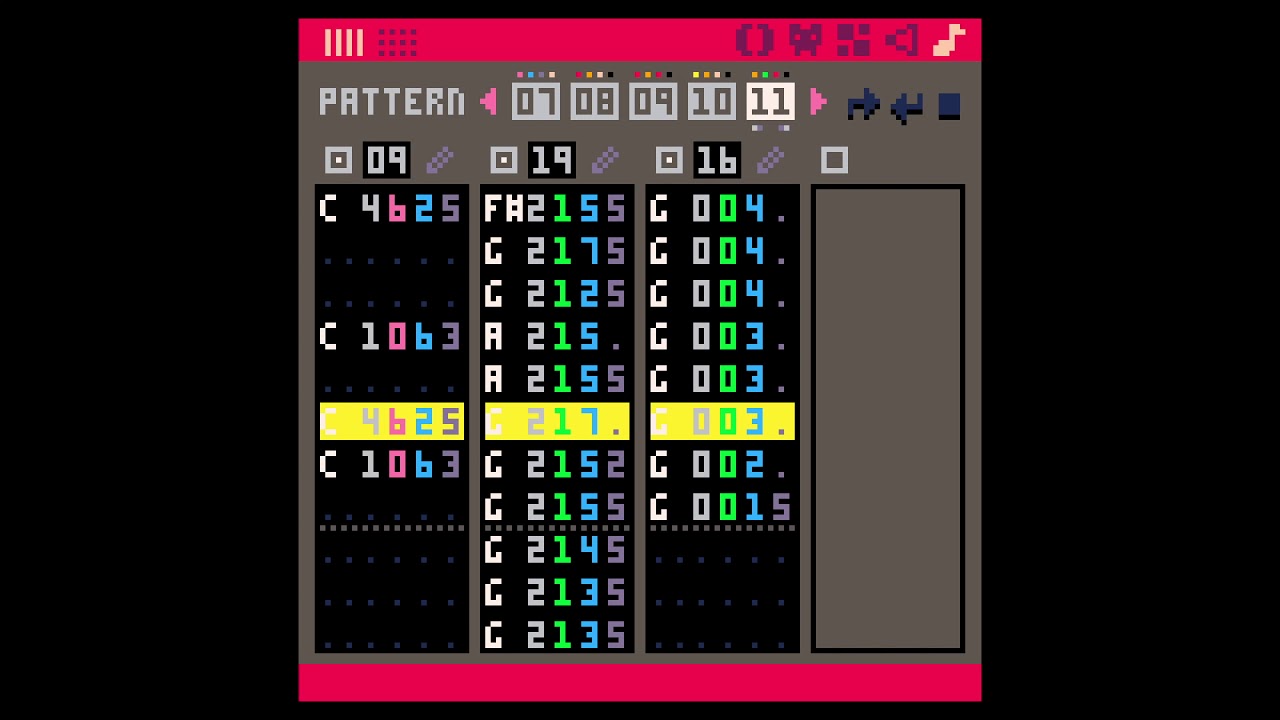
sort of offtopic, re: pico8
i always just kind of assumed pico8 was open-source. i’m not sure why i thought that, as i see now it is retail software for 15 USD.
i’m not sure that should really be a deal-breaker for anyone, but it definitely dampens my enthusiasm to mess with it. it’s possible no one would care about this or it wouldn’t be as slick/easy/whatever if it were open source so i can’t really complain, but i guess to me it’s really just another dreams or mario maker where you are tethered to their whims. edit: maybe that’s too harsh? i maybe shouldn’t even comment on it because i don’t fully understand it.
do these updates ever break old games?
If you exported your game/media/whatever in some way, the version is baked into it so it won’t change. But yeah, afaik everything is strictly backwards compatible (or close enough that I’ve never seen it break anything).
As far as open source - it doesn’t bother me too much although I can see how it could be a sticking point. I think zep thinks that his careful curation of features for pico8 is incompatible with an open source model, and I would tend to agree after sampling the open-source pico8 clones.
I wouldn’t be surprised if he hands it off somewhere down the line when he’s “done” with it. I think the crucial difference (at least for me) is that he’s an individual and not a corporation, but it’s fair to be skeptical!
i revise my assessment to that it’s just a closed tool that produces something you can use as you wish, sort of like other utility applications. i have no problem with that. my personal surprise at not having realized it was closed is probably a factor in my distaste for it. i think all things being equal, it’d definitely be better as something open-source, but it’s very fair to consider that things would absolutely not be equal for the reasons the creator gave, plus it’s fair to sell software.
now i want to look into how the licensing works but i’m guessing you own what you produce? that would seem solid
