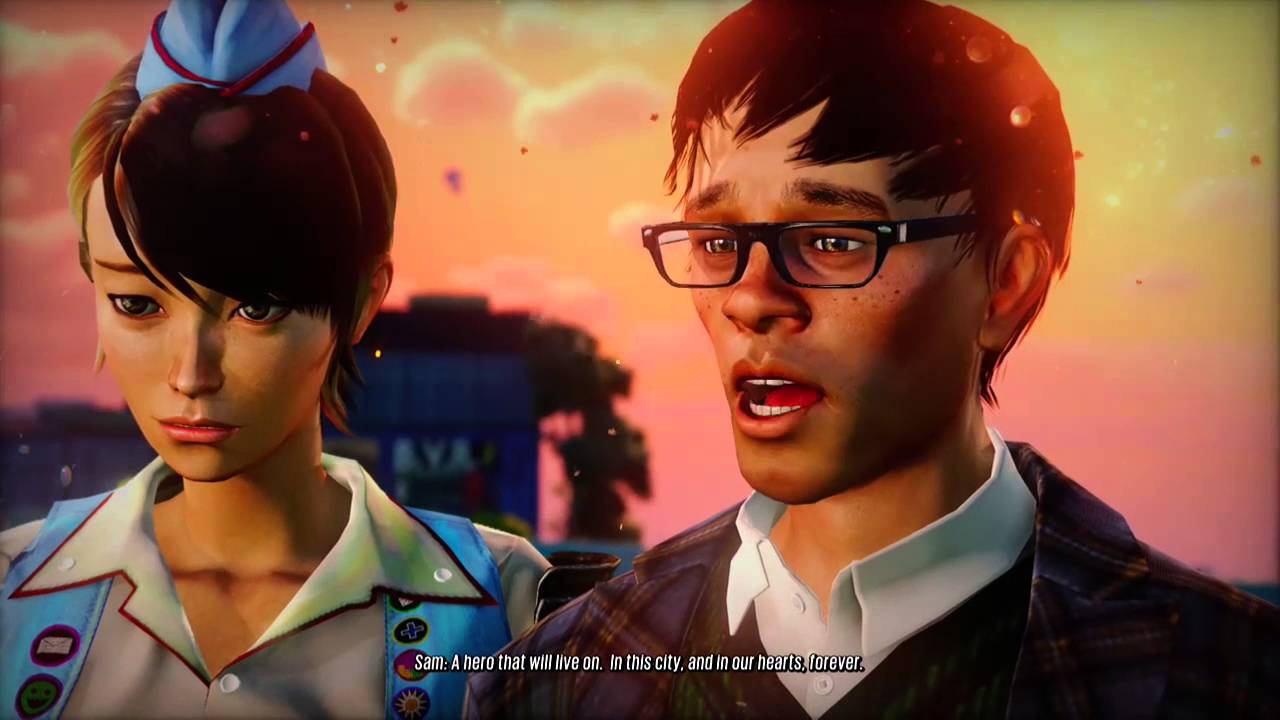
(timestamped)
(timestamped)
oh ow ow ow
this is like my Sonic
oh I actually timestamped it after the credits roll start that says
INSOMNIAC GAMES
(In order of termination date)
I read a book of essays about Kafka once by actual literary scholars, and one of them had an idea for how to improve ‘in the penal colony’'s ending. They argued that instead of that slightly awkward epilogue, the traveler’s ship should’ve landsailed right up to the Apparatus in a magical realism way, and the traveler should’ve immediately left on it without talking to anybody else in the colony
“We can only guess at why this solution did not occur to Kafka”
reminds me of 90s academic superstar Stanley Fish deciding to write a whole book about tv’s “The Fugitive” and getting in touch with the show’s creator, who was very courteous and helpful and happy to talk, and after a while Fish mentioned that in fact he himself had written his own outline for a new film version of the show and had brought it along just in case you wanted to read and hey where’d he go
The Ones Who Get The Grappling Hook And Do 30 Sidequests To Power Up And Then Save Omelas
So like… first of all there’s nothing I disagree with here, but I do think this is a framing of the problem of art vs. commerciality that I see a lot, which we’ve all kind of ambiently inherited from our culture, and which I really think is not correct.
So the story goes, as we’re all familiar I’m sure, that as an artist you can either be true to yourself and your special vision or you can sell out for popularity and give the people what they want, or maybe there’s a line there where you can do a bit of both to make money and also live with yourself. And the problem here is big companies, rather than indulging art, are too focused on what customers want.
I disagree!
To unpack that a bit, I think it’s first of all dependent on the idea of the artist as a special kind of person able to deliver a special message that people need but can’t understand. Having a lot of crossover with everything from games to music to fine art, I don’t think the prophet-artist model is just very accurate. The average person isn’t stupid, and they don’t all share some mass taste vs. the refined taste of the educated individual. People are, honestly, like all sorts of things, and they enjoy all sorts of stuff. Artists, comparatively, have a lot of training and ability but mostly are just, you know, human beings. They don’t have the special-boy minds that see the brilliant and crystalline truth; they just have their own ideas like everyone else.
I think the second issue here is a lot of great, idiosyncratic and even highly personal art is actually absurdly popular. Most of the music people really like is probably like this (and, you know, sure, ok, maybe not like… Bruno Mars or something, but a lot of it for sure). And when you look at stuff like Outer Wilds or Disco Elysium or Inscryption—these games did absurdly well. Not only was Elden Ring successful, but it blew all its genre competitors out of the water and became one of the biggest phenomena in games by breaking literally all the rules of how big budget games are “supposed to be.”
And I think that’s because human beings are just not that unique. Every person is a beautiful and irreplaceable snowflake for sure but we also broadly all live in the same culture, together, and the stuff we do has a lot of overlap. The benefit of the artistic impulse, of making something that matters to you (and whether that’s personal work or not, right? Art is a lot more than just navel-gazing self-reflection) is that a lot of other people are probably enough like you to connect with it. Like I said, there’s no magic to making art—it’s just having an idea and caring enough to make it into something. Literally any human can do this, and it’s how we relate back to the culture we live in.
So the third issue is I think the framing that what big companies are doing—that is bad—is selling out by appealing to the broader market of consumers. Again, I don’t agree with that. I think many large studios (not all, but many)… their problem is, broadly, that they don’t give people what they want. There’s no benefit in capitalism to giving people what they want; the target is to give people something they will buy. And the goal is to do this while reducing risk to the minimal degree possible. What’s come out of this is factory models of producing a large quantity of very polished games that are much more focused on removing anything negative than producing anything positive—if you basically own the culture because you are part of a huge media conglomerate and almost nobody can compete on a financial level, why would you try to be good? You already have the access to markets and press to sell copies, all you need to do is not piss anybody off. And you need to do this in a way that scales to staggeringly huge productions with standards everyone understands (in case you need to ditch half your staff for trying to unionize or what have you).
I’ve got a really firm sense from talking to, you know, self-professed Marvel fans, Star Wars fans, people who’ve played every Assassin’s Creed game, etc. about these properties that they actually only like maybe 20% of their releases. And they only love like one or two movies or games. But they’ve seen every single one, and they’re going to see all the rest of them, whether they’re good or not, because now they’re in it. In the same way that once you get big enough in politics it turns out every vote just costs a certain amount of money to get, if you are Disney or Ubisoft then every sale costs a certain amount and the goal of business is to keep that amount lower than what you get back from the sale.
If you’re asking yourself, “what game should I make?” The answer is make your best idea. Make the thing you would most like to exist. Because you’ve inherited those tastes from the same culture we’re all living in, and that’s honestly your best shot. If you make the mistake that “the market knows best” and you look at whatever is selling right now, jam two popular games’ mechanics together and ship it on Steam then all that’s going to happen is you’ll be two years too late to a genre that is now flooded with other copies of the same stuff you ripped off (which is still the best version of that idea).
But if you’re in AAA, “what game should we make is?” is like… for most studios fundamentally not even the same question. What IPs do you have in your portfolio that you need to iterate on, or what big IP deals can you sign with rightsholders? If you can afford to sink money into creating a new IP (huge marketing costs), it might pay off because the law then allows you to enclose part of the cultural space and be more efficient over the next 5-10 titles (because of, you know, basically a legal scheme that governments are allowing you to run). The genre is already decided: it’s one of the maybe two or three big genres your studio has experience in making because that minimizes budget and technical uncertainty. You can also put a glider in there, because people liked when Breath of the Wild did it.
So these are the actual questions—not because people like playing the same games over and over every year, but because this massive improves your dollar efficiency in marketing to the point required for you to buy enough purchases at an efficient enough rate to be profitable. Fundamentally, the needs of businesses are not the needs of human beings, and the products of businesses are not optimized to be the best or the most loved by humans, but to function most optimally within a legal and social framework of profit.
And I know this is very long, but my point here is I don’t think there’s any choice between popular work and art. I think art is, more or less, the social production of imagination. It is fundamentally supposed to be a popular activity, and it basically always has been except for maybe a weird blip of academic mid-century modernism that no longer exists. So the question between artistic production and whatever Ubisoft does is not one of making art vs. making money—it is a question of humans making things for each other vs. an unthinking machine that is actively hacking our society to generate profits as securely as possible.
Sure, absolutely. A more precise way to phrase it is that commercial-mindedness is customer-mindeness. It means focusing on what people say they want instead of working towards a self-confident vision of what is good, what is interesting. What people believe they want us very hard to learn by asking them because generally they can verbalize what they have known and liked but not a future they haven’t been invited to be a part of creating.
One of the ways that large productions compound this is that it becomes much harder for charismatic authority to hold and sustain a vision of the new and it’s internal values. There’s doubts and misunderstanding and even more just falling back on cliches just to communicate, and it comes through.
man I TOTALLY forgot about that, given Insomniac’s crediting policies it’s kind of scathing, though that makes me wonder if it’s intended to reference that at all
i think the trade off is real but it’s almost about legibility rather than popularity per se - platform legibility, financial legibility, aesthetic legibility - something which has always been treated in games more as a neutral, product-design issue than an aesthetic one, maybe bc developers spent just so long having to deal directly with the ins and outs of making something ‘legible’ to an operating system to begin wth. it leads to a distressing thing where people throw out a lot of possibilities before they even have a word for what it is they might be signing away. i think about that thing in political polls where people regularly give more rightwing answers to the question of what other people want vs what they themselves want - a compromise in the head that happens before even meeting actual opposition. and the problem of figuring out what you yourself actually want is made harder than it should be by every portion of arts infrastructure being designed to bring you in contact with guys going: i get it, i like it, but i don’t think the others will and i have to confer with these imaginary people to reach a more objective verdict.
In addition to working on games professionally, I have hobby projects where I actually get to be creative, and the trade off is…uh
For a time I wanted my game to be an Indie Game Darling Thingy and so I built the game around this but I found the staggering amount of polish/“content”/gameplay that indie games have to be too much for my goblin brain to produce, so a few years ago I made the concious decision to make it freeware when released, and that took a huge weight off my shoulders to make something “sellable” not even in the sense of making animated gameplay gifs that would get 6000 retweets, but just in terms of having a bit of a mess of a game and not worrying about bad reviews or whatever. It made me free to cut features that would take a long time to make and thus extend the already protracted development (which is not helped by the fact that I only get a few hours a week on it, if that). This decision was also helped along by reading a lot of indie game post-mort-ems with developers going “How much did it sell? It sold very few copies. Think of a number, divide by 100, it’s lower than that!” so like why risk it.
Communication is inherently burdened by negotiation with the other person, and I think art is a fight to liberate from our weak communication. Art is truer for the sender but can only be received weakly or interpreted unlike our normal language which can be beaten dry until (more) understood.
And in our social groups, in our studios and scenes and corporations where precision or scale demands more understanding on first blush either between ourselves or our audience we learn how to speak more for them than for the other.
It’s been interesting as I’ve become stronger and stronger as a professional and learned specific ways to communicate specific things to try to hold an understanding of the intuitive conversation I associate with art. Before, I could only communicate through my unverbalized ideas. Now, I understand how to speak with words, but how do I understand the things I haven’t said before? They’re thoughts dangerously close to indulgences and I need to separate it from clear, new things.
I mean I agree about the last part for sure—this stuff is primarily important to platform holders, publishers and bodies who can provide funding, because at the end of the day their opinions on what players want generally matters a lot more than what it is players want.
Because it’s definitely not important to players, right? The one place where there is actually a free market in games is the low level Steam churn of unfunded, low cost, single dev or small team games—an absolute nightmare to be in for sure but at least everyone is more or less at the same level of access there—and the stuff that survives actual level competition is mostly completely arbitrary and chosen via totally capricious tastes. It’s not “polished experiences” that “respect player time” and have “compelling core loops”; it’s games called like “Rick’s Haunted Ghost Simulator” that are made in a weekend with free assets and crash if you pause and unpause too fast. Players, broadly, don’t seem to care that much about a narrow concept of polish and mostly as it turns out want to goof off with their friends.
But I think you’re right that everyone in the industry believes with utmost conviction that this isn’t the case, in the same way they believe players love huge IPs (when mostly the dominance of huge IPs is more about business strategy and legal entitlements than player tastes).
Like I’ve interviewed for so many funded III studios whose plan is something like “we’re going to take Phasmaphobia and produce a more polished and commercially viable version,” and like… good luck pal, because it’s already a runaway success and nobody is going to care about your expensive ripoff. But, you know, industry logic dictates that if you put more polish on it, it’s going to be better! That’s what players like—polish and features!
This is… ok more tangentially related but one thing that frequently bums me out is how much of my working life has basically been flushed down the drain because of executive types who think they know what it is that players want by “studying the market” and signing up teams of 100+ people for a death march to inevitable failure. These guys honestly don’t know anything except how to sell platform access and legal rights and back and forth to each other.
my one contribution to this is that my then-girlfriend-now-wife had hardly played any video games at all since she was like, 12. I showed her quite a few games and the ones she ended up really loving were Earth Defense Force 2017, Bomberman Live, and Fable 2.
So at the very least, my theory is that people’s taste is undeniably bizarre and barely related to polish or anything resembling “objectively” good…anything.
OH, and Peggle, but that’s a gimme everyone loves peggle. it’s peggle.
incredibly good news for me. I was playing my own game build and remarked that I’ve seemed to have recreated a very EuroJank dungeon crawler, despite not being from Europe.
I think my only disjunct is that I don’t think this is executive types…this is everyone who works on this stuff, this is almost all of the indie churn in the basement of Steam, this is what most people do when they approach it. Dig through design docs from ten, twenty, thirty years ago, from when teams were pitching to themselves, and it’s almost all derivative and drafting off the latest hit. It’s not imposed from the top.
The flaw is asking a standing group of people looking for something to produce in an environment that rewards that iterative production, rather than an idea bursting and demanding it be made, then forming a team out of that.
peggle’s great until you run out of balls!!! amirite gamers
My favorite big games are quick and dirty sequels reusing technical foundations with better artistic direction or sharper writing e.g. New Vegas, Majora’s Mask, Forsaken, Hitman 2
Seems nearly impossible to fire on all cylinders out of the gate
This reminded me of this article about Devolver:
At the same time, Devolver’s biggest recent hit, Loop Hero, takes the “polished core game loop” ethos literally, so that publisher is kind of awkwardly on both sides of this discussion