yeah my favorite example of this that boggles western minds is that whenever ‘the double harmonic scale’ (1 b2 3 4 5 b6 7 1) is brought up in western contexts, they always talk about how ‘spooky’ or ‘discordant’ or ‘unnatural’ it sounds. like my dude that is the starting raga of Maya Malava Gowlai that every south indian child is taught as the very first scale in carnatic music. to thousands of musicians it feels like home.
western doofus - (i havent watched this video but beato epitomizes western doofus to me)
That said, brains are all much more alike than they are different and therefore any broad cultural musical style, one that appeals to like millions of people somewhere in the world, is a style whose harmonic content you can train yourself to appreciate with just a little bit of focused listening. You can (well, I have) literally feel yourself starting to fall into a feeling of “home” where before you felt adrift.
yea absolutely! I have this experience with various genres of music all the time, you catch the vibe if you put a bit of honest effort into it. like learning the sounds of a language, in that way… inhabit the headspace of the people doing the art, and you will catch the drift
–
i had a conversation with my jazz teacher today (group q+a to be exact) and talked about basically how i’m having trouble balancing interest and discipline. i feel like most people just do what they like to do and don’t tend to focus in on something they don’t like to do, but i have the opposite problem of resorting to self-discipline whenever i dont feel like practicing, am not inspired etc. i tend to ignore the signs that i’m not interested in something and should switch tacks, instead going the stoic route of like “i have to eat my vegetables / practice this scale pattern until it’s perfect” or whatever. so my teacher basically agreed and said “if you don’t like it don’t practice it!” and “you’re on the right track” which helped me feel a little more empowered to just practice the ways that i see fit and find exciting, and not worry too much about whether i’m getting better or what.
i also had the brainworm of thinking i should e.g. listen only to bebop if i’m trying to learn bebop, etc, basically trying to restrain my natural curiosity or wandering to stay within certain limits that my superego imposes. but now i think that’s sort of toxic and divorcing me from my inner sense of what i like to hear and want to play like.(“Only listen to what you like! Drop it if you don’t like it!” encouraged my teacher)
part of the thing i’m doing with piano right now is drilling technique a lot, which is fine, but technique divorced from the actual music is pointless, so i think i need to be
a) listening to a ton of music that i want to listen to, and really trying to soak it in like you would a foreign language
b) at the piano, trying to just make music, play a song etc, even if it’s in a basic form; and once i get sick of my chord voicings or my basic solos, i have an automatic impetus to practice something to switch it up
i don’t know how i got brainwashed by the cult of practice routines and “do these x things to get better” and so on but i think i need to honor my love for the music rather than give myself a big checklist of tasks.
It’s funny: every time you talk about your experiences learning art I am reminded that you were a speedrunner. It’s all about that grind.
Me, though I played music for many years, I could never really be assed to practice in any significant way. I (therefore) never got very good, but I did very deeply internalize musical structures in a way that I have found has paid massive dividends in my life listening to music.
eh, i’m a speedrunner too (just set a double WR in Excitebike 64 last night, yeeeehaw) but i’d say my approach is much closer to yours than stylo’s
i have these twin impules with music - the obsessiveness-compulsiveness of the thing you’ve spent more time thinking about than any other - versus - the ever looming threat of burnout, which literally makes music not fun anymore (and it stays not fun for months)
most pop music on keys or guitar isn’t technically demanding so i’ve been pretty happy at the plateau i hit where i know chords/scales/arpeggios by feel
what makes me a more consistent player now is just staying limber by putting on a record to pick out by ear or playing with a metronome/looper
voice is an instrument too i guess. getting better is mostly about giving no fucks making inhuman noises with an occluded vocal tract as loud as possible while i’m alone. me talk pretty one day
there are a few educators on youtube i’ve been benefitting from. depends on your proficiency and goals how much these will be helpful to you, but i find them massively useful. feel like there are others i’m forgetting…
Some of the material I was writing about above is covered directly in Tonal Harmony, by Stephan Kostka and Dorothy Payne, which is what we used for the first year of my music theory classes. That’s a great textbook, although it helps a lot to have someone check your exercises for misunderstandings. It gives you a sense of what all the diatonic chords are typically used for, with a pretty strong orientation around traditional tonal music but some nods here and there to jazz and such, covering first progressions in a single key and then modulation.
As I alluded to a bit above, though, the “tonal harmony” perspective by itself gets you close to understanding what’s going on in like four random bars of Beethoven or Bach w/e but sometimes you still come across passages that are kind of confusing or unclear or where the harmonic relationships are cleverly obscured somehow or whatever. To make sense of those passages, it really helps to study counterpoint, which is more focused on voice leading as its own subject kind of—it views music as one or more distinct voices moving together, with each moving in characteristic patterns and also each voice moving with the others in characteristic patterns, so to speak.
The textbook we used for counterpoint is Counterpoint in Composition by Felix Salzer and Carl Schachter. I really like this book and I still pull it out and do exercises from it every now and again. It will help you answer all your questions about chord voicings and what makes a nice diatonic melody and much aside. It helps to study tonal harmony first before you read it though. Together with tonal harmony, countrpoint gives you a really powerful toolset which you can use to understand even a lot of music that’s well outside the vein of traditional tonal classical music or w/e. You can go in a lot of different directions from there.
I think Boethius is really interesting to read from a music history standpoint, and he can give you some interesting ideas compositionally, but music has changed so much between his time and place and ours that I think you might find his perspective a little unsatisfying for general purposes today.
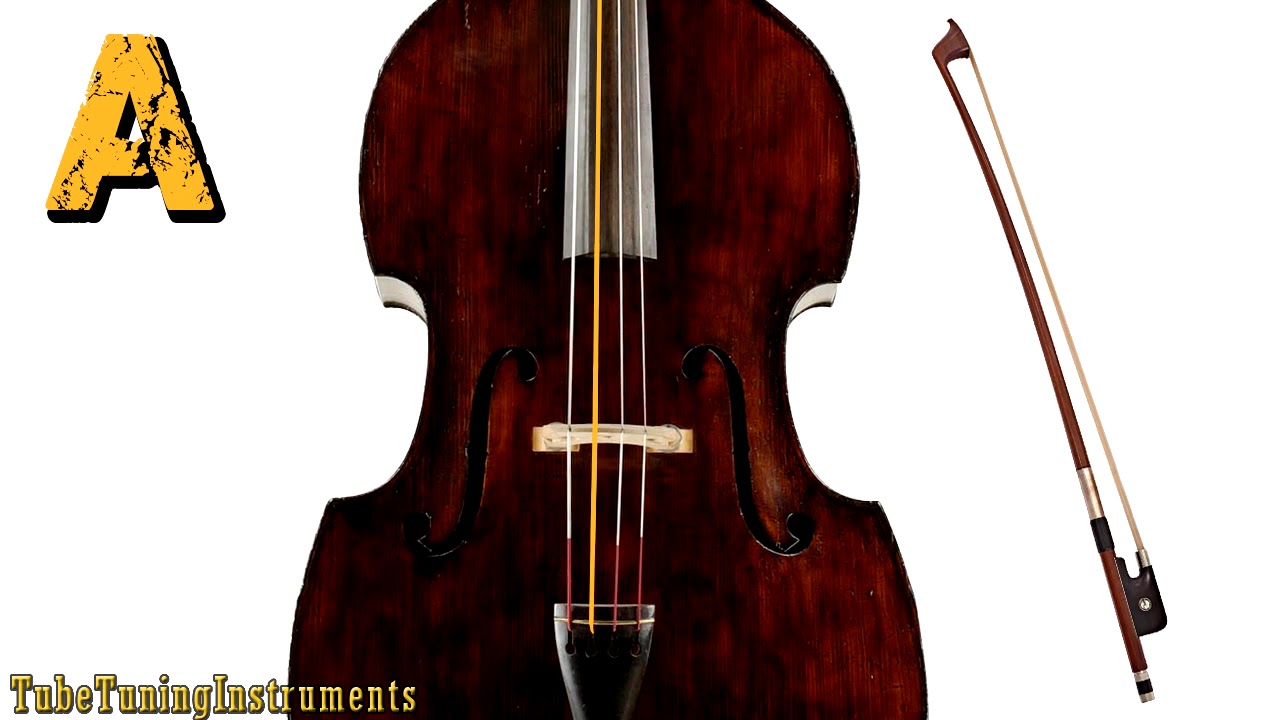
Yes, there are (psycho)acoustic reasons. For example, the root of the V chord corresponds to the third overtone in a harmonic sound (with the second overtone corresponding to an octave); this almost certainly has somehing to do with why the V sounds like it has such a close relationship to the I—it does, physically! In fact, if you listen to a single low tone played on an overtone-rich instrument such as a double bass, you can kind of hear the root of the V “in the sonority”:
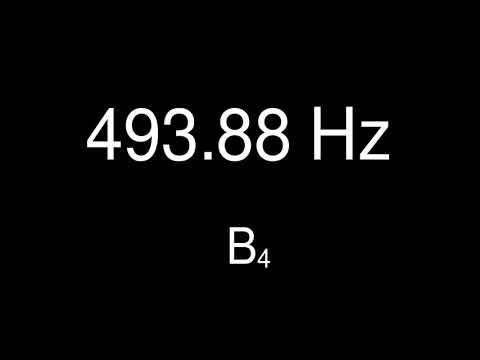
Like, for the starting E in this video, at times you can faintly make out this tone:
I would guess that somehow our neurological machinery for detecting pitch has an intrinsic sense of this relationship, because it helps greatly in recognizing pitched or harmonic sound, so that even when we bring together tones that are consonant with B followed by tones that are consonant with E, we can feel on some sort of visceral level the close physical relationship between them. I think there’s almost certainly lots of neurologically mysterious aspects of this and maybe it’s something we’ll understand better in future eras, but it makes sense to me that it would be this way to me as a kind of byproduct of our need to recognize pitch (which we make extensive use of in speech etc.).
Speaking of, in the book Tuning, Timbre, Spectrum Scale, William Sethares makes an argument I find quite convincing that it’s possible to measure the consonance—in a certain sense—of a harmony quantitatively based on the rate of beating between all of the partials in the harmony, in a way that really nicely expresses how stable the harmony sounds in a kind of general sense. His formula is based on a review of psychoaustic research projects with human test subjects. Anecdotally, I can say that I’ve found his formula to work remarkably well to quantify the relative consonance of intervals in a given tuning, at least in the sense he means—it’s a way that can make it much easier to get your bearings compositionally in tunings other than 12-EDO, if you have any interest in that.
What he means by “consonant” is something pretty close to acoustics, though, and kind of different from the meaning of consonance in like traditional tonal theory or something. The intervals which composers regard as stable for theoretical purposes in a given system of composition are very cuturally-determined. For example, in the Middle Ages, a perfect fourth was regarded as an unstable interval, because the fifth is focused on more heavily in Medieval voice leading, and the fourth is the inversion of the fifth (making the fifth a more ambiguous interval through their presence). In the transition to the Common Practice Era in the Baroque period, fourths became regarded as relatively stable instead. This is because thirds began to play a bigger structural role in harmony from that time on in support of greater chromaticism, and the extra information they provide results in less pressure being put on the fifths harmonically (thus making them less threatened by the fourth, and thus making the fourth, which Sethares regards as relatively consonant at least with a perfectly harmonic timbre, more permissible).
Typically relationships within the overtone series provide a nice foundation to understand what’s happening in a given musical system. All of the harmonic relationships in 12-EDO chromatic music can be mapped satisfyingly closely into relationships between the first 32 overtones, for example, albeit in a way that orients them around a single pitch (they lose their equal-temperedness, because you have to pick one note to be the fundamental). In Tuning, Timbre, Spectrum, Scale, Sethares spends a chapter closely analyzing the tunings of the instruments in a few gamelans, which are tuned very differently from typical European-style instruments, and he still has a lot of interesting things to say about consonance in that context in acoustic terms (he extensively explores the idea that an instrument’s timbre greatly affects what intervals will sound in tune in some sense on that instrument—one of the reasons why, as you may know, pianos are commonly tuned with stretched octaves or why bells can be nicely tuned despite having partially anharmonic overtones).
If you’re interested in this sort of thing, I recommend that book, it’s super-fun—musical tuning is a great topic to study if you like the interface between acoustics and music theory.
You kind of have to take it case-by-case up to a certain point, but the combined perspective of counterpoint and tonal harmony can make a lot of sense of like, most pieces of retro game music for example, especially if you also consider some “post-tonal” theory à la Hindemith or the like. (What those kinds of subjects can only approach loosely is stuff that’s like entirely textural weird noises or whatever, but you can look at that sort of music “spectrally” or more acoustically and still find ways to talk about it. Some “post-tonal” theory kind of tends in this direction. The subject of orchestration in the European classical tradition is also concerned with that kind of perspective in certain ways.) In some ways anyone’s answers to those questions have a personal aspect too though—like, my idea of what a minor seventh chord is “about” in some general sense will probably be somewhat different from yours even if we also have some common ground.
Some musical phenomena are easy to describe precisely, others are more tricky, though you can usually find some way to say something definite. Kind of obviously, it’s hard to give true “mechanical formulae” that, when followed, churn out interesting, satisfying music automatically but you can often find surprisingly piercing ways of describing how a given piece of music “works” if you look, and then you can come up with interesting variations on it based on your analysis or that sort of thing. There’s definitely a science to it, but there’s a degree of subjectivity and an art to it as well. It’s kind of both.
Definitely possible! Do you mean arrangements for piano or for the sort of ensemble that’s suggested by the final boss theme of a Romancing SaGa game?
The “Level 7” part of the video you shared uses a set of techniques that I think aren’t too hard to pick up in a way. For example, just looking at the first eight bars, one thing I note is that the bassline mostly moves chromatically/by half-step, but at the boundary of the second phrase it moves by whole step and then a major third (ignoring the transposition up an octave in bars 5–6):
To me this suggests that in this style, at least in terms of these specific bars, the bass generally moves by half step (chromatically) within a phrase, but by slightly larger intervals at the beginning or end of a phrase. Also, at least for these specific bars, the bass is always descending by half step; I don’t know that it would necessarily break the sense of style too much to have the bass ascend by half step instead at some point, but it might be worth noting.
Here’s the bassline together with a reduced form of the melody, and each note of the reduced melody brought within the same octave as the bassline, to get a feel for the harmony between them:
This is the pattern of intervals we get, just considering the ratios:
| d5 - M2 | P4 - M3 | M3 - M7 | m7 - M6 |
These are mostly major-scale intervals (with the exception of the tritone and the minor seventh) and I’d say that (just as vertical intervals) they tend a bit more towards consonance than dissonance without being anywhere near cloying. Of course, the actual pattern of notes also has the effect of suggesting rapid changes in key, because even if these are mostly major-scale intervals the actual notes suggest a variety of different major scales. This is largely produced by the chromatic movement of the bass.
Actually, that brings up a point I think it might be worth noting at this stage. I personally wouldn’t call this passage “keyless”—I think actually it has a pretty strong sense of key from chord-to-chord, in that you can generally feel a sense of tonic over the duration of each chord, but I’d say the sense of key changes very frequently, often with each new chord, and in a way that’s fairly “angular” (like, just shifting from key to key without necessarily smoothing out the transition in the voice leading—e.g.
). This approach creates a relatively strong sense of chromaticism (in like a stylish…cool way ). Music can be way more “keyless” than this though I would say:
So, I would say this style modulates rapidly and casually but while retaining a local sense of key, rather than trying to stringently avoid any implication of key.
Anyway, having said that, let’s briefly check out a fully-voiced light reduction of the chords in the first eight bars of that “Level 7” passage:
One thing you might note here is that the bassline almost always has its fifth in the original voicing, moving in parallel with it; the only exception is chord #7, the one marked C/E. To hone in a little more on the harmony, we can remove those fifths; because they move in parallel with the bass they kind of merge with it (although we should note that in the actual passage they play an important role in the overall sound). Also, we can pitch the melody down an octave and bring the bass up an octave:
Here I think the harmony starts to come more clearly into view. The passage is written with an eye towards creating three-note tone clusters around the bass (but then pitching the bass an octave below and probably adding its fifth). When the second in the cluster is unavaible for some reason, generally the bass still has its third, and there is a second at least somewhere in the chord. This does a lot to maintain the “groovy 9th chords” feel (like Battle Garegga).
At this point I think it’s especially illuminating to bring the melody back within an octave of the bass again like we examined at first:
You can see clearly from this standpoint that almost all the chords are made either from three-note clusters or two seconds stacked separated by an interval no larger than a major third (ignoring any octave transposition etc.). The one exception is the last chord, which (contrary to the marking) I personally would call a Cmin7 chord in first inversion. Here it is sounded in root position so you can hopefully hear what I mean:
This chord is a bedrock of stability compared to all the others, which I think is part of why it works nicely as a way to close out the passage.
There’s one last thing I want to check out for now. Let’s look at the intervals making up each chord in the above reduction:
One important thing to note here is that the “stack of gapped 2nds” marked * has the lowest voiced shown pitched an octave up in practice to serve as the melody. So, we can say that you don’t always have to treat the bassline as the bottom of the cluster/stack—you have the occasional option of starting it from a half-step below the bass and then pitching that lowest note up an octave in order to preserve the shape of the bassline.
There’s probably plenty more you could say about this progression honesty, but I think even with this we have a decent sketch of how to do the harmony/voice leading for a melody in this style:
Decide on a melody.
Start with the bass somewhere within a tritone of the melody, below.
Have the bass descend by half step until you reach the end of a small phrase or so.
There, have the bass move by whole step, minor third, or major third, at both the end of the current phrase and the beginning of the new phrase.
Continue until you reach the end of the larger phrase. There, have the bass instead descend by half step up to the end of the phrase.
You now have a melody and bassline. To add the inner voices, fill in, starting from the bassline and ascending, either three-note clusters or two seconds spaced by a third (see above chart). You have the occasional option of building the cluster/stack starting from a half-step below the bassline and pitching that note up an octave; it can create a bit of drama,(?) e.g. towards the end of a phrase(?).
Pitch things up and down by octave as desired, but try to preserve at least one second in each chord. Pitch the bass down an octave lower than you would otherwise and add parallel fifths above it. You can omit these if needed (e.g. for fingering reasons).
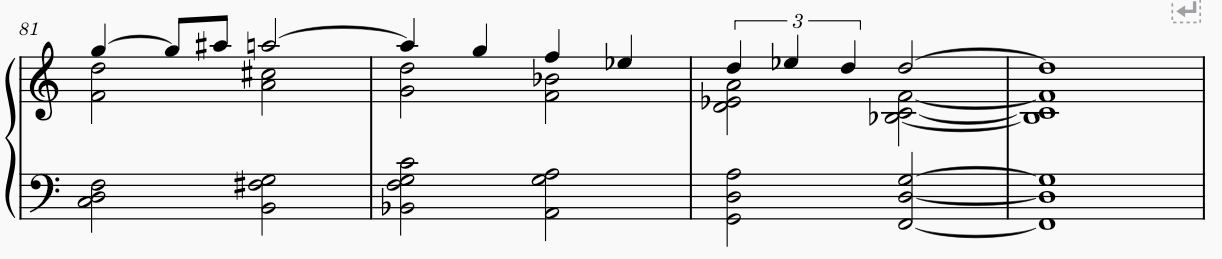
Let’s try this on a short passage from a Romancing SaGa game. Working kind of roughly from the above, here’s a harmonic sketch for a few bars of “Coup de Grace”:
you know what i love
i love bela bartok’s mikrokosmos
learning music would be sad if there were no mikrokosmos
even if you don’t play piano you should invest in mikrokosmos
study mikrokosmos
it’s real music
mikrokosmos
Sure thing! I wrote it kind of in haste considering the amount of text (I’m still finding typos and little “glitches” in the writing and things like that ) so don’t hesitate to ask questions if anything seems kind of confusing or unclear. I have a few addenda also…
For one, at the point I left off at with that example, I thought I would say in case it’s not already clear, from there it’s kind of necessary to have some idea of what instrument(s) you’re composing for. You can use that harmonic outline as a guide to figure out how the actual lines should work, but you have to know how many voices you have to work with and what you’re arranging for and that sort of thing at least to some extent. It can be as vague as “three voices” or the like at this stage but you have to make some kind of decisions like that to move forward from that point. That might be kind of obvious but I thought I would say that just in case.
For another, I thought I would note too, it’s not to say that I thought any of the markings in the video were “objectively wrong” so to speak—they’re all justifiable based on the notes and so on, it just kind of depends on what you’re trying to highlight. This is kind of in line with what I was saying earlier about naming chords being a way of communicating something about what you see their function or role as being. Most of the chords in those eight bars are pretty ambiguous—you can argue that they’re mostly 9th chords with the root in the bass but I think it’s kind of debatable how much we really hear them that way or not, especially because the voice leading doesn’t do that much to try to strongly establish one note or another as the definitive root of a given chord. However, the last chord is strongly suggestive of being a seventh chord in first inversion to me because of the pattern of intervals (you can note that it’s the only chord in the reduction that contains two thirds—that makes it far less ambiguous than any of the tone clusters) and I think calling it that helps to express how it serves as a kind of resolution, because a first-inversion seventh chord is a lot more stable than the preceding ambiguous harmonies. It’s not wrong per se to call it a 9th chord missing a note if you want, I just feel like to me it makes sense to say it’s a seventh chord in that context.
On that note, when I say the voice leading doesn’t “smooth out” the implied key changes, a maybe more-to-the-point way of putting that would be to say that it doesn’t resolve the dissonances in a way that would make the key changes very clear. The voices mostly move stepwise, which does create a kind of smoothness (there’s not a ton of jarring leaps into strong dissonances or things like that)—it’s more just that they kind of glide from harmony to harmony without telling you too strongly where you actually are in the tonal space, just kind of hinting at various key possibilities here and there. This style of harmony is nice for jazz improv, because it leaves the soloist free to “fill in the gaps in the harmony” as they see fit and make stronger statements about what the progression might “mean”; the ambiguity of the progression means that there are a lot of different ways to do this, so the soloist isn’t too boxed in.
Okay, I went over it and cleaned up+clarified the text a bit more, added notation for the audio examples (sorry I didn’t do that before, I had written them out kind of messily), corrected one of the audio examples, and tightened up the “Coup de Grace” demo/attempt a bit. Hopefully it should all be easier to follow now.
EDIT: Now I can’t decide, I think maybe I made the demo a little too dissonant with my revision, but I’m too sleepy to decide right now…I’ll come back to it tomorrow.
While I’ve never practiced anything more than 20 minutes in my whole life I feel like you can’t let em take joy away from you. Easier said than done but. Consider it an act of resistance, because it is.
so a friend called me up and mentioned that Andre 3000 has a piano album out–i was like what . I checked it out on youtube — my impression of it. I think it is complete and utter crap -horrific-god awful insipidly wretched nothing . oh my fucking god this is some atrocious shite — is he some type of fucking asshole ? is he a complete and utter dilletante ? I could go into detail about why each cut is stillborn –but why bother –it does not even deserve the attention of a critique it is so dreadful . the guy is not a pianist -that is the beginning and the end of it — what an ugly piano sound — lets not even talk about telling a story with harmony —sounds like he listens to a bunch of music gets a couple of gestures in his head –sits down in a stream of consciousness and gets at some gesture for a few bars of something that he has not internalized -and barely knows on the most superficial level and then he loses the thread–of course there is zero composition going on in the improvisations –no language to speak of just a few cliches in his head that he can’t actually play the cliche but he hits and tries at it until he peters out quickly — wow — he is so horrible at playing harmony –so many horn players that piano is not their instrument play so much better — this sounds to me like pure fraud —- what a lack of respect for the discipline by someone who in my opinion is a complete asshole for doing this — it is depressing that this garbage will get any attention because he has a name and fame — there is nothing refreshing about the naivety of it –it is just downright dreadful and awful–true fucking crap –insipidly wretched nothing –
not that i think the Andre 3000 album was special but it’s kind of like getting mad at a baseball player swinging a cricket bat. like what are we doing
i guess this is in here cuz it sort of reflects on how i think about music now, like nobody is going to be A+ at every single instrument ever invented, it’s a crazy thing to desire and impossible to achieve. i’m glad i’m not playing the game Matthew Shipp seems to be playing, i’m trying to live a musical life - and speaking of trump slop era, if it’s reminded me of anything, it’s also that music is not everything in the world, the fact that “musician” “pianist” is like a dedicated profession one is supposed to aspire to at the exclusion of everything else feels particularly silly when one can be illegally detained at the border for having the wrong opinions. idk i’m thinking a lot about Bertolt Brecht recently, and the struggle of making art under fascism. @Father.Torque you’re definitely right on and I ought to internalize that, the music is supposed to be done because we’re human beings and we like to do this sort of thing.
music is everything in the world, but it doesn’t have anything to do with mastery of all soundproducing implements and professional recording techniques and all that pedantry. it’s about the musical shapes that our perception attunes itself to.
oh shit that rant is from real life actual Matthew Shipp wtf??? why does he sound so much like an insecure redditor?? you’re a successful musician bro!!! i bought a couple of your cds back in the days!!

 or why bells can be nicely tuned despite having partially anharmonic overtones).





 ) so don’t hesitate to ask questions if anything seems kind of confusing or unclear. I have a few addenda also…