I’m trying to understand why a company would spend so much time and money into engineering a portable FPGA wunderkid and then go “it should have the same ergonomics as a 32-year old product”
4 Likes
PS1 updates…
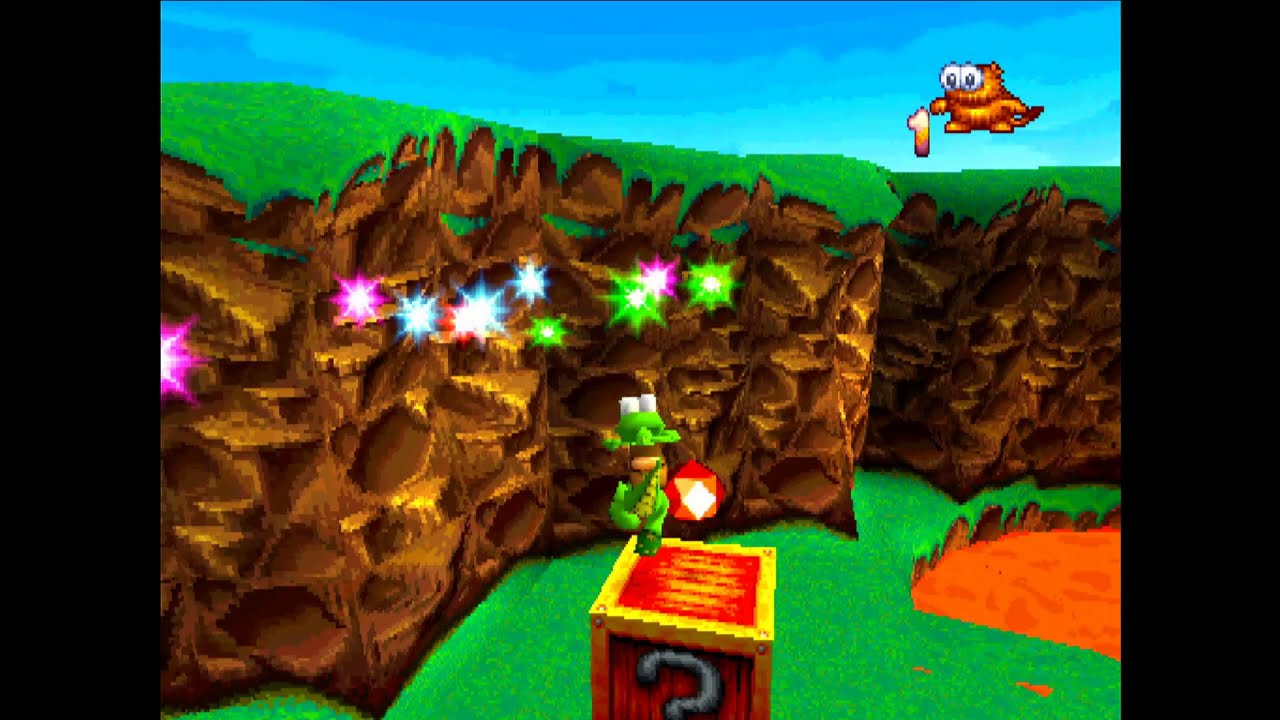
… and Saturn!!!

6 Likes
This may be strange point to wonder about but would an FPGA core consume less power then the equivalent of emulating the system on a PC or even a Raspberry Pi and similar device?
1 Like
nah, it’s usually slightly more in practice, but very close to negligible unless your x86 PC is somehow consuming 200w+ to emulate an N64
1 Like
The MiSTer power supply is 10w, so you’re going to have a hard time beating that with a PC. Raspberry Pi is probably close, but I’m fairly confident an FPGA core is much more efficient than emulating the same system. Of course an FPGA is usually coupled with an ARM processor so there is that to consider, but the “emulation” itself should be much more efficient since it will be running at a much lower clock rate, etc.
2 Likes
The efficiency is from emulating a chipset at a much smaller/more efficient process node, right? Like, an FPGA at the same node as a SNES would be less efficient but now we’re running it on a process twenty years in the future and unlike a PC, not running an entire OSand system in top of it?
Theoretically, how efficient would software emulation be in a similarly stripped-down system? I suppose a Pi ARM chip is our example of this?
1 Like
For comparable levels of accuracy, an FPGA core is basically always going to outperform a software emulator in terms of performance-per-watt.
I am not a hardware engineer, so perhaps someone else can answer this better, but here are the factors as I understand them:
- The static power consumption of the FPGA would be influenced by the process used to manufacture it.
- The dynamic power consumption depends on the core it is executing and is affected by clock rate, data rate, etc.
- Emulating a system in software is inefficient because multiple instructions are going to be executed for every emulated instruction. Thus you’ll need a clock rate multiple times higher on the host system than the emulated system.
- PCs can only scale down their clock rates so much. Mobile is probably better, but a lot of no-op instructions will be executed aside from the normal overhead of an OS, etc. (MiSTer, of course, still has this overhead because of its ARM processor running Linux).
- Not sure about the efficiency of the GPU scaling a Raspberry Pi would do compared to the scaling implemented on the MiSTer FPGA (I think the MiSTer scaler is in the FPGA).
FPGAs are less efficient than ASICs though, so an FPGA implementation of a 6502 is going to draw more power than an actual 6502. But I would guess the FPGA 6502 would draw less power than 1GHz ARM processor emulating a 6502. I guess it does depend in part on how big the FPGA is though.
EDIT: I guess it is possible that a modern FPGA could beat a 6502 in power draw due to process improvements, but I’m not sure. I think an actual expert would need to answer that question.
2 Likes
the quoted battery life numbers on the analogue pocket 2 are considerably worse than what I get from running retroarch on my iPhone, so I think there’s still an argument in favour of extremely advanced arm chips being better than native (maybe not for recompiler architectures, there isn’t much of a direct comparison there yet), which is why I’d still consider it near-negligible
2 Likes
sounds like a good experiment to actually just do and see
4 Likes
Analogue Pocket news
Analogue will be shipping out the pre-ordered units on December 13th.
I’m excited to see the impression videos that’ll start popping up next month.
My Life in Gaming did really enjoyable and extensive videos on Analogue’s past systems, and some of the random videos from other folk were a good time too.
Edit / Small update:
Reviewers have already received units and are under an embargo until the 13th.
Impression videos will likely pop up right on December 13th.
1 Like
they’re reopening preorders on Tuesday morning at 8 too
I am actually excited to get one of these, despite not wanting a mister or a playdate, I feel like this complements my existing software emulation solutions in a novel enough way and isn’t too gimmicky or overpriced
mister has a pretty compelling WIP psx core now, though there’s no audio or memory card support yet
lots of games play well already, it is kind of staggering. it has savestates(!) because that’s how the core author debugs stuff.
i played through a race of tokyo highway battle, a level of mega man x4, several sections of king’s field 3j, some shmups, some rpgs… some games hang at various points and as mentioned, there’s no audio yet, but it is already shaping up to be extremely good
2D stuff tends to work great! 3D stuff is vastly improved over just a week ago! it’s pretty exciting
saturn core is also coming along very nicely, though there won’t be a WIP build out in the wild for that until some time in 2022
4 Likes
Is the expectation still that you’ll need more sdram and lose any IO boards in order to get the full PSX experience?
no the beta builds work with regular mister stuff, nothing fancy
Specifically I’ve heard that more ram will be needed for sound, which is what I meant by “the full experience” though I realize that was kind of vague
1 Like
possible but i don’t know enough of the technical details to make an informed comment there. i think the goal is to avoid needing a weird mister build just for ps1 but only if it is technically feasible
well i poked around on the discords and it looks like zumspass thinks it will all fit in a single SDRAM
2 Likes
once saturn and psx cores are fully functional i am buying a mister immediately
1 Like