The f is for Forever (Silent Hill f)

Done with my first playthrough, started the second. Started on Lost in the Fog to check out how busted my current Omamori loadout is but I’m not sure I’ll stick with it after surviving Hard, I kinda appreciate what the combat was aiming for with the sanity/Focus mechanics but there’s too much small irksome stuff for me to find satisfaction in mastery. Still impressed at NG+ being a thorough remix so far, items and enemy placements are thoughtfully rearranged, there are new locations and events and textlogs scattered everywhere, and you get a UI element telling you if the cutscene you’re watching is new or not. Not that I feel too confident about skipping the scenes I’ve seen before, once you get a general gist of what’s going on literally every event is understood in a radically different way.

When I played Umineko, I was very impressed by the mood at the end of the first episode – a bunch of teenagers stranded in a lavish mansion on a remote island, surrounded by corpses of their rich relatives and a storm growing stronger, having absolutely no idea what any of the dozens of the cryptic horrifying events that occured mean, knowing they’re past the point of saving. I’m glad that in SHf’s first playthrough Ryu07 goes for a similar vibe, it’s an endless parade of intensifying psychedelic folktale misery, and only by the very end I was confident I get the general gist of the guiding story logic (hell, even the last cutscene threw me a curveball with regards to the passage of time). I scoffed at some very basic theme signposting and tired tropes at the start, only to get shocked at what the game does with them. The themes might be simple in the end, but it’s a really fun mystery to decode. The structure keeps piling up questions by making sure every stray odd line is a vital hint you will only understand in a few hours, and the logic of the imagery where a teenager struggles to use all the Shintoism and historically loaded sights around her in order to construct shoddy tools that could help her understand her suffering and duties feels fresh. Trying and failing to find freedom in the same myths that serve as your prison.

I think it’s the first game in the series since The Room (save for arguably Shattered Memories) where the main character is offered an actually interesting new mode of seeing the world. I’m extremely surprised at how 07th Expansion’s sensibilities translated so well into arthouse-adjacent cinematic storytelling, especially after their anime adaptations were uniformly trash beyond a few catchy cheap tricks. The blocking and lighting are next level, Konatsu Kato gives one of the strongest performances I’ve seen in a Japanese game, the camera language is extremely thoughtful about how to communicate emotions. Makes me yearn for a version of the game where the camera does anything interesting during exploration and all of the screenshots don’t look the same. Anyway, I can live with that, and I can live with combat being kinda trash. My only big regret, especially given the series’ pedigree, is the music not being memorable at all (beyond the main theme and its variations).

11 Likes

One thing I really liked about the (first) ending is the abstraction of the emergency vehicle lights and sirens, like they are just barely getting through to Hinako in her hallucinatory “They look like monsters to you?” state.

3 Likes

Finished first playthrough. I probably won’t do a replay soon, but I absolutely want to come back to it given it sounds like a true ending B scenario. I was trying to figure out if there was a way for me to get the sword under the old tree so I’m glad it’s explicitly mentioned in the ending guidance the game gives you.

Loved the sirens coming in in the end and how much sad rage Hinako is filled with in the final stretches. The game pulls the ripcord on the monster grinder and despite there being so much combat it did fit the ‘feeling’ of the end even if the atmospheric tension of monsters was evaporating.

The question of ‘At what point did Hinako split?’ after the reveal was fun. The framing sets it up as a parallel linear narrative with her fading in and out of consciousness but presumably Hinako’s spirit was taken by Fox Mask at some point in response to her intense dislike of her family, friends, and town. She’s then tested to see if she’s worthy of receiving god powers through marriage. Fox Mask is interesting since he never really does anything outwardly malicious apart from insist Hinako continue, he even helps banish Sakuko at one point. I was expecting him to be the final encounter. While Hinako’s spirit is being corrupted by her initial desire, ‘real’ Hinako is trying to deal with the effects of this in the town. The ending sort of suggests she is already acting outwardly destructive to the town but through the veil of what she sees. I thought the reveal that all 3 of her ‘real’ friends are dead was quite obvious given what we do as the spirit, but to her it really is a shock. When she meets herself (other than the one time in the house), only the spirit really knows who’s who, Hinako just sees another monster. Ironically the symbol of marriage she adopts to gain the power to kill her past. Sadly, the police show up to break up the fight between schoolgirl and bride.

I wasn’t expecting the split Hinako being such an integral part of the final chapters where they even confuse the chronology. I think they’re trying to get you to assume that the same kind of split happened with Junko. We have zombie bird Junko and doll guardian Junko. Presumably Fox Mask splits you into a selfless and selfish doppelganger pair and the selfish wins out to ensure pliant thralls. The doll is just too weak in the end to do anything, reduced to a representation of a woman.

Enjoyed the monster allegories of the social ills of the town even if they’re probably obvious. The abusers, drunks, and lechers surrounded by the archetypal girls, mannequins, and mothers. Enemy behaviour is consistent with the social dynamics of each. The school children only acting behind your back.

I like the way the journal initially feels like quite a conventional method of exposition and grows to become an unreliable narrator that increasingly talks in Hinako’s mixed subjectivity.

Initially the sections dealing with your friends feel like they might have a plausible undercurrent of growing up and leaving bad friends behind but morphs this into being hostile to the person you become, or that everyone feels you should. Shaped by societal expectations but also the fact that they remove who you are as a non-adult. The adults make up a focus of hatred and to become one is torture.

Having no map in one of the final areas is a challenge I wish they used a bit more to give some friction to the obsessive map checking that Silent Hill requires. If they had done it in the level where you return to your house, it probably would have been cruel but would really have ratcheted up how disorienting that section is. Speaking of that level, I love when the game brings in random sections of normal sounding dialogue like the guy ringing about the order from the fishing company, or normal sounding crowd ambience during the mum and dad scene.

I think the Fox transformation is a great case study for how empowerment in a horror game should operate. It’s not a permanent upgrade and also feels wrong even though it makes it so much easier to take down enemies. I do think ultimately the combat is probably one of the less coherent parts of the game when taken as a whole. I suppose it works in service of making the Fox transformation pay off. It’s just funny how much I was thinking of similar action games, right down to the rage of Sparta Hinako L3+ R3. The ‘mother’ birthing monster just felt like managing Souls lock-on when outnumbered to me, just with very slow attacks.

F is for fuck marriage

‘GET OUTTA MY WAYYYYYYYY!’

3 Likes
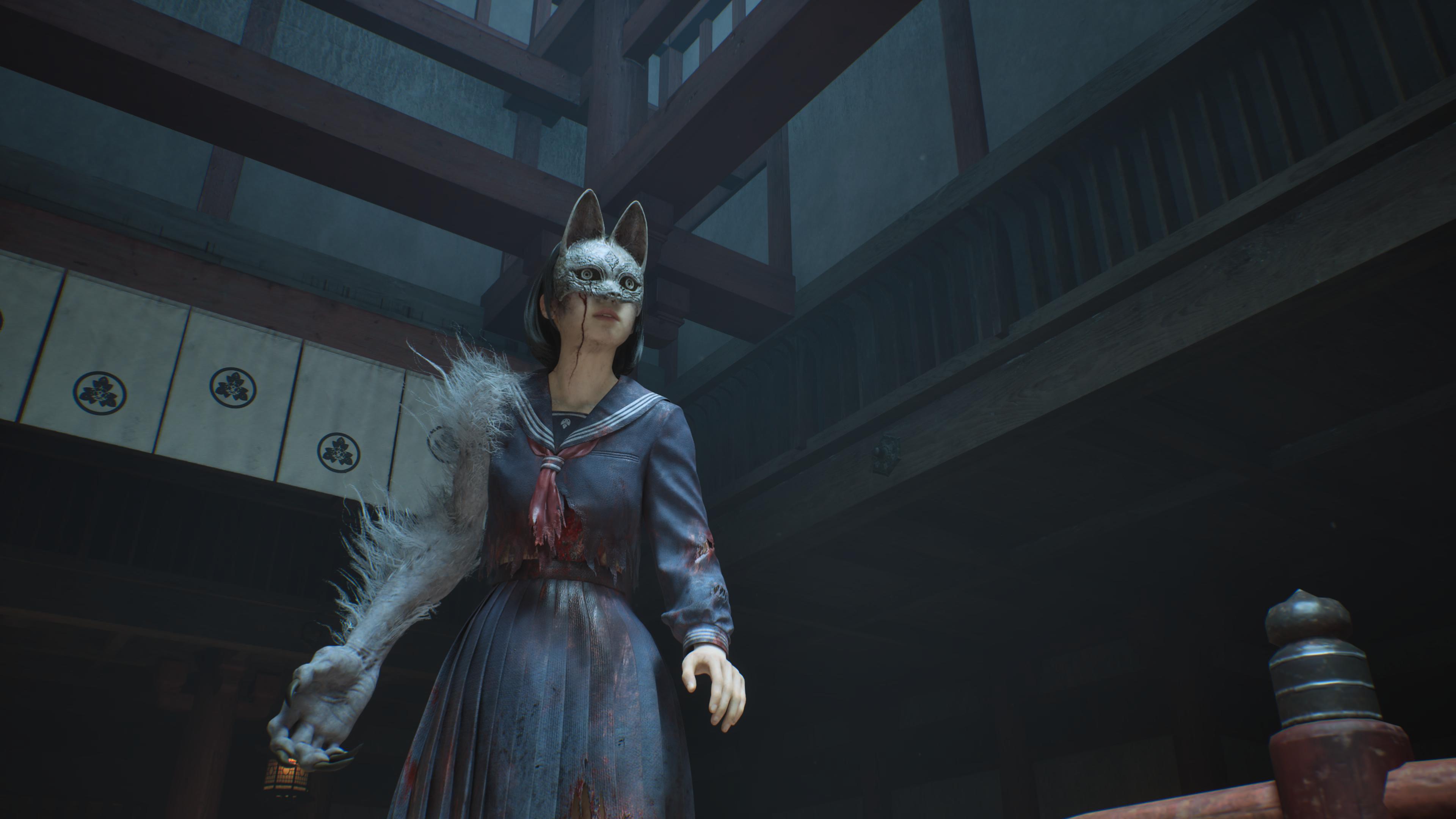
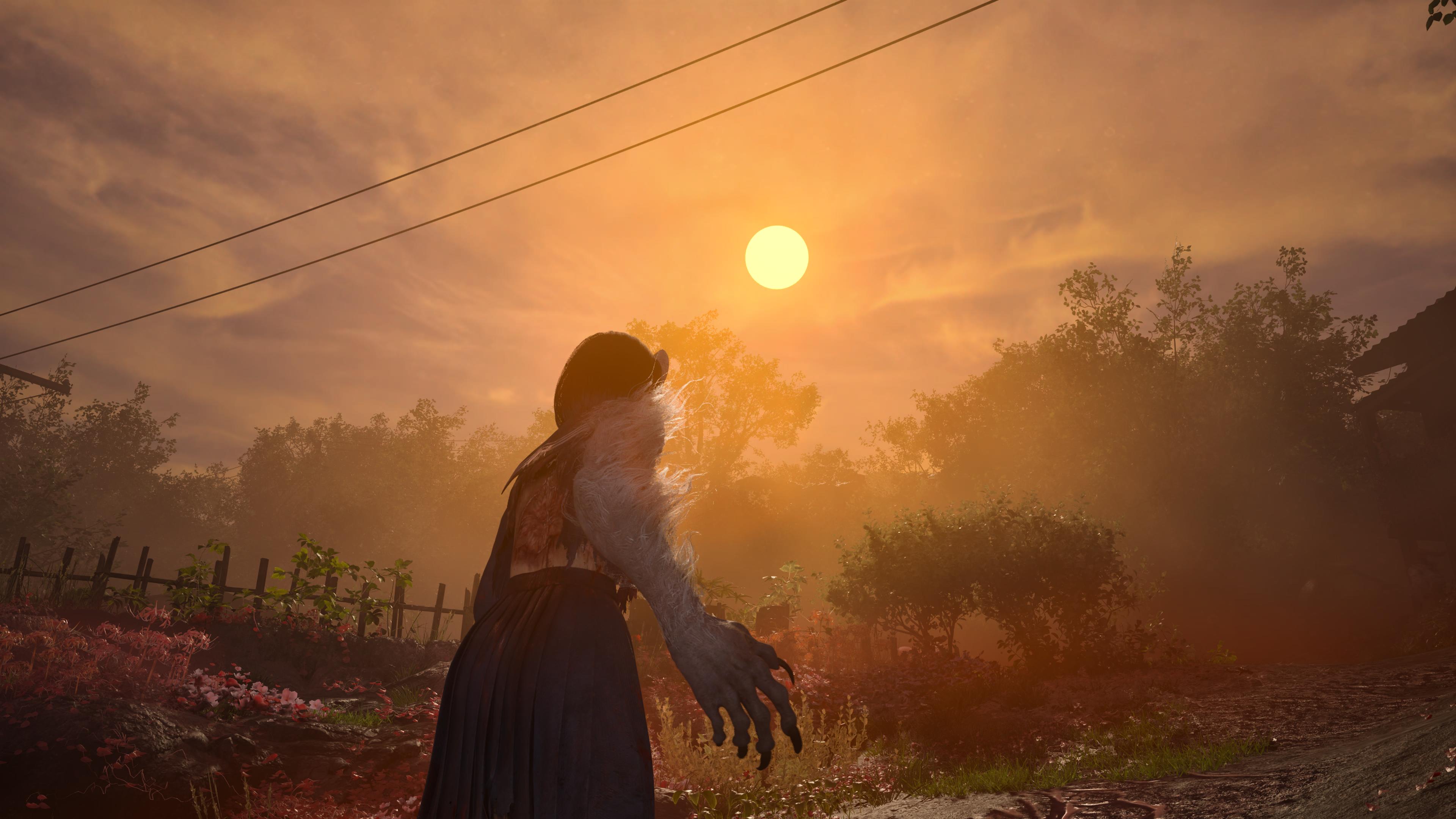
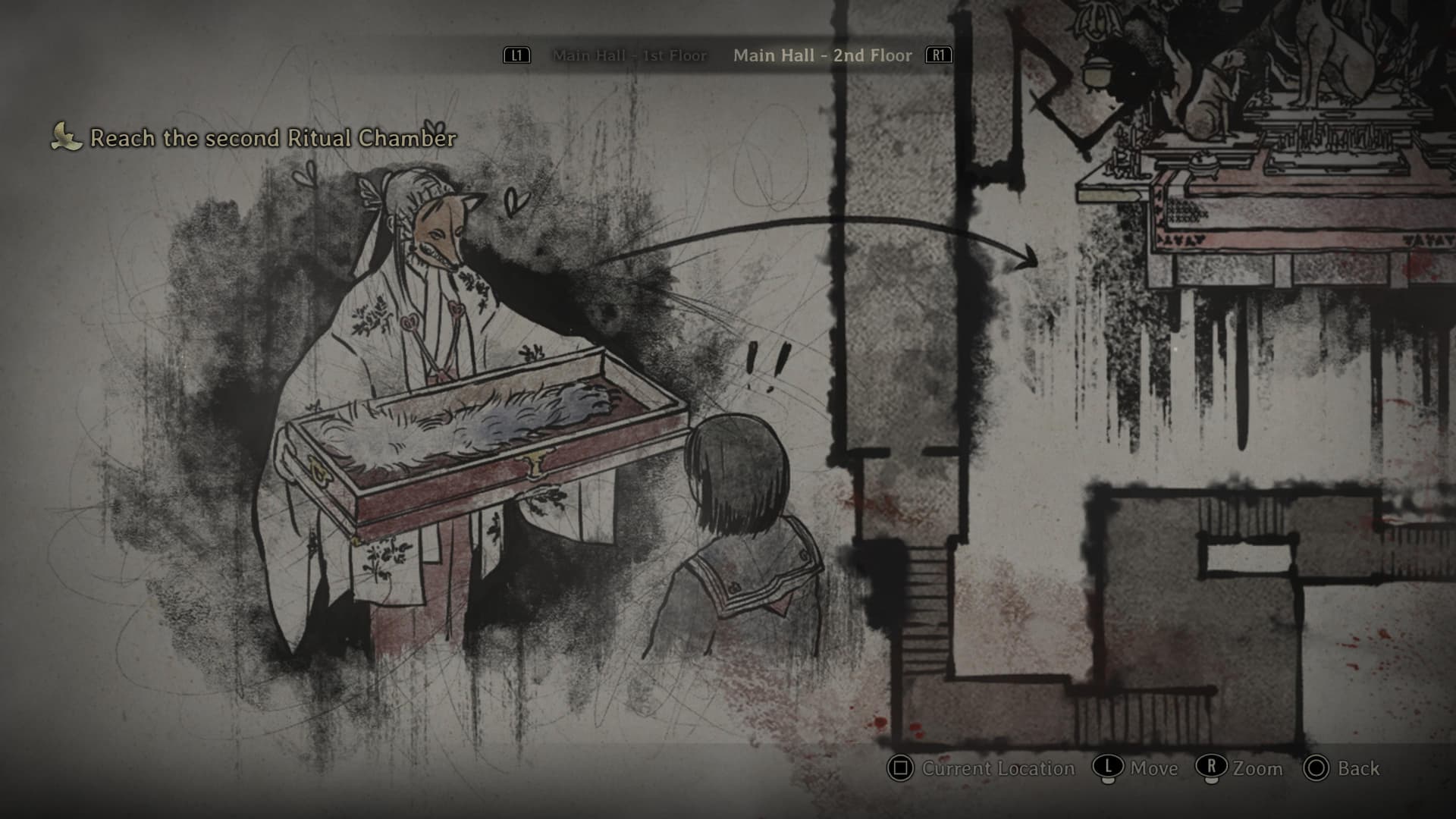
Fun screenshots [Spoilers]

I’d love to have had more dead-end rooms with strange things in them like this one:

! !

2 Likes

I just finished the second playthrough and despite my initial positive impressions I think it’s way undercooked for what it needed to be. The few monster archetypes they have do not warrant this much repetition, and as much as I appreciate the rearranged enemy and item placements they come across as nothing but a minor curiosity when it’s all the same terms of engagement all the way through, and all the mechanical jank gets infuriating on Lost in the Fog (which is balanced around grabbing all upgrades over multiple playthroughs anyway, just play on Story). Despite an occasional curveball wrt progression (you get the fox powers very early on, the school is full of scarecrow children from the start and you can easily skip it) it’s all the same events you already know with really minor cutscene changes. Basically only the final <30 minutes of each playthrough are what differs significantly between endings, and the four non-joke endings are really great, but I do feel pangs of regret over all the time I wasted, even though I saved a lot of it by visiting YouTube. (The UFO ending is shockingly forgettable considering the Space Wars setup it has in the main story, almost feels like an anti-climax is the joke).

The NG+ textlogs are the stuff that does most of the heavy lifting here, basically every facet of the story is revealed to have unexpected layers, whatever interpretation I thought could be a reach during my first playthrough is accustomed in one way or another. Ryukishi07 really operates on a different level from the rest of the industry. Umineko’s entire thing is that every scene offers two explanations, one where all the supernatural witch melodrama is real and one where it’s all unreliable narrator tricking you so that the Agatha Christie-style locked room crime remains unsolved. Utilizing the same mindset in an AAA videogame and making it so that every scene operates on a few level of complete artifice is like playing chess when everyone else is stuck with checkers. The town isn’t what you think it is, the characters don’t look the way you see them, the time doesn’t flow the way you’d expect, every event is a metaphor that initially tricks you into believing it means something else. Almost nothing is real, and yet it never falls apart, because Hinako’s inner reality is fully consistent and very expressive, the emotions ring true even if nothing else does.

Silent Hill at its best always walked a fine line between crowdpleasing and arthouse, shamelessly blunt and deceptively subtle, and it’s the same here. A casual audience will be satisfied with an approachable dramatic arc with familiar tropes, a more demanding person receives a puzzle with multiple red herrings and conflicting solutions. If you want it to be a modern folktale, you can find an appropriate story thread where Ebisugaoka ensures its doom over centuries. If you want it to be a realistic story of social mores in the 1960s, there’s more than enough to read it as a psychedelic allegory containing a surprisingly nuanced vision of patriarchy. A lesser story would treat Fox Mask as someone getting his just deserts in the end, this one finds an appropriate degree of empathy to paint him as a victim of greater forces, too. There’s a lovely NG+ chain of textlogs where you discover the history of Ebisugaoka and realize it’s all people making up stuff about the current oldest thing in the area, but then at the end you realize they’re all written by a damaged man who is overly invested in his atheism to the point of rejecting anything inexplicable in his reality, and it’s the kind of nicely layered backstory the game is full of.

One NG+ thing that I feel I don’t have appropriate tools to talk about is all the mentions of the famous losers of The Tale of the Heike, the Taira clan (who are reportedly responsible for leaving behind the sacred sword that can save Hinako). It made me think of Masaaki Yuasa’s Inu-Oh, a story of a medieval rebel rockman singing songs of the Taira as victims of history, daring the audience to empathize with them as the outcasts and the forgotten and the defeated, eventually causing the ire of the Imperial court. That kind of reading of the Taira (who were historically presented as receiving just punishments for Kiyomori Taira’s crimes) feels appropriate as a parallel for Hinako who is destined to be a faceless victim of her own times, but I’m not sure how widespread this interpretation is and if I’m not overreaching. But then again, the beauty of this game is that barely anything I’ve read into it was an overreach.

14 Likes

Also it’s wild to me that the game has some of the best cutscenes in the industry, an incredibly thoughtful cinematic language of careful blocking and switching perspectives and fog and light and shadow and colors so closely attuned to Hinako’s subjective perception of reality (especially after Bloober’s work meant to replace SH2’s FMVs was so austere and undercooked with all the boring shot/reverse shot dialogue), also a wonderful casting with a great eye for young Japanese film industry talent (this just wouldn’t work if voice actors had to carry it), and all the cinematics were overseen by the director of the game Al Yang, known for Dynasty Warriors M, Resident Evil Resistance, and FFXV Pocket Edition… I wasn’t really familiar with your game, and so on.

5 Likes

That’s a shame the second playthrough(s) are a bit more slight, perhaps best to leave some time in between. The more I think about the game the interpretative space is really hooking me. You can’t help but try to resolve. It resists simplicity but with so few elements compared to more sprawling and bloated game narratives that ultimately get forgotten.

I only played 2 and 3 and this is making me wanna go back to all the well regarded ones. I hope this team get to do more cool stuff!

1 Like

If you’re looking for more like SHf may I recommend Umineko?

3 Likes

Is When They Cry the place to start?

Higurashi and Umineko are connected thematically and cosmically, but not directly, you can start with either. They’re both 8 chapters long, and you just read them in order.

Higurashi was why everyone knew right off the bat that Ryukishi07 would be the right person to bring Silent Hill to a japanese setting, because the rural town setting is identical. The one I go to bat for is Umineko, which I genuinely believe can make people better. Umineko in a single pithy sentence: “Did you ever wish Agatha Christie had a cross counter?”

6 Likes

i think i’m tapping out close to the end because the combat is just that damn awful

2 Likes

As someone who’s played both I think playing Higurashi→Umineko is the ideal because a lot of Umineko’s shock value comes from violating a lot of “rules” set up by Higurashi (e.g. the magic-vs-reality conflict, general rules about how portrayed events can be interpreted), and moreover Umineko is just plain longer (in terms of each chapter’s wordcount).

Higurashi gets a bad rap because its quality is an upwards slope, i.e. episode 1 is the worst, then 2… episode 3 starts bad but abruptly turns godlike though. Meanwhile Umineko’s duds are episode 5 and 6, which everyone conveniently forgives it for because episode 7 is pretty juicy.

On a purely personal note I also don’t like Umineko’s translation as much because even though Higurashi’s is a bit sloppy and typo-rich, Umineko does that thing where they leave in gender or honour words like ‘-sama’ or ‘obaasan’ or random nouns like ‘omiai’, which I find way more annoying.

8 Likes

Playing this on Hard and by God it’s tough.

In combat the camera can be as much as an enemy as anything else.

There was one boss encounter that felt like maybe I wasn’t even supposed to fight it after about 30 minutes? Then it finally went down.

Some of the enemies waiting in ambush still basically ambush you even if you know exactly where they are.

It’s a good game. It feels like a tribute to Fatal Frame and Silent Hill. It does not fit in my head as a Silent Hill game.

3 Likes

keep meaning to go back to this but did not find the beginning compelling at all. it felt very videogamey in a way that’s exactly the opposite of how any of the good silent hills have ever felt to me. you immediately have to do some yakuza chase sequences to escape the lava ground, you’re funneled through some narrow town-without-streets walkways into monster and stealth encounters to teach you the Game, then I was in some videogame mind palace shrine area thing where I had to walk behind a mysterious npc who stopped and talked about things. felt like a game designed by people who grew up with xbox 360 games instead of pc adventure games.

9 Likes
3 Likes

just what i wanted, a week after i finished it.

2 Likes

Silent Hill Five Point Five

2 Likes

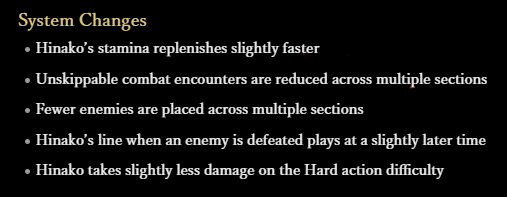
Yes, this sounds pretty good (but also too late for me).

I wonder if I would have used this.

2 Likes

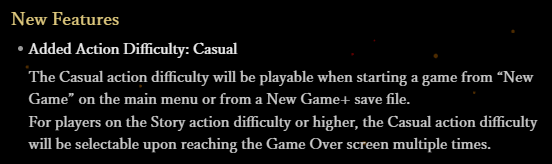
i can’t actually tell if casual is above or below story. i assumed it was a middle level (which is what i wanted), but the text there implies it’s an even lower level?

I am bumping this thread!! I am finally playing it because my family got it for christmas. Even though the combat is identical because they are both Unreal Engine/Fortnite games, this is much better than Slitterhead.

I was pretty annoyed how VIDEO GAME it was at the beginning, but it cooled off and finally let me play Silent Hill with weapons that break easily. During the scarecrow bit I had no weapons left and just has to keep running to reset the puzzle.

It is maybe unfair to play this right after Siren, which was almost perfect for the time.

there are two options on PS5, Performance where you can actually play it or Quality with screen tearing and a shit frame rate. I can’t even tell a visual difference. Performance still has massive frame rate drops randomly which is like come on. Get it together. Why don’t you make games for the hardware and not this mysterious super hardware that doesn’t exist? I haven’t been wow’d by any of the visuals but the absolute refusal to do direct light is an interesting choice.

Think I am about 40% done. All said it is nice to play a Silent Hill.

7 Likes