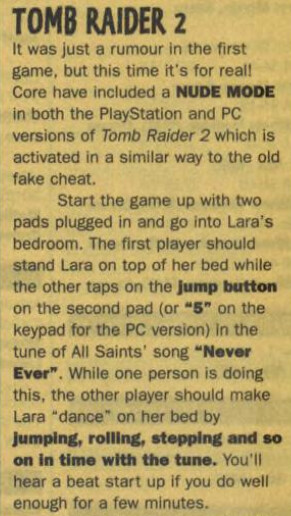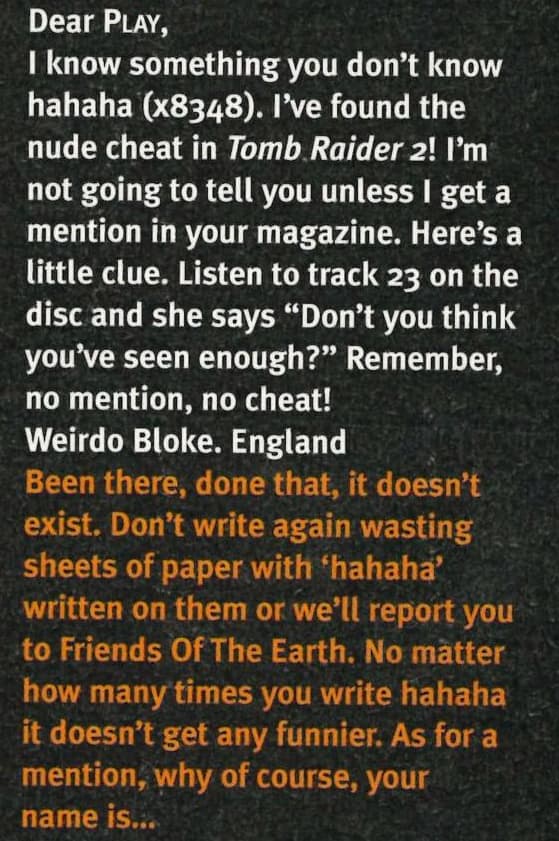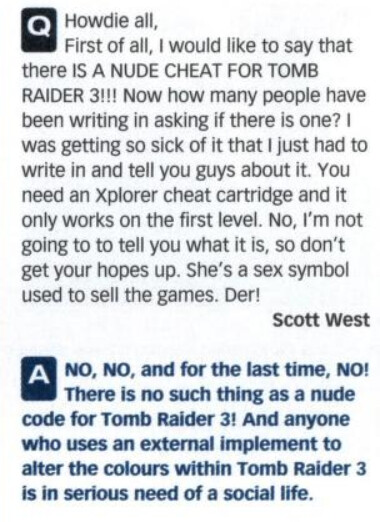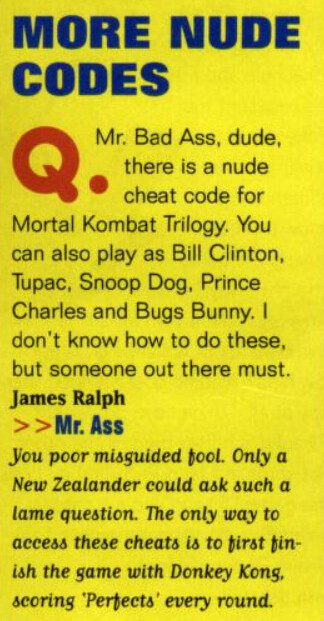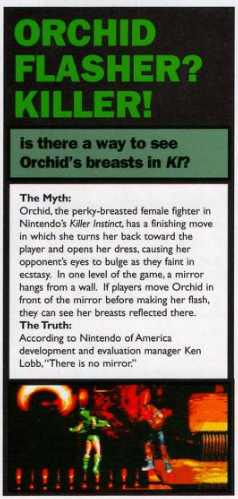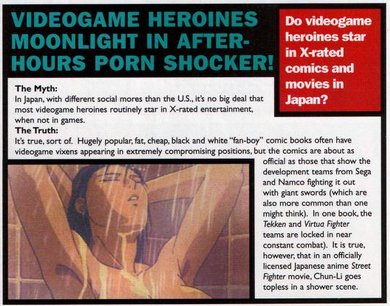
one of the earliest things i remember from uk videogame magazines growing up was an ongoing letters page controversy around the fabled tomb raider nude code. looking it up on the internet archive lets us see the slow development of a collective myth - first emphatic denial from the developers themselves (“people ask us if we’re going to do a nude lara, and of course we are not” - core design’s jeremy smith 1995), and then vague mention (by 1997, Saturn Plus is mentioning that they’ve never found “the much-rumoured ‘nude lara’ cheat”), and then at last, the truth comes out:
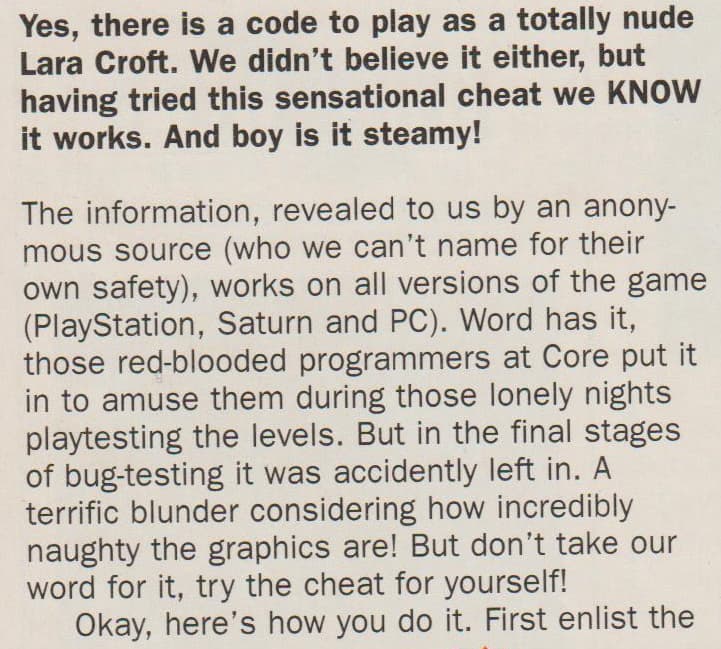
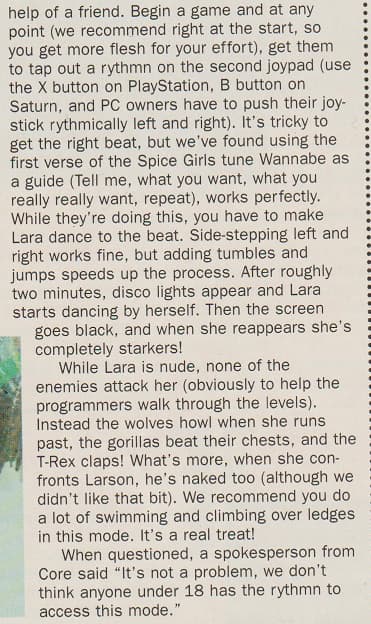
this is from the april fool’s edition of the uk magazine “computer and video games” and is i think a significant moment in nude code mythology, particularly as it came with (censored) screenshots that seem to suggest the code in action. i seem to remember reading and being fascinated by this, less for prurience (i would have been 8 years old) and more for the odd details, the idea of making a character “dance to the beat” by rolling around, the disco lights (disco being a reliable laff magnet in the mid 90s for some reason), the screen going black, and then the oddly sexless and plummy tones used to describe the nudity itself (“completely starkers!”)
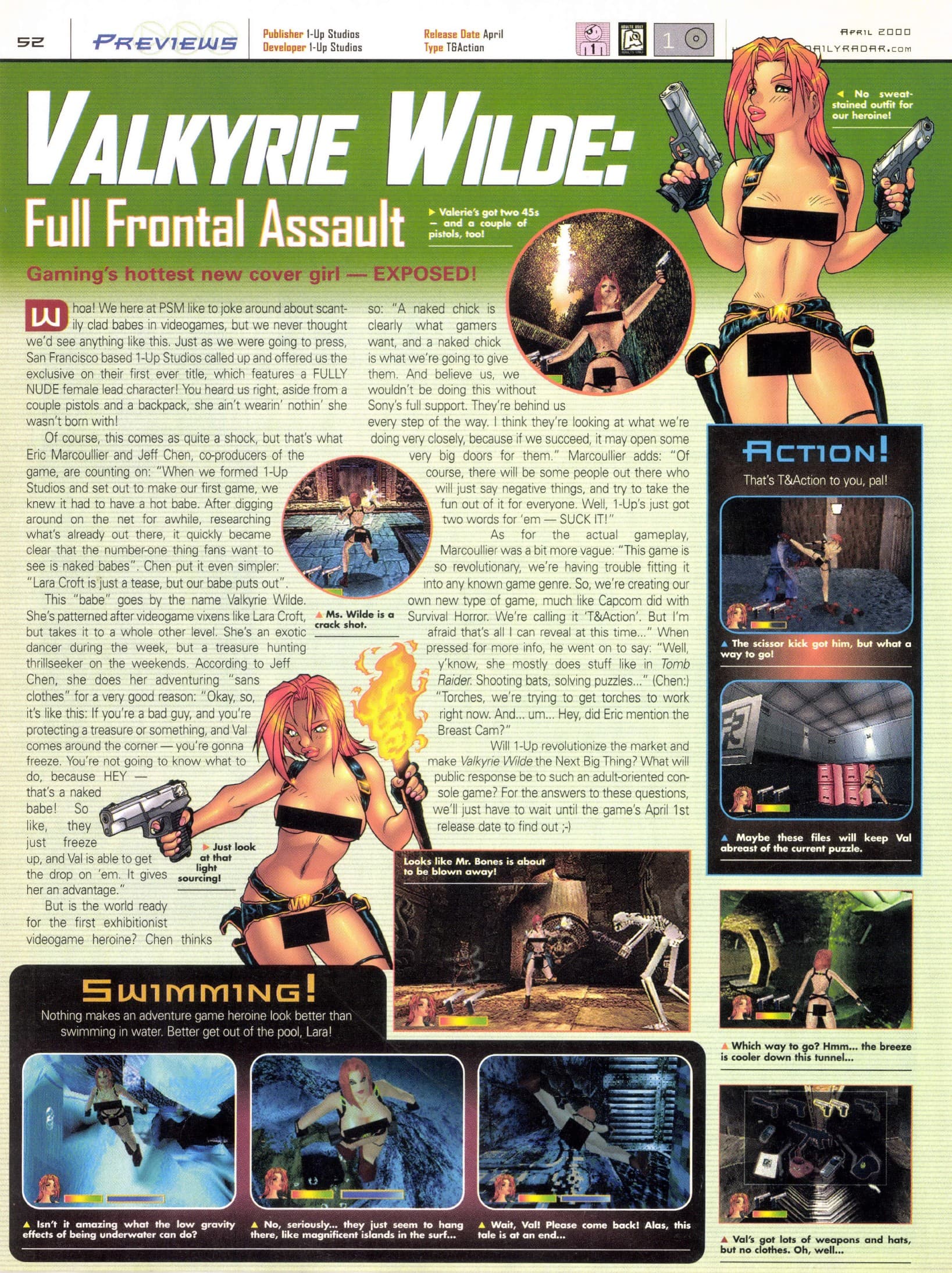
so begineth, in this and other magazines, a whole press cycle: reveals of the nude code as hoax, irritated dismissal of the whole business of a nude code, joking about the possible existence of a nude code, asking interview questions of the developers about a nude code, reporting on “ongoing rumours” of a nude code, often as an excuse to fill a page with sexy promo art, and repeat.
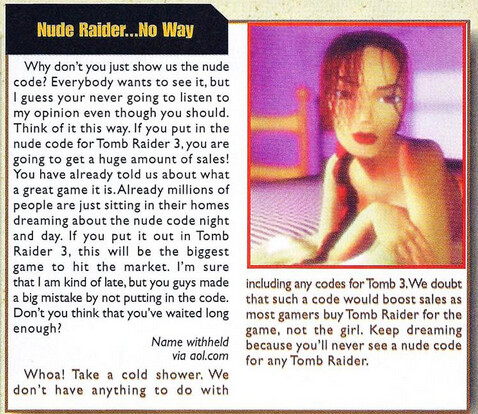
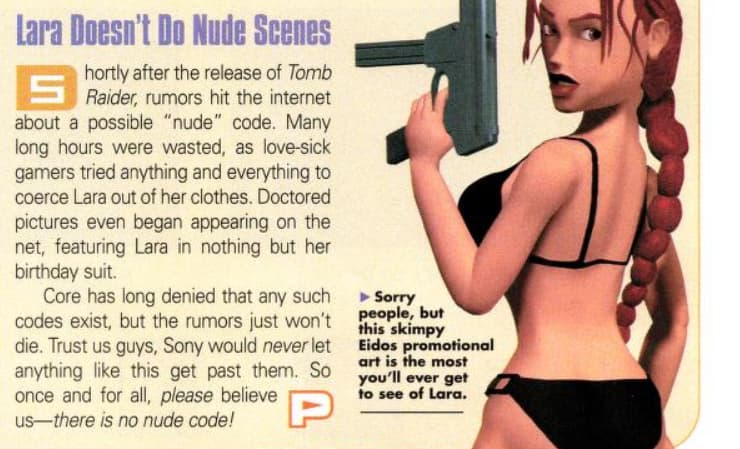
to specify the remit of this topic: i’m not interested in fan-made patches and hacks (the famous nude raider website and legal backlash to same); i think that falls under the seperate cultural history of game modding. what i’m interested in about the idea of a nude code proper is something like the below:
- nude code as byproduct of the shift into 3d:
reflecting some sense that a 3d model somehow had more autonomy than a sprite. a sprite consists only of things you’re able to see, while for a 3d model it’s easier to imagine the presence of aspects that are present though unseen (eg that a character’s face is still present in the model, even when not rendered from a particular camera angle).
it was apparently a cause in toby gard’s leaving core that the marketing team would do so many “pin up” style 3d promo renders of lara. it’s interesting to me to think that a shift from “sprite vs promo illustration” to “game model vs promo model” might have added to the confusion, in that the latter involves less of a distinction between representational modes.
- nude code as somehow unwilled or accidental:
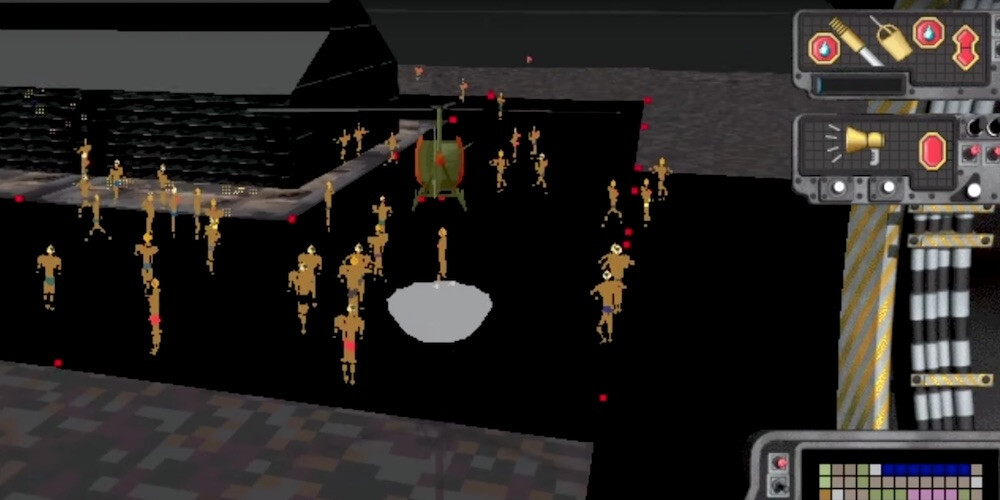
1996 was the year of the notorious simcopter himbo (<-- user title free to good home), an employee prank by a future Yes Men member by which guys in thongs would appear on the street and start kissing each other. it had something of a media furore and maxis distributed patches for the initial release of the game. is this the starting point for the nude code mythology? many key elements are there (the idea that the himbos were only meant to be present on certain dates, or through other arcane conditions; that it was hastily patched out and only in certain versions of the game; that it existed outside official company knowledge or policy). i think you see an interesting echo of these ideas in the below reveal of a hoax nude code for lon lon ranch(!):

i find it interesting that even the author of the hoax doesn’t seem definitively sure it doesn’t really exist; saying “nintendo tests their games extensively and would surely find something like this” further underlines the idea of a nude code as just something that appears, possibly unwilled.
- circles of knowledge:
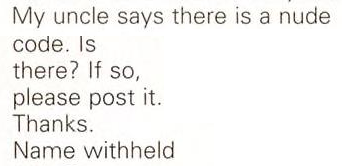
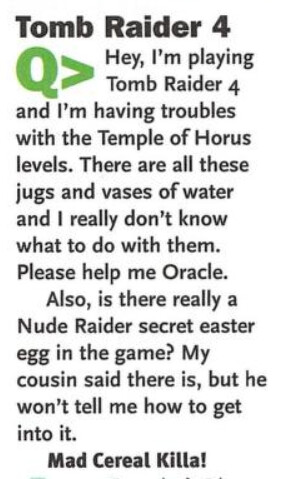
it’s easy to make fun of the reader letters that say they’ve heard definitive evidence of the nude code from an uncle or cousin. but the idea of a kind of secret grapevine of videogame info was ofc part of what the magazines themselves were pitching, “secret” cheat codes and insider info and etc. the idea that by reading you were getting temporary admission to a charmed circle, aided by the way each magazine would try to build up its own sense of an exclusive mythology (partly thru mean replies to people gauche enough to beg for access to it). i wonder if this is more of a uk thing? some weird cultural echo of the inscrutable british class distinctions between different schools and sets?

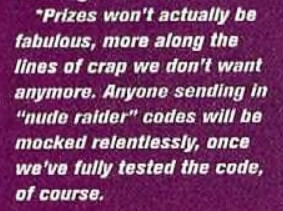
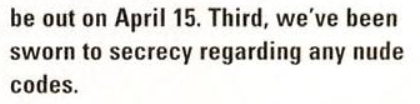
this letter begging for a code seems to make a distinction between public videogame tips and others that might be passed on in secret - we see kind of a slippage between the function of a magazine and that of a priesthood. other letters seem to have a degree of resentment at the idea of an elitist media cabal hoarding all the nude codes for themselves.
- magazines and the internet:
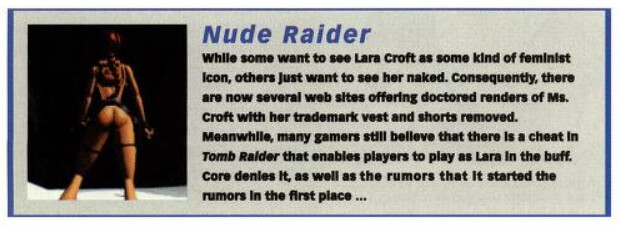
i know i’ve said it’s technically outside remit, but it’s interesting to me that the actual “nude raider” patch website also seemed to exist around 1997, and that this is not quite what many of the nude code arguments were talking about. reading these magazines is partly encountering people unsure of how to talk about the internet at all; should you link a site like that, or even talk about it? does it taint the magazine’s very existence as a space of vetted-yet-unofficial knowledge, to start mingling with the swamp of misinformation and pornography that is the internet?
- nudes of the wild frontier
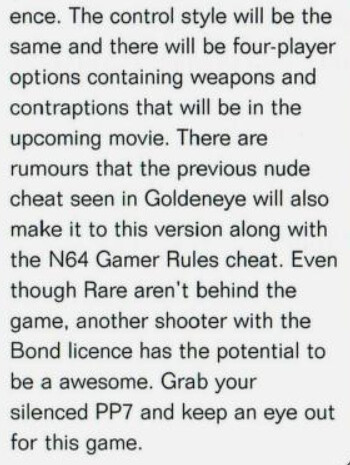
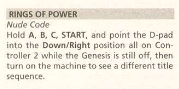
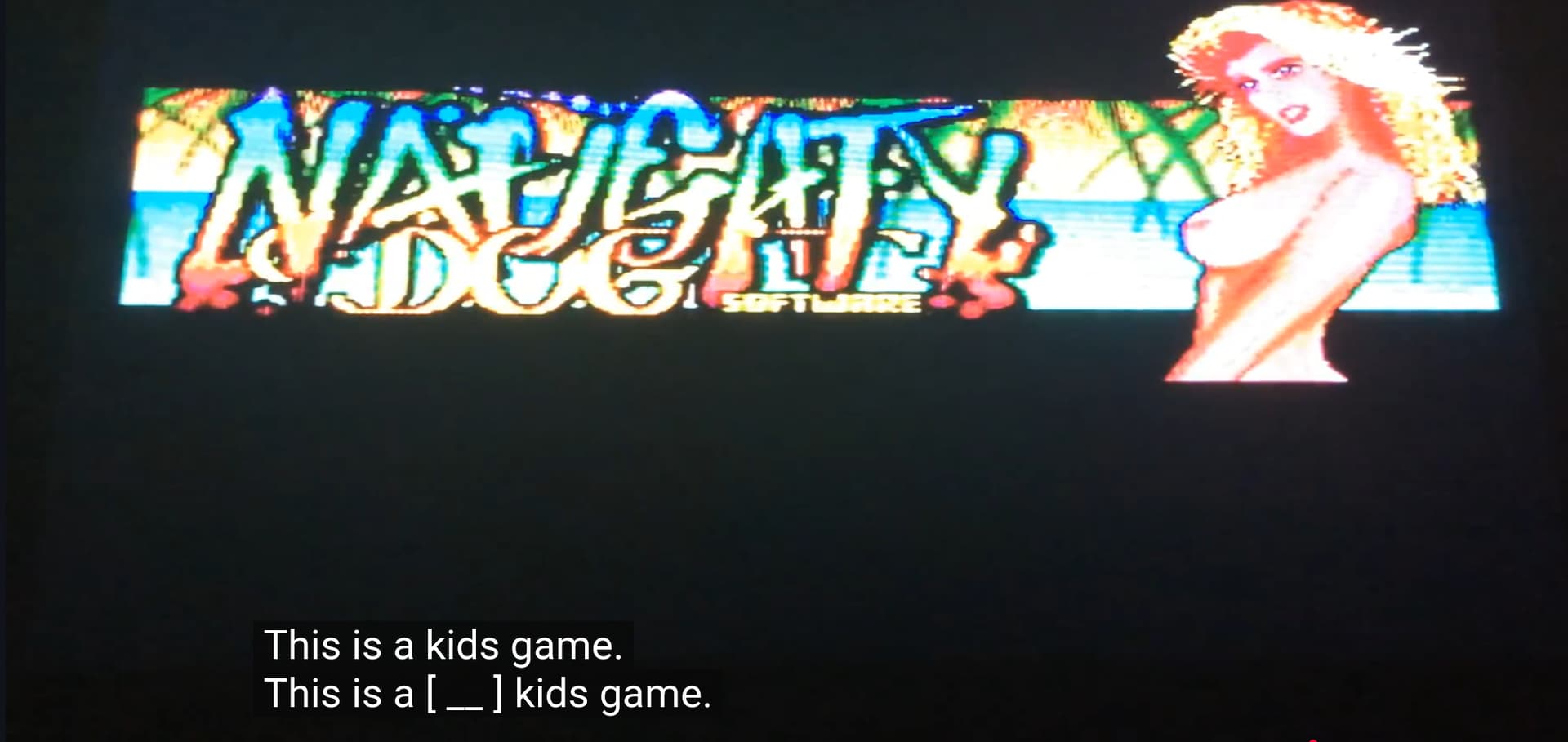
the final stage in the journey of the nude code was a migration into other games; a sense that other people wanted to get in on the fun, that every console or franchise could have its own nude code mythologies. sometimes brought up as a real possibility (dead or alive: beach volleyball), sometimes as a joke (nude duke nukem, nude graham from king’s quest).

the most interesting to me are mentions of a “goldeneye nude code” - which i think reflects some sense that the authors of nintendo-branded gaming magazines were being left out of the fun, but also that the myth of the nude code thrived best in the console space, the realm of things definitively cut off from the emerging realm of internet patches, and that this distinction perhaps seemed to be eroding in the turn to the cd format.
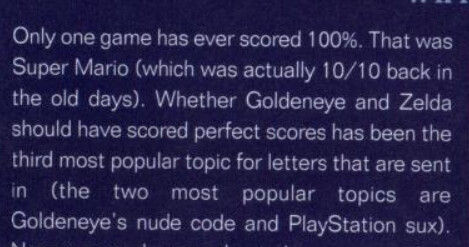
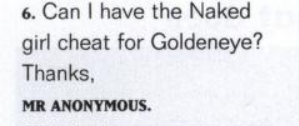
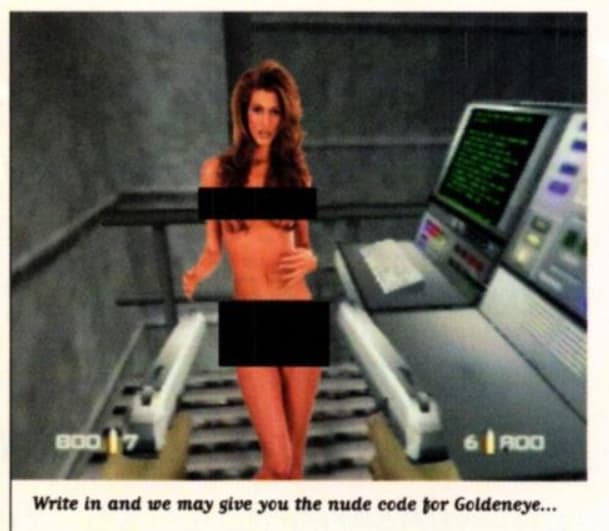
maybe for me this is why the nude code remains most charming when least likely, in the dubiously official space of magazines and console games. that being said, some of the fansites give a glimpse in terms more direct than magazines could of the specific fantasies being invoked:

last word on the topic goes to chun li…
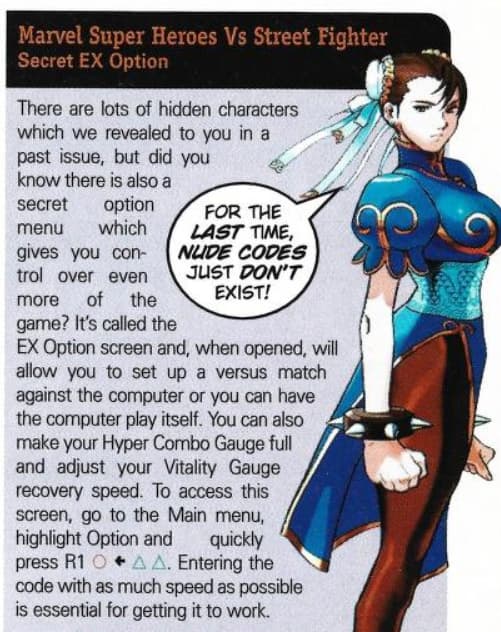
feel free to post here your favourite fragments and ephemera from the glory days of the nude code