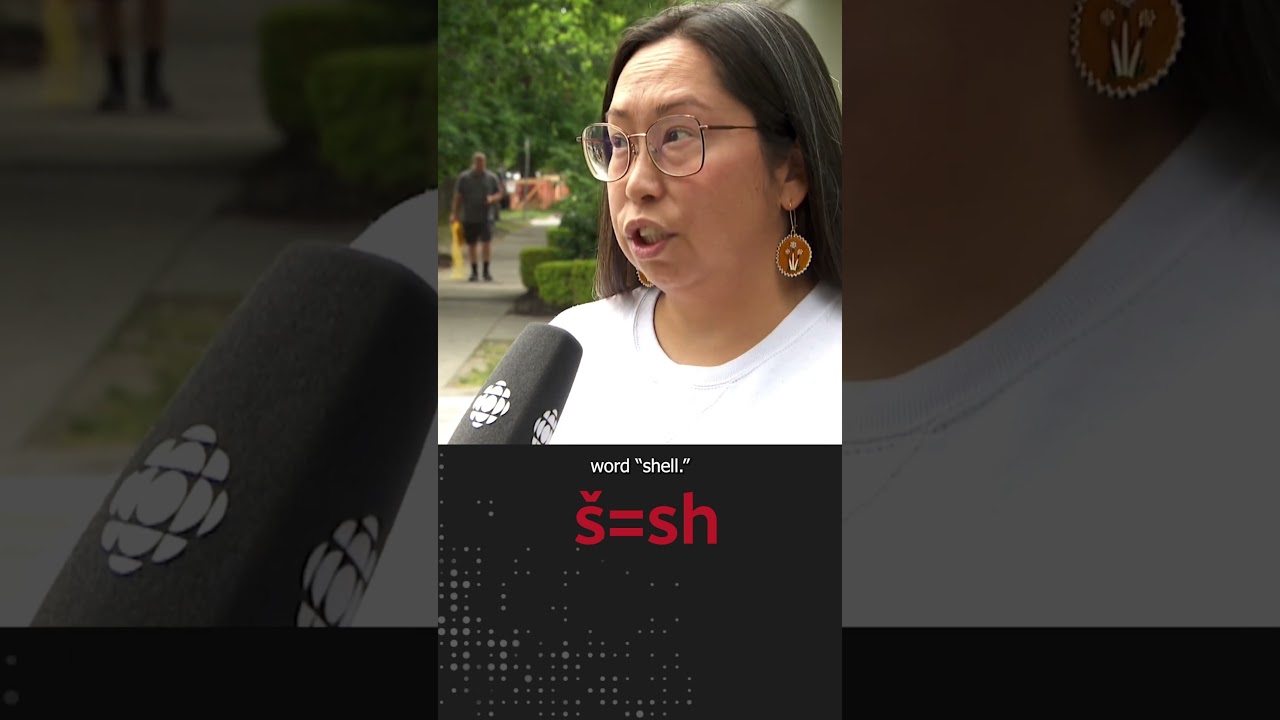
I love this, I would like to use xʷ for that sound on paper.
I love this, I would like to use xʷ for that sound on paper.
Since starting to learn Spanish, I’ve basically only drilled vocab. But now that I have, according to Forever Fluent, learned around 1,200 words and reached A2 status I have switched to using Kwiziq which gives me lessons on grammar. And shit now that I’m learning about grammar I feel like ten times more stupid and worse at this than I was when I only knew vocab lol. Learning is quite the experience.
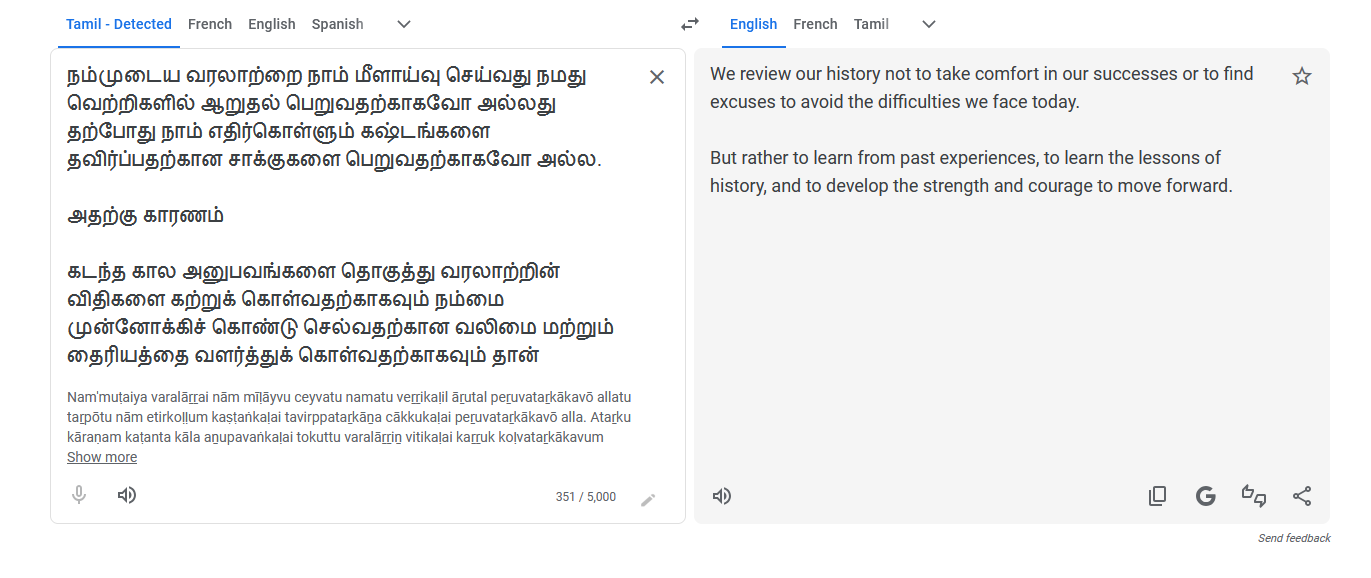
tamil is so hard for me to read. all the words are 8 syllables long and my vocabulary for formal tamil (extremely different to spoken tamil) is not great. so i’m constantly doing this hooked on phonics “sound it out” stuff
and then, the grammar of tamil means the actual thing that happens in the sentence, the verb or the point of it, usually is the very last word. so i’m on a cliffhanger for like a full minute trying to figure out what actually happens in the noises i’m making
word by word:
our historyacc we review-doing [is] our successes-in comfort find-in order to-either or[else]therefore us facing [the]difficultiesacc avoiding-instrumental for excusesacc gain-in order to-either not.
for-that [the] reason [is]
past time experiencesacc summarizehaving done history's lessonsacc learn-in order to-also usacc forward taking going-instrumental for strength and courageacc growing-in order to-also only
(all the accs etc are clitics denoting subject/object, time, relationship, etc)
yeah anyway it feels like reading the halo 3 terminals
I really dig this person’s reviews on backloggd:
I have been for a while now expecting I would soon need to change up how I am studying Spanish. Earlier in the year I started learning vocab and sounds with FluentForever, but maybe in July switched to using Kwiziq to help get a grasp for grammar. That was definitely a good move, and a pretty timely one. It just began to feel monotonous and not dimensional enough studying vocab and sounds like I was. My goal, ultimately, isn’t to have a large vocab but to develop enough familiarity with the language so that I can begin to learn without the assistance of educational tools, like the services I am using. I want to be able to read a sentence, sound things out, make guesses, interpret, and to confirm if I’m not certain. And I feel closer to that now than ever.
But I’ve been reflecting on the past year, and the quality of my attention and focus has been really strange compared to others. I think that studying Spanish has kind of introduced me to something personally harmful, or specifically my mental health. I think I was really really quick—quicker than most tbh—to see a lot of the dark patterns of thought that people are talking so much about in the design for different social media platforms and apps and games, and even in like 2015 I remember being very intense about staying away from that stuff as much as possible or monitoring my exposure to it. But this year with my desire to learn Spanish, the methods I’ve chosen to study the language have involved me in those patterns of thought and I think, for the first time really, my year has been full of a rare kind of anxiety because of this. I have felt so distracted in my day to day thinking I should study Spanish and knowing if I don’t do it now then later I will be thinking I should study Spanish.
The business model of these things obviously encourages people to use them constantly. But I think these things can really only be effective if you study a lot using them. And now reflecting on my own state of mind after a year of using them I think that they can be harmful (and probably not that useful) if you instead study just a little but every single day. It’s like, what if there was a language classroom which you were always just on a ten minute break from. And you were keeping yourself in a stressful position for basically your entire waking life. These are probably best used for a short but really intense period of time, simulating what it would be like to participate in a course in person I imagine.
Because the thing about taking a class in person is that at least at some point you get to go home.
I think one dimension of the issue is that we have valorized “teaching one’s self” when learning is necessarily social in nature. Learning with and from others, especially language, is far more rewarding than what these apps are selling.
yeah the most fun i have had learning have been moments piecing together understanding of something randomly encountered in our day.
I should probably enroll in a class next year!
to this point, I read something: “the person who works hard can never defeat the person who enjoys themselves”
any language will take 30+ years to “master” (insofar as this is a goal) and you will stay learning it if you are enjoying yourself. this has been hard for me to internalize because I am very single minded about my goals; but it’s just plain true
the only guy I knew in high school who became a professional saxophonist, was the guy who just loved playing the saxophone. so whatever you love about the language, I would say lean into that and see it as a treat you get to give yourself. it builds the excitement so each day you look forward to the learning
I’m a strong believer in the Language Simp model, which is essentially, just look up spanish YouTube content you are interested in, and look up words you don’t know, figure it out as you go. I’m not “actively” learning anything right now but still find myself looking at random French content, or reading Spanish ads on the bus, picking up random things as I go
realized a fun thing about french that has been tripping me up - the e (é) vs ɛ (è) phoneme has a length distinction exactly opposite that of Tamil
in Tamil, ɛ or ‘short e’ is always short in length, while e or ‘long e’ is always lengthened. e.g. here are two words for why:
எதற்க்கு = ɛd̪ərkkʉ
ஏன் = e: n
in metropolitan french, ɛ or the “è / ai” phoneme is often lengthened, while the “é” phoneme is often short. exactly the opposite!
secrétaire = səkɾetɛ: ɾ(ə)
so i’ve been having a strange amount of trouble sounding more natural with these vowels because of this vowel length thing which no one will notice or mention, except i noticed it because i come from a language where that distinction is meaningful
I’m having a blast listening to Jonathan Richman’s Spanish album.
started learning Russian and I’m in love with the pronunciation if it. retroflex sh, palatalization, the spelling, all cool new challenges
Chinese language vlogs are fun.
oh I love maxxie
I finally had another virtual tutoring session in Spanish. It was great to immerse myself in the language for an hour. There is a lot of problem solving involved that you don’t do when you’re teaching yourself. What do you do when you don’t understand? What do you do when the word is on the tip of your tongue? Do you say fuck it to conjugating or do you take the hit on fluency to get it right?
It was fun and now I’m thinking and dreaming in Spanish more.
I’m feeling pulled towards different languages right now. When I learned I was going to China a month and a half ago, I dropped Spanish and returned to Mandarin. Now that I’m back from that trip, I feel like dropping Mandarin and going to something else. I could go back to Spanish, but I also want to study French (for film) and Portuguese (it sounds so good to my ears).
finally found my motivation for spanish upon finding the dominican accent, that’s just the rhythm and sound that hits right for me, i did a few hours of content tonight
(somewhat embarrassing to say i found it bc of this meme)
using the easy spanish channel for basic vocab but also trying to find the more interesting native youtubers, i always enjoy the ones where they actually go to the country in question, or explore some topic relevant to the native speakers or culture. it helps get out of the mindset that a language is just ‘a thing’ and establishes it more as this social relation between people, embedded in a context etc. like just watching these guys walk around the DR eating mangú and visiting the dude’s family etc, talking about culture etc, makes the language and culture feel very real
i saw this method where you take a small (a6-ish) notebook page and split it up into 4 sections:
| . | . |
|---|---|
| content source (e.g. name of yt video) | vocabulary |
| phrases | free write in target language |
i think it’s a useful way to split up a page and just start mining whatever input you’re using for words and phrases.
coming back to this and it’s definitely a problem i’m having with learning music/piano. gonna have to ponder on this.
related to what resources work best, i’m workshopping a take: i think i only like ‘content aimed at language learners’ when that’s actually paired with a teacher who’s choosing what content you need to focus on based on personal needs, like in a typical school/college language class. otherwise, it just feels like… you can get lost in the sea of slop made for babies, without ever actually interacting with the native speaker content that gets you motivated about the language in the first place. i decided to try out lingopie today, and bounced off it super hard with how sort of basic and boring all the example content was. that’s not where the ‘sauce’ of the language is! I had this same problem when i was subscribed to matt warnock’s jazz guitar stuff which was focused on getting people who could play 0 jazz to play 1% jazz, and the problem is 1% jazz just doesn’t sound very good.
with jazz as with spanish, there’s probably a happy medium between “just play the chord tones / just use simplified language learner content” and the full firehose of charlie parker / dominican street slang
see the thoughts here about tolerance for simplicity vs. tolerance for ambiguity. i definitely id as a ‘low tolerance for simplicity / med-high tolerance for ambiguity’ person, that’s what gets my brain working and motivated. I remember my first Arabic class, the professor came in and did not say a single English word for the whole semester – it made us work like a mf, but it was very exciting also.
… then again, maybe i’m lying to myself – my content method is to use a Dual Subtitles extension, follow along with the English while listening to and casually observing the Spanish, then pausing to explore or re-listen to certain phrases, look them up, look up words I dont recognize, conjugate verbs introduced in the the thing I just heard, etc. So maybe that indicates a low tolerance for ambiguity. Who’s to say, I guess you have to experiment with it? Or it differs at different times.