Grandia has no higher aim than being a day at the beach every day. It’s absurdly long like a Dragon Quest but it’s not really going anywhere, just luxuriating in itself
5 Likes
I managed to complete all sixteen missions in Super Runabout: San Francisco Edition. A lot of the difficulty is mostly just in the janky physics and bad frame rate, really. I also unlocked the VMU games, which are mentioned offhand in the manual and you need to read two ancient French guides in order to work out what to do. And then it’s a tate mode VMU maze game?
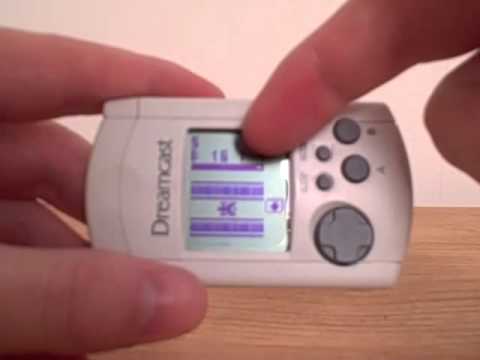
Wild.
It also has the “Climax Editors” VMU application, which is split into two parts, one of which is just… a weird paint application for the VMU, which I guess you could make a little flip book through, but my favourite part is that it has a 1 bit per pixel illustration of somebody’s cat from 1999 in there. The other one lets you edit the names of characters in the game? But as far as I can tell the characters’ names appear only in the two intro cutscenes and nowhere else? Who is this for?
Finally the guides all note the existence of, but do not explain, the final unlock, the “Superview.” As best I can decode from the French and Japanese fansites it requires you to drive 500km in-game, and having completed the game the hard way I’m just over half way there. I’m struggling to think I will have the motivation to do it, as the main things remaining are mopping up the other vehicle unlocks and doing the “free run” mode, which is actually just a circuit time trial mode. But it’s so tantalisingly vague…
Anyway it’s a very silly game with weird bad physics, a lovably dorky soundtrack I will never listen to, and a strange turn of the century Japanese sensibility about what ‘80s America was. You interact a surprising amount with “the president,” (a bit crushed image of I’m pretty sure Bill Clinton, which in combination with the Dreamcasts appearing in both campaigns’ menus makes for a very weird ‘80s) delivering him hot dogs and condiments, and ultimately rescuing him from an aircraft carrier hijacked by terrorists.
13 Likes
Oh! And I also went and installed the original Yakuza on my PlayStation®2, because having finished Kiwami and started on the sequel I wanted to see how different it felt. It’s wild to me how the first hour or so of the game is a perfect shot for shot remake. Feels okay, but the combat has been done better in the remakes and Zero.
So far the voice acting isn’t completely awful but it’s made some baffling decisions; I guess they thought people wouldn’t be able to differentiate Kiryu Kazuma and Kazama Shintaro, because they renamed Kazama to Fuma? Also the localisation team were SO excited to be allowed to say fuck, shit, asshole and motherfucker, and I kind of wish they’d just toned it down a touch.
2 Likes
That’s how I’m gonna play DQ7, one day
4 Likes
4 Likes
oh yeah I meant to ask for a link for this
here’s an already patched version, I have the patch linked from my website
4 Likes
Ya it is, that’s how I played RPGs in the 90s. It worked with SNES stuff. It made them seem bigger, and deeper, and I don’t recall ever coming back to a game after a break and feeling lost. When I’ve tried revisiting these games as an adult I’ve found them unsatisfying unless I take the same approach. Earthbound or Chrono Trigger have a rhythm that is vastly more enjoyable without fast forwarding and consulting a walkthrough and trying to binge it in in a weekend, y’know?
But PlayStation era stuff is the pits. The pacing is so much worse. Battles are slower, unskippable animations and text more prevalent, there are all those fucking load times, and despite what some recent viral twitter threads may claim certain people have always felt this way about these games and came to these conclusions without ever being exposed to 4chan.
For a few months in 1999 I’d steal the small TV from my family’s kitchen, perch it on a stool in my bedroom, and play Xenogears on it. I also had my own TV in my room, and I’d tune that to WWOR’s 11PM block of dating shows and Newsradio reruns. And once that ended I’d turn off the PSX and go to bed, because playing that game without something to distract me during the constant lulls was absolutely miserable. You couldn’t manually advance the text! That is most player-hostile bullshit and PS1/PS2 era games are loaded with it*. I think once the fall TV schedule arrived they stopped showing Newsradio and that’s when I abandoned the game. I wish I’d done that earlier. I played that shit for like 60 hours and never got to see Chuchu’s crucifixion. What a total waste of time that added nothing to my life. Those Newsradio reruns did though, that show was really funny, awhile back I tried to find a clip from the episode where they go nuts editing the baseball ad and I couldn’t find it so the internet sucks. I wish I hadn’t sold all my DVDs.
Like, I think the fact that save times on PlayStation were artificially inflated cuz Sony was worried players wouldn’t like…recognize that their games were being saved unless they saw a bar fill up real slowly? really says a lot about something or other.
Anyway I have a lot of thoughts about that era and they are very scattered and I should probably be replying in the other thread where folks were discussing PS2 games but holy shit I am never going to replay a PS2 game that’s over 3 hours long unless it’s Dragon Quarter or GOD HAND, they are all too fuckin’ long for no good reason.
If I ruled the world anyone who’s ever said a PS2 RPG is good yet slagged Sierra adventure games for solely being vehicles for selling hint books would be banned…for life.
*Fuck killer7
16 Likes
tbh one of my hopes for the future is that the idea of a “console generation” being a defining trait about a game when looked at from many years into the future starts to die out. i mean of course different tropes and styles and changes in technology are attached to different eras. but i have no real desire to denounce and/or endorse the idea that there’s something ineffable about the PS2 as defining and special and/or overrated. feels like a bunch magical thinking. and i really don’t care!
besides, i’d rather not buy into the game industry marketed framing of this stuff whenever i have the option not to. instead wouldn’t it be nicer to try and focus more on the kinds of artistry/craft in those games that escape the confines of its context as a cultural and commercial artifact? not calling out specific people on here for that per se. i’m just really tired of that framing being given so much justification for it to keep going. the reasons for it having so much purchase in discussion/criticism/etc even today are all bullshit in my mind.
15 Likes
i really appreciate how modern DQ games stick to this “series of 2-3 hr vignettes, usually centered around a single town” structure that makes them so easy to dip in and out of. they’re like the only narrative-driven games of that length i can stick with anymore because the pacing makes them feel like way less of a commitment
6 Likes
moving forward, as a way of trying to push back on marketing cycles, especially at their most egregiously hollow and self-justifying, sure, I can see why you wouldn’t want to talk about console generations. as a historical frame though I have equally no idea why you’d want to take it away? just the other day we were talking about those PC98-looking win32 strategy games, which were obviously informed by two very specific and narrow platform paradigms without which they’d seem totally inexplicable.
I’m making a pico8 game this week and judging from what the pico8 does and doesn’t make easy – and it’s deliberately opinionated in that regard the way that most good software is – it seems equally improbable to talk about it without having a clear retrospective view of console generations.
just because the present discourse has devolved into self-perpetuating pantomime doesn’t mean you throw the historians under the bus
8 Likes
oh also i posted this in the wrong thread because i get this one and “videogame things you think about” confused. oh well. too lazy to delete and repost.
1 Like
man, i just don’t care. sorry. i think that’s some pretty lousy framing of a problem that’s not even really about that anyway. the whole console generation as historical framework thing is a smaller symptom of this larger problem of mediocrity in parroting of a sort of generational conventional wisdom like it’s some kind of insightful or valuable history. take off the mask and it’s all “child of the 80’s” or “child of the 90’s” crap just beneath the surface. it’s a mask.
3 Likes
ok well while I can appreciate from this horrible comparison that you’re really, really uninterested in a technological framing here, and I think that mode of analysis can probably take you as far as you want so I don’t think it’s, like, an inevitable problem with your scholarship (except insofar as humanists sometimes find themselves inventing new mysticisms because they refuse to learn about actual technical decision-making, but I don’t think you’d be guilty of that), I do think it’s a fairly radical and intentionally narrow historiography?
eras aren’t mutually exclusive, they can and do overlap, but for such an obviously technologically limited medium… idk…
4 Likes
I feel comfortable saying, there are significant trends, shaped by hardware limitations and perceived market desires; when looking back and trying to apply categories, we attach a model, and we have to be careful and specific with our usage, because it’s an abstraction that lets us do larger comparisons, but it’s necessarily crushing detail.
I always associate a PS2 feel with linear single-player games, polished smooth. That was both the stock basis for generic and licensed product and the base mold for experimental works; and it’s a clear limitation when we ask, what have Ico and Silent Hill bequeathed? And when Cuba notes certain devs seem stuck in a PS2-mode, like Platinum, it’s because they’re tethered to those structures; resolutely level-based, very reluctant to give up player pacing agency.
When we define trends like shooters, online multiplayer, and open worlds, these exist on the PS2, and the PS2 gave them their first mass-market exposure. They weren’t dominant like they would be in the 360 era so it’s hard to categorize the system that way, but tracing those movements on their own has to go through the PS2.
7 Likes
i mostly remember ps1/2 and onwards as the point where the concept of a “save file” seemed to expand into and cannibalize everything around it, like it somehow morphed from an incidental timesaving device in a proportion of titles to the thing these games were ultimately about: the save file as a kind of horrible virtual pet which your job was to dutifully hatch, nurture and maintain. you couldn’t jump into most of these games outside the confines a save file anymore and so no matter what they were about, or how they played, the process of experiencing them always blurred into that of acquiring yet another save-egg to care for and protect. go into the memory card and look at the little logo-creatures jiggle around cutely, waiting for you to look after them.
i know this is a backwards read and an increased emphasis on saving was really just a byproduct of a lot of other things. but it’s interesting to me, trying to go back and play some of these now, the point where i give up in disgust is almost always when i feel the “buy in” of the save approaching: the point where they offer you some limited stakehood in what the game is doing, with the prospect of profit to come.
22 Likes
actually, I remember that being the defining argument of aderack’s critique of the SNES way back in like 2004, and I remember it so clearly because it was one of the most salient critical thrusts from insert credit – it didn’t even occur to me that it’s also what this discussion is about
the memory card interface adding a weird accumulative meta-view seems like a substantial further colonization of the space though
6 Likes
in my mind it’s also linked to a question of ownership of these things - i could play weird old floppy disk games or NES games at a friend’s house with no worries. they were a kind of common area. if you rented a SNES game and it had a save file on it you could delete with impunity at just the cost of the doomed knowledge the same thing would inevitably happen to you.
but at the time memory card seemed like very much personal, proprietary technology, which i was deeply fearful of trespassing on whenever i played ps1 games at a cousin’s house or something. and after that it seemed like save files became ever more deliberately locked in to private and personalised networks of account ownership - if i wanted to try something on my brother’s ps3 i could set up a new account, a further layer of buy-in, or i could impersonate him and awkwardly see all kinds of pop-ups and friend messages hovering at the edge of the UI.
not to go full foucault or whatever but there was something increasingly creepy to me about the way save files in these things were not just indications about how to play them, but were also markers of what kind of person would be allowed to play them: people who individually owned not just the game, the console, the online account, but were also committed to these things and maintaining them. no tourists or rubberneckers allowed.
16 Likes
things i wrote and thought i deleted but apparently didn’t:
dovetails with a video i watched by electric underground lately about why arcade shooters “died”
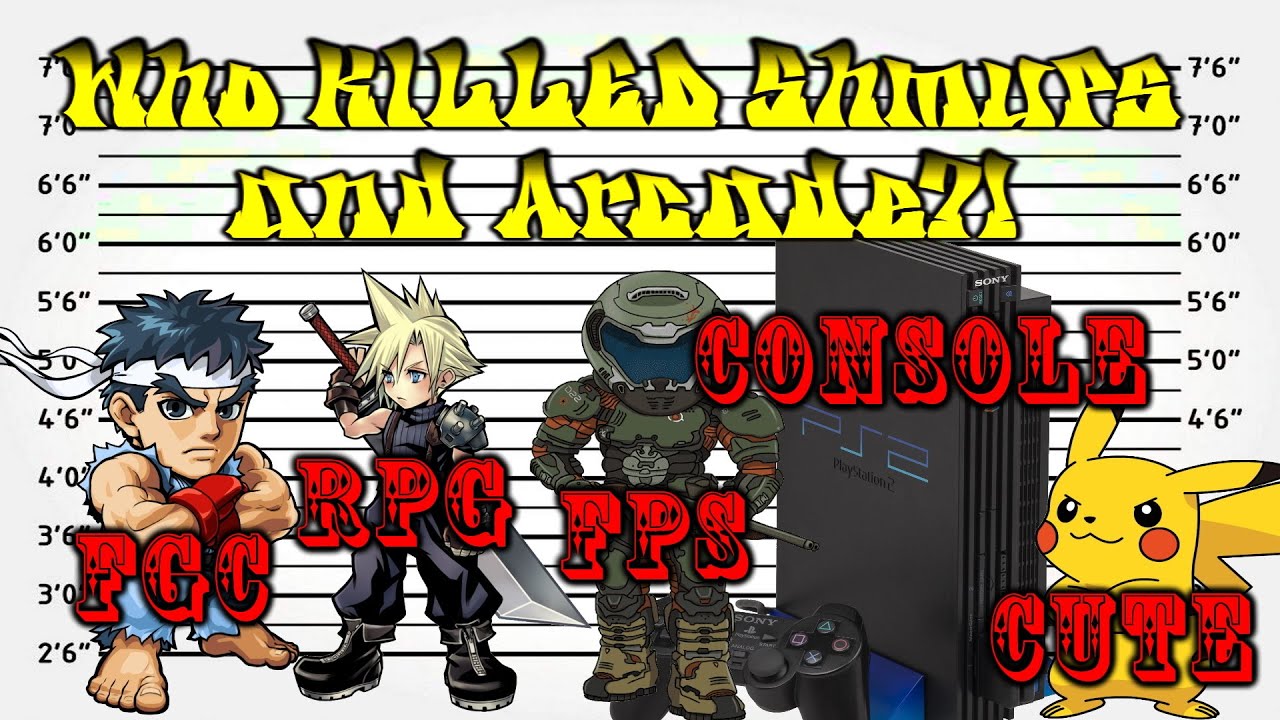
some interesting points in there. i really do think just from my personal tastes that i am very interested in “mastery” versus “progression”. it’s just such a salient distinction.
from a larger perspective of creators working within their means, you can’t start in media res without a savefile, so it’s not surprising if games in that paradigm tend to tune toward mastery, either via mechanical skill or systemic knowledge. passwords represent a sort of innocent liminal state, since you can only be so precious about them - no one can really “possess” a password, though one can certainly lack one.
i’m always moving between these surfaces, mothlike curious
5 Likes