yeah I was using lune early game but it’s all sciel once you grok the foretell mechanic. altho with lune you can do earth stains > burn > the one move that gives you 4 ap for burn and another turn for your earth stains. and yeah I have been using the mayhem build as well.
I’m still lvl 20 ish but the damage is starting to snowball in a very fun way, just getting into mid game I guess.
we all agree that Gustave sucks right
I forgot I could just enjoy game mechanics like this, there’s a breeziness to it in this game
I realized the other day that I hadn’t touched Clair Obscur in weeks and I was starting to see finishing up the optional cleanup phase as something of a chore, so I went ahead and proceeded to the final area last night.
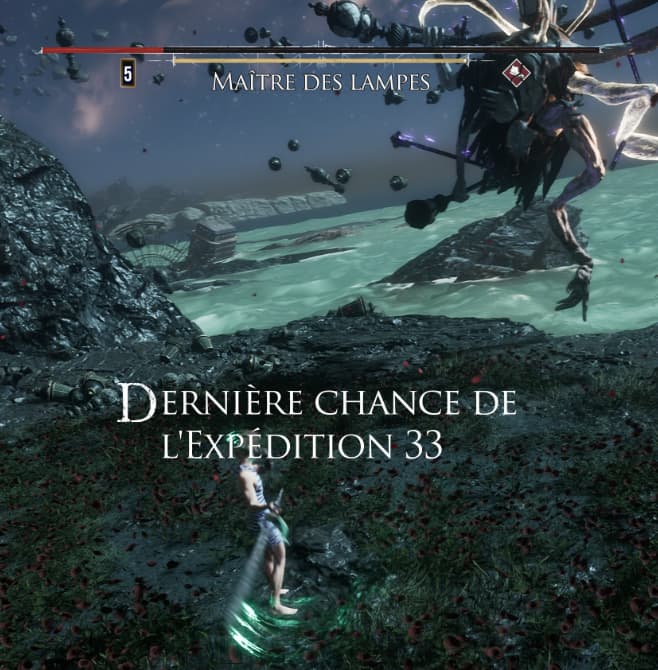
At level seventy-something it was very easy. None of the enemies there even got a turn and the final boss fight’s dramatic presentation didn’t exactly match up with how easy it was. Seems I could have done that right when it became available and still kept exploring, but I’m not sure I would have at that point so this was the right approach for me.
I had already explored every area I’m aware of and done most of the other optional content (such as the fun Sprong fight) before setting the game aside, so I think all I’ve really missed out on are the hardest of the optional battles. I may still go back and try a few of those, such as that flying dragon that I never even attempted.
In short, I’ve been thoroughly impressed with this game.
I am playing on hard difficulty and in act 1 the success ratio it demanded of me has been around 80%. Note that I am investing every single stat point in VIT, otherwise that would be higher.
I wasn’t sure whether I would enjoy that difficulty, but so far it’s felt fine, primarily because almost every boss has been single-phase. Then the Act 1 final boss did have a second phase, but at least its new attacks had straightforward cues (which reminds me of Genichiro’s scary-looking but actually easier final phase – a lesson from Sekiro that most parryslop games failed to learn).
Does that mostly continue in the rest of the game? If it starts to have lots of 3-phase bosses, I’d rather drop the difficulty down and just be underleveled instead
my memory is the default (expeditioner vs expert) difficulty was actually quite good (I think my heuristic for “play one notch up from the default difficulty on most AAA games” didn’t kick in because it was a 3-point scale rather than a 4- or 5- point and because it was called “expert”). what I can tell you is that in the second act, pictos that ~double your base VIT become pretty common and make putting stat points in VIT considerably less useful so you’ll probably wind up respeccing that anyhow to get your crits up to the soft breakpoint and keep up in terms of AGI.
took me a while to feel ready to tackle this, and rightfully so — the prologue alone made me tear up already, and i am def not ready to expose myself too much to this game.
Definitive ‘my GotY 2025’ vibes right from the start!
(and of course playing it with the french dub, why wouldn’t you?)
I like that any time we meet the Gestrals or other races, they have kinda figured stuff out and have a pretty stable society. Humans are just an annual caravan that comes through to fail.
Finding the synergy is very fun but I feel like my damage output varies very wildly in the mid-going-into-late game. Sciel just accidentally does like 50,000 damage while I can’t get Verso or Monoco anywhere without puzzling around. When things come together it feels great that even when they don’t you still get a sense that the puzzle can be solved with some tweaking. Even if things don’t go well the risk of parrying and dodging means that you can still just endure an encounter if you’re a bad enough dude. I beat dualiste first time I think around the time that I realised parries should be integrated into the game plan if you want to progress smoothly. This got hammered home even more in the Renoir fight where I got unbelievably destroyed the first attempt and melted him on the second. A battle is really just a puzzle that you pay with dodges to continue.
It’s hard for me not to see Lune-Maelle-Sciel as the party. They are the most interesting to set up and payoff and Verso and Monoco’s stuff is comparatively very hard to get going, Monoco in particular feels very hard to control with the wheel and ability bonuses and how many turns of the wheel the ability moves. I like Verso’s perfection/sacrificial theming but the benefits he gets from playing well are very marginal compared to the femmes. Some characters just play more powerful as well. Maelle stance changes just feels so significant.
Gustave getting killed off feels like one of many JRPG nods. I think ultimately Verso is more interesting, especially given that he’s framed as the leader of party despite not sharing the details. I got him and Sciel to bang in probably the most low-key sex ever put to game. Verso’s freaky life is a very interesting dimension since he’s clearly helped many people but also failed at protecting any of them. Monoco and Esquie are characterised very quickly and I’m glad that the game kind of avoids the trope of:
new party member introduced
new party member gets a B plot
new party member resolves B plot
we never hear from party member ever again except to have a token line in scenes in which all other party members queue up to say their token line in a group conversation.
Mask keepers’ invitation cutscene was kinda cool. Think I like how much more casual everything sounds in the French dub. Esquie is too good especially in the French dub. Genius move to make one of the characters the airship. The scene where he vomits wine got my sicko flowing. Same with the eye effect that happens when the party hears Sirene’s song.
I like that they keep subtly reinforcing the importance of the mansion, not through character discussion but just the fact that you keep unlocking rooms randomly in the overworld. It also helps with the constant foreshadowing that we are the problem, or some version of someone is the problem, or the people who came before us were the problem. The plot keeps things moving enough that you don’t really dwell on it too much but a lesser RPG would make it a constant tease but also the sole thing going on. Like a random example but just the existence of axons raises lots of interesting questions that it doesn’t even necessarily have to answer.
The rare party where every character has interesting things going on both mechanically and character wise. I like Lune’s writing in particular since she is often asking a lot of good questions despite also kind of freaking out when weird shit (relative to the character’s experience) happens. It’s what is sorely lacking from things like Death Stranding 2 or FF16. DS2/FF16 has a codex and little meaningful character dialogue/reactions whereas Clair Obscur has meaningful character dialogue/reactions and no codex. The latter is more mysterious and more interesting imo.
All those HD-2D games really need to pay attention to what an RPG can be here. It just pays off so much letting the player break the game and giving them so many ways to completely change the rules of the combat system rather than relying on the same gameplan all day. Also just be weird. Like get insanely weird with your weird fantasy worlds, please.
I like also that throwaway lines from various characters have massive indications for how many generations of nevrons, axons, gestrals etc. have existed since before the fracture. I think you come in with the general assumption that the world is Earth but I like that it throws doubt on things or that the current date is so far in the future that it’s a Nier situation. I wouldn’t be surprised if the number has nothing to do with anyone’s age or that it is horribly cyclical.
It’s a shame they couldn’t figure out how to avoid doubts that the Paintress (after the barrier breaks) is not the final confrontation. The games upgrade system clearly states that it’s not the end of the game and I think they could have done something like a fake ‘last chance to do all side quests’ notice or something similar. Gustave has a sort of fake skill tree that serves a similar purpose to make it ambiguous about whether he’s going to have a mid-game power that unlocks new plot specific skills or just dies as a party member.
Unsurprisingly, I’m liking this game a lot. The fact that the jump button and progress through dialog is the same while the interact is in the X position boggles my mind. Why can’t games realize that the proper button for jumping in RPGs is the Y position. I actually switched it in Elden Ring and it was the ultimate correct way. It’ can’t be changed here. C’est la vie…
But something happened that made me so happy… Edit: spoilering isn’t working or I’m doing it wrong so SPOILER WARNING
I was just introduced to the Grandis race and I love them all so far. I could write about all of them but I just want to talk about the fashionista a bit. I just got a couple of Mary Oliver books this morning and read one poem.
Then I find myself in a poetry battle contest with the Fashionista for a new wardrobe item, the coolest items in the game undeniably. So I’m already excited. The verses end up being quite decent and relate theme as well as rhyme. I yell to my roommate “I’m having a poetry fight in the French game.” So he comes over and we get the last one right and I’m singing “We’re so good at poetry, we’re so good at poetry.” Then the guy just up and gives me my favorite outfit so far for my favorite character.
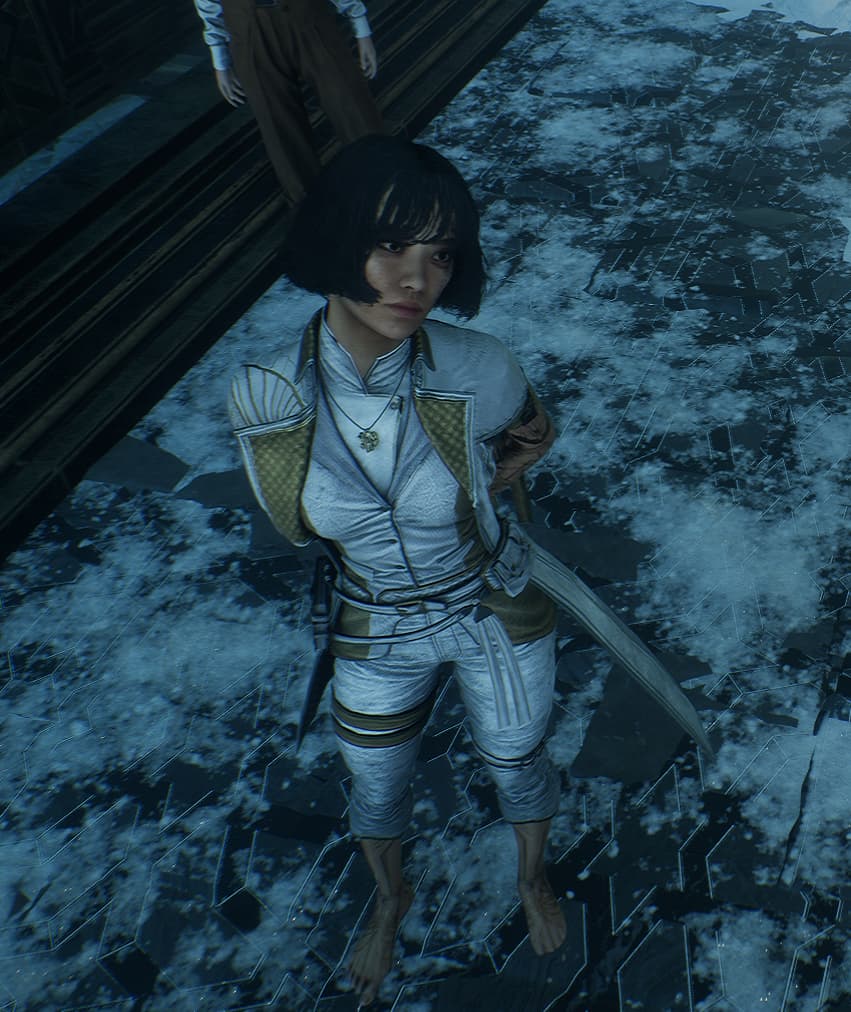
and of course here feet are clipping here but I’m not taking another screenshot.
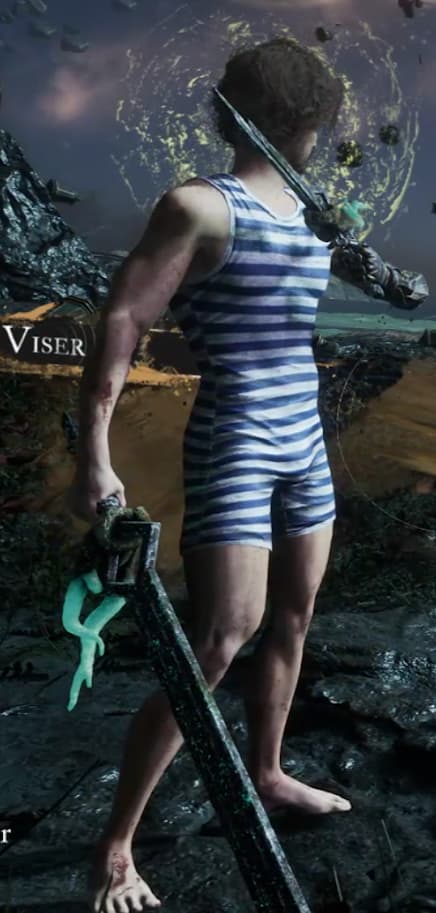
So I don’t have a specific thing for feet but Lune’s original outfit had bare feet and up until this point I had her in a cute skirt and shoes but I couldn’t shake the feeling that SHE wanted those feet to be free, like for comfort, and the only other barefoot outfits I have are bathing suits, which look good but that’s not why I’m playing the game. I do have a weird sapio-sexual(?) thing for really being into when people are comfortable and I also have a fun little crush on Lune as a character.
She is also my navigating character because her fly-running eliminates the not-so-good footstep and panting sounds the other characters make.
Finished it and enjoyed it a lot. The prospect of a lot of the postgame content is a bit daunting but I like that it’s there for the sickos. Feels like a game I wanna revisit after some years.
Endgame thoughts
The reveal of the world being a magical painting and there only being like 5 human characters I kinda like. Felt quite Myst/Rivenesque given there’s a dysfunctional family struggle relating to a technique that creates/accesses fictional worlds full of sentient people they impact with their actions. Ain’t nothing worse for families than artomancy.
Unlocking the 9999 damage limiter = getting the powerful magic and wielding it back. The feeling of the pictos breaking the game eventually pays off toward the theming alongside the big reveal. We are just reality magicians inside the painting.
The ‘endgame’ feels very odd. There’s not really much of an indication of what is beyond your current level other than the generic DANGER message. As a result, it feels like you’re exploring through an endless series of possible things to do before the final encounter. Some of them felt basically impossible (flying manor, abyss, the dragon, super mime) others feel like they should be mainline content (all the character sidequests). It feels a little bit directionless and it’s not always clear what is late game and what is advanced late game, but I think it’s also one of the best strengths of the game. The world map feels large and unmanageable in the same way older FF does even though it probably isn’t if you gave it a quest tracker and a clearer list of everything in relation to your current level. You essentially trade a sense of direction for a sense of limitlessness.
Sprong is the closest I came to feeling like the balance was just right between something I was not quite ready for but that couldn’t just destroy me in one hit. The cheater picto unlock helped trivialise a lot of what I did later.
Was revelling in the fantasy-ness of the world, and combat almost feels trivial after the reveal as the narrative becomes less about threat and the existentialism of fiction. We’re essentially helping Maelle roleplay the young adult novel Alicia Dessendre and the Canvas Chronicles.
Not a huge fan of the challenges that are basically pure parry tests or platforming. Mainly because this so much of the game that relates to setting up a party with the right equipment, pictos, and stat allocations that parrying and other action-based tasks become so important by the very endgame that the RPG aspect of it doesn’t really matter any more. I suppose there are insane sicko builds online that help with this but I think I’m done with endgame stuff for now. Maybe I will revisit it later. My one suggestion that might be anathema is to provide a highly expensive autoparry picto or have it as an extreme accessibility feature. I really don’t care to practice some of these endgame bosses but wouldn’t mind seeing the rest of the expedition logs as I really like revisiting the concept of the expeditions even though you kind of get past this in act three.
I got bored getting rocked everywhere so went off to melt the final dungeon. Quite satisfying to just blast through it after old the difficulty I encountered exploring the world.
Enjoyed the ending all the way through but have heard people have trouble with the premise of the party not being ‘real people’. As for the ‘these people aren’t real’, fictional friends are kinda like real people, within an appropriate degree of investment. They are models, playthings, simulacra that are genuinely meaningful but not the same. People who have died and for who we mourn aren’t really real either in a directly experiential sense, we keep them alive through memory and imagination. I think part of the difficulty of navigating this aspect of the game is how fuzzy they are with the rules regarding painted people. They’re not treated like real people by Renoir or Aline so Maelle simply needs to learn this through also coming to terms with grief. I chose the Verso ending and it feels the most appropriate way to end, by leaving our fiction behind once we’re done and not clinging to grief. Verso grouphugging Esquie and Monoco as they face the oblivion is what I hope happens to my childhood memories and creations when I die.
Maelle being horribly disabled feels understated. I liked it but I think it could have been threaded through act 3 a bit more, mainly because you don’t really get a lot of this kind of character as the lead very often. It helps a lot with motivation since she is not just staying there purely for Verso’s sake, post-grief her life is likely going to be quite miserable that this too is a loss worth dealing with. Could’ve been highlighted more in the confrontation with painted Alicia. People arguing about whether it’s ethical to erase painted people would also do well to consider this dimension of the ending. Escapism is one of the few remaining refuges for the severely disabled and the situation never feels comfortably resolved which feels right.
Maelle is 16 and lives another 16 years and so is experientially 32. Verso died on the 33rd of December.
Nier spoiler:Nier has a recurring motif of black and white to highlight the same ethical stance taken by the protagonist against the shades. Clair Obscur as a title and theme feels like a nod to that as well as the erasure, grief, and copies of family members present in both game’s various endings.
This game is mostly a loveletter to From Software bosses though.