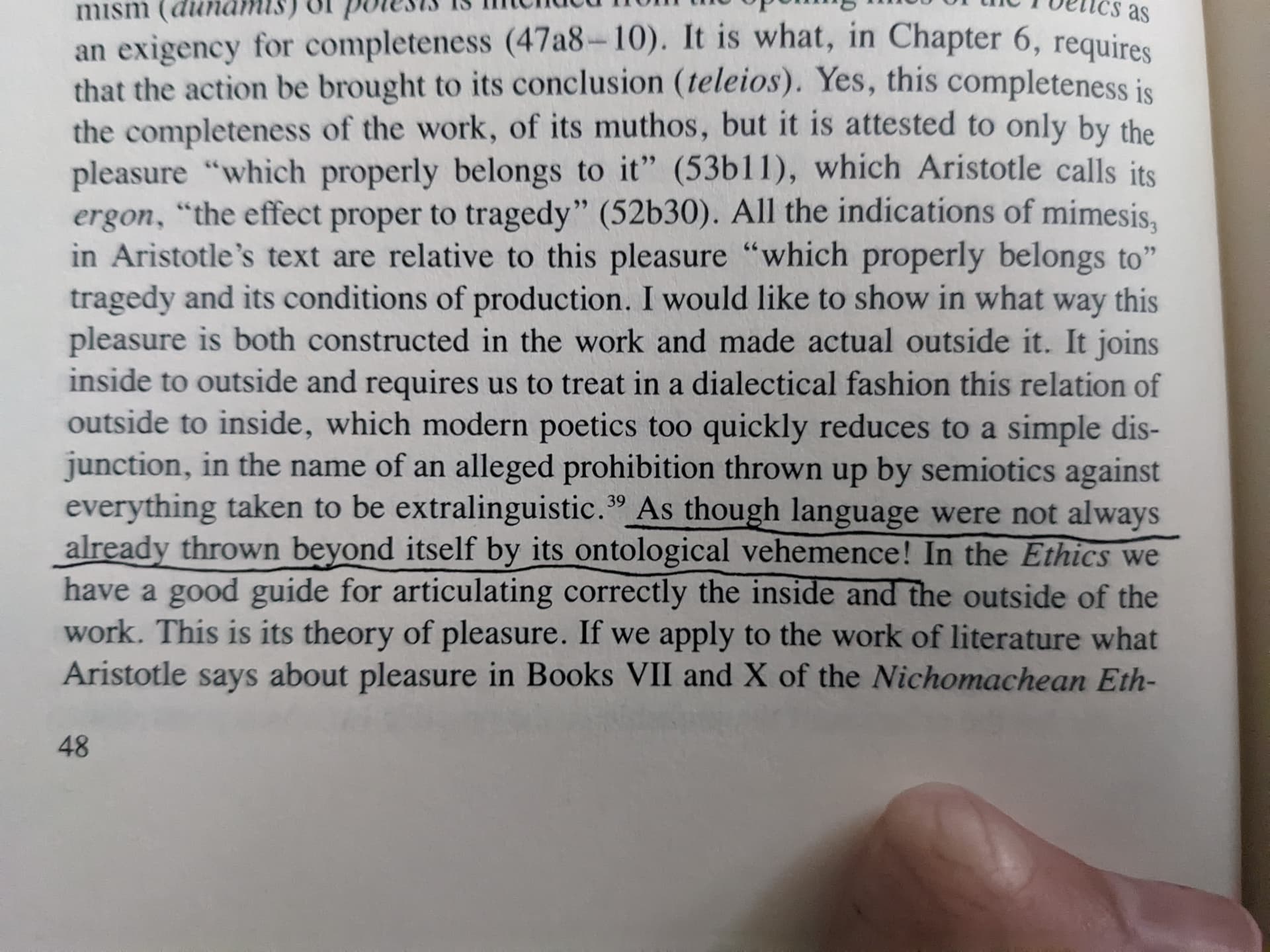
Conversation has moved on, but I wanted to make another comparison this morning and took the screenshots and, well, I’m doing another one of these.
重巖我卜居,
鳥道絕人迹。
庭際何所有,
白雲抱幽石。
住茲凡幾年,
屢見春冬易。
寄語鐘鼎家,
虛名定無益。
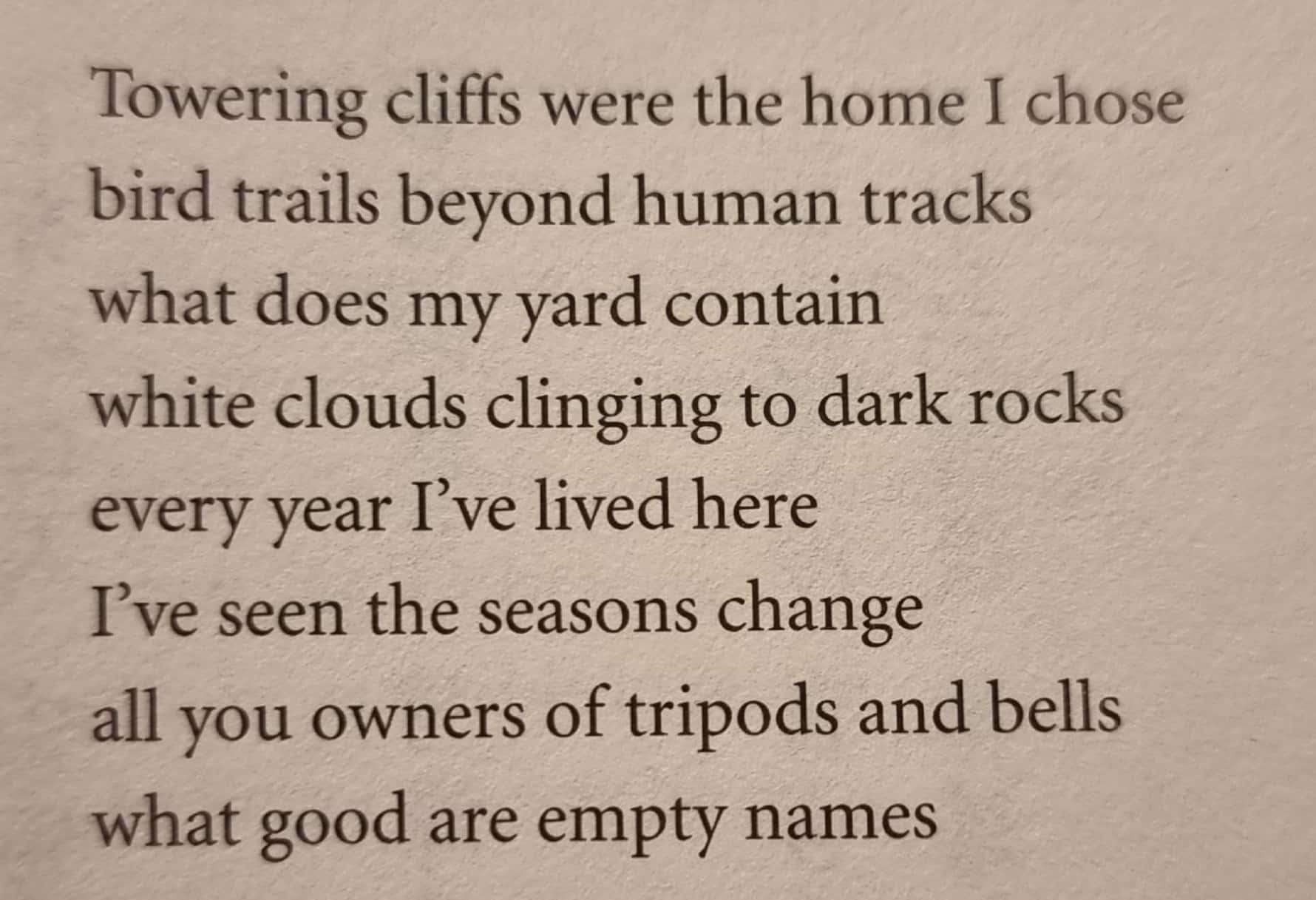
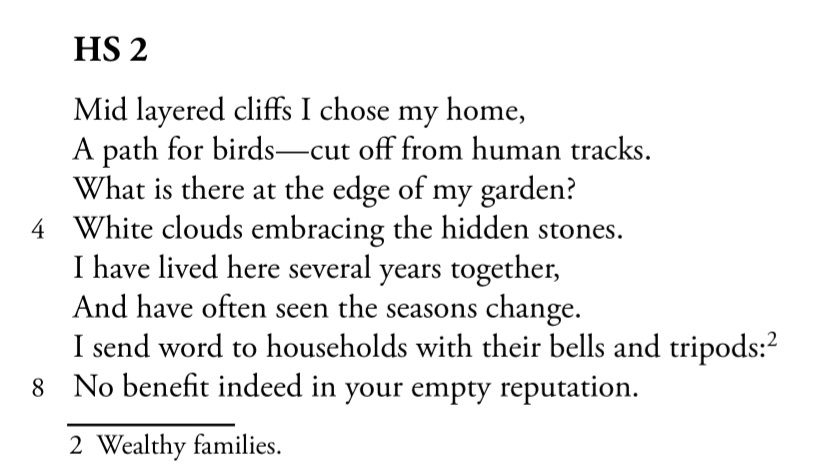
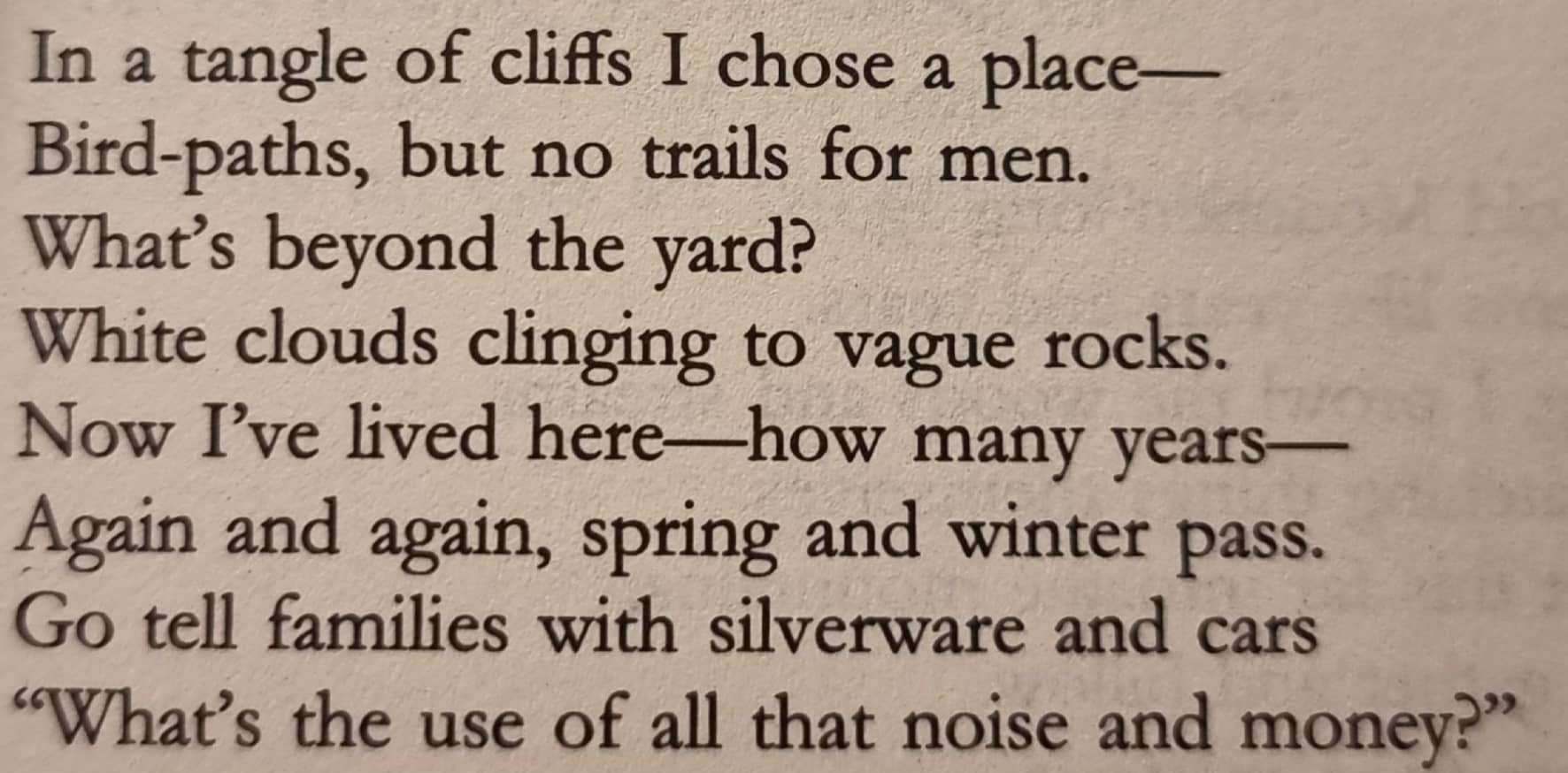
Original at the top, then Red Pine, Rouzer, and Snyder
This time, instead of deciding what the original poem means, I’m going to try and glean a distinct meaning from each translation. I have tried to use a Chinese-English dictionary to clarify things, but it’s not so easy. What I would need is a period-specific lexicon. Nevertheless, I’ll do what I can with what I have.
First, Red Pine:
I’m picking up on several contrasting images. First, Hanshan’s chosen mountain home is contrasted with the unspoken home that we assume everyone else has. It’s isolated and elevated, but, importantly, not as elevated as the realm of birds.
The final couplet is tricky for me. My best crack at it is that the speaker is making a distinction between different meditative modes. I take the “tripods” to be incense burners and the bells to be another part of ritual practice. If the speaker is contrasted with these “owners,” then it may be that nature is all that’s necessary for them. It reminds me of Emily Dickinson, if that’s the case. I wish there was a footnote or little more to help me access this.
Rouzer gives a footnote and says that bells and tripods are just part of being rich. I have a hunch there’s probably something to it that these particular objects are being used as markers of wealth, but I don’t know. The distinction of bird paths and human paths is clearer. In fact, here it seems that Hanshan’s home is the path for birds. The punctuation helps me get more of a conversational rhythm out of it, and I imagine the speaker talking to a person who is utterly bewildered by the hermit in front of them. The third couplet is interesting to me because the lines appear redundant at first, but there may be a slight twist I’m not seeing.
Snyder really pushes the conversational tone making “many years” into a conversational filler. I imagine the speaker rubbing their chin and looking up to the right as they try to recollect just how much time they’ve lost track of. The big liberty Snyder takes is with the final couplet that is way off in terms of literal content, but appears to follow Rouzer’s footnoted interpretation while making it more accessible to the contemporary, unfamiliar reader. It’s silly and irreverent and that seems like the right mood to be in when approaching Hanshan.