Starting out They Thought They Were Free today. Paired with “The Dream Quest of Unknown-Kadath” just coincidentally.
5 Likes
Finished up Demon Copperhead after the power went out last night owing to a windstorm I could hear through the walls. I don’t know anything about modern litfic but I guess this Kingsolver lady is a big deal, Oprah books and awards and so forth. I can see why; I can imagine in my head the liberal lady for whom this is revelation - wow, people from the sticks aren’t all orcs, they are actually human beings with rich inner lives! Who knew!
That’s being too mean to the book, I guess, which does have some nice turns of phrase and choked me up a couple times with the bitterness of beauty subjected to the crushing weight of the uncaring world. It’s just the protagonist is a little too good in a few too many ways, like it’s selling giving you someone to root for a little too hard, and the book has that slight stink of didacticism that makes it feel like it’s designed to be assigned in 10th grade English, after you get done reading Elie Wiesel. A pleasant read all told, it’s nice or whatever, it’s kind of like the novel equivalent of one of the better Oscar grab movies, but there’s just a ceiling on what it can give you.
7 Likes
Had a lot of fun reading Gideon the Ninth, a book that several irl friends had recommended. It’s an enjoyable adventure with good chemistry between the pairing and a cool necromancy-based sci-fi setting. Here’s my review.
Being a tumblrina myself, I’ve definitely heard of GtN before, either by people fawning over it or hating on it. Strong reactions, which means, there’s something there. It’s written by a popular Homestuck fanfic author who took a swing at the big leagues and struck gold, and it does come through in the writing, for better and for worse. I don’t think it would have the charm it has without that, but it would also not grate like it does either.
For the better: this is a really cool necromancer society with ancient houses, a fun Noble/Swordswoman dynamic, and a unique necro magic system that is largely consistent. I liked pretty much all the characters they introduced, they feel like they’ve lived lives and have opinions, and speak with unique voices. Some of this is the work of Moira Quirk as the audio book reader, who does an amazing job getting the tone right, which is particularly impressive as she oscillates between the gal-himbo Gideon and the hoighty Harrow often. I also really thought the action was well-presented, more interested in the feeling and the aesthetic of the fight than the specifics. So, it’s a fun adventure.
For the worse: there are memes, they are excruciating. I thought I could deal but they really pluck you right out of the book every time you hit like a Mean Girls line or a Simpsons quote, fuck meee why didn’t the editor pull them out? Why make Gideon say and think shit that’s out-of-character for her, just to get the reference in? Eerrgghh okay, putting those aside, I also felt like the main story of the book - a hunt for keys in a haunted mansion - was strangely AAA videogamey, not something I was particularly interested in. I love the lore surrounding this house, and beyond it, but the house itself? Eh. The main villain was also nothing too unusual, though there were a lot of cool details about how their plan was done.
So, I’m definitely going to continue on to the next book, partly because it features Harrow, my favorite character, and partly because it will be a change of location and scenery for everyone. And certainly there won’t be yet more memes in this one than the last, certainly she got these out of her system with the first book.
5 Likes
Finally, after years of just attempting to read, then eventually actually reading Dune, I have started Dune: Messiah. I got the audiobook from the library, and it’s got 4 different narrators, pretty good! I drive about 45-90 minutes every day across the county for my job, so audiobooks are the easiest way for me to consume fiction.
Really like Dune:Messiah so far. I am generally very supportive of Villenueve’s Dune project, and understand some of the changes he makes. I really hope he doesn’t cut Edric cause hot damn that would be fun to see. Maybe I’m biased cause I’m a long time Pattinson supporter, but I think he will be fantastic as Scytale. I do like the character design for him in the newest trailer, he looks a lot like the steroptpical Dutchman who stays out all night at the raves, even though he’s a little too old to have the stamina to do so anymore.
(I lived in Amsterdam for 2 years so I am haunted by the specter of Dutch culture)
7 Likes
for tonal balance: this book on the history of detroit techno is extremely good so far, it’s dense and replete with references. it’s my first introduction to the subject though and so i’m having to take the author’s word for everything, but it certainly has an air of credibility
4 Likes
I’ve got bad news about the next two books.
3 Likes
great book/writer
3 Likes
Finished Wuthering Heights last night. My usual habit of falling off a book I’m reading in the middle and never returning to it almost happened again here, not because I found it boring or anything, my attention tends to just wander sometimes. I’m glad I got back to it though.
Felt like a funny coincidence that most of the characters I was reading about started to become ill about the same time I did which ended up making me feel sorta grateful that getting sick nowadays isn’t as much of a death sentence as it seems to have been back then… Even Brontë herself couldn’t escape that fate. Also, starting to notice a predictable pattern with the authors I seem to end up reading…
thoughts + spoilers, I guess, for an almost 200 year old book
It’s pretty amusing/depressing I guess to have seen the marketing for the recent movie adaptation and the backlash both seemingly sorta ignore what I thought made the book most interesting to me… Felt like neither a love story nor a “fucked up” version as certain commentators would have you believe. I kept hearing people refer to all the characters as basically being monsters which feels like such an oversimplification that it’s a bit maddening. I feel like the book does such a good job of capturing the complexity of each character present that you’ll inevitably end up feeling all sorts of different ways about each of them at different times. No one’s a saint of course but there’s enough of each’s humanity on display that it feels just as misguided to view them as simple monsters.
So many of the horrible events that play out feel as much a product of repressive social structures as of any individual’s personal actions. Sometimes there’s just this overwhelming sense of how much simpler things could have been were people not so limited by their station, whether that be race, gender, class, religion, etc… The narrative device of having most of the events recollected by the house keeper felt like it added to that complexity of perspective. While her account seems mostly trustworthy, it’s her own little comments that paint a picture of her and others prejudices too. Everyone feels like they’ve been failed in various ways by narrowed, self-righteousness spurred on by the various structures built up around them, whether that be the church, the institution of marriage, indentured servitude, property… All these things serve as both the manifestations and incitements of everything wrong that happens in one way or another…
The ending is interesting… Still not entirely sure how I feel about it. There’s maybe a sense of Heathcliff finally recognising the folly of his quest for revenge. That no matter how much pain and misery he inflicts on others, none of this would ultimately address the hole left in him by Catherine’s death. Perhaps in letting go, he gives both Hareton and Cathy a chance at a future that exists outside of that same circle of abuse that has haunted him for years… Part of me isn’t sure about how the story leaves his character. I guess in some ways his fate could serve as a warning sign for where that level of single-minded obsession can send you but then… that smile that he’s left with. Seems ambiguous whether we are to believe he has finally reunited with Catherine on some other plane of existence or just welcomed death’s embrace with genuine delight and relief… Lockwood’s final comments seem to emphasize that both of them are nothing more than dead and buried though, regardless of the ghost stories passed around… and yet the thought lingers…
Anyway, the whole thing has only further energised my desire to read more stuff… which I’m really delighted by. I had always wrongly assumed that something like Wuthering Heights would be too dense for me but it ended up being super rewarding in the end. Excited to move onto something else. Maybe I’ll finally revisit some Flann O’Brien stuff I’d always intended to get to…
6 Likes
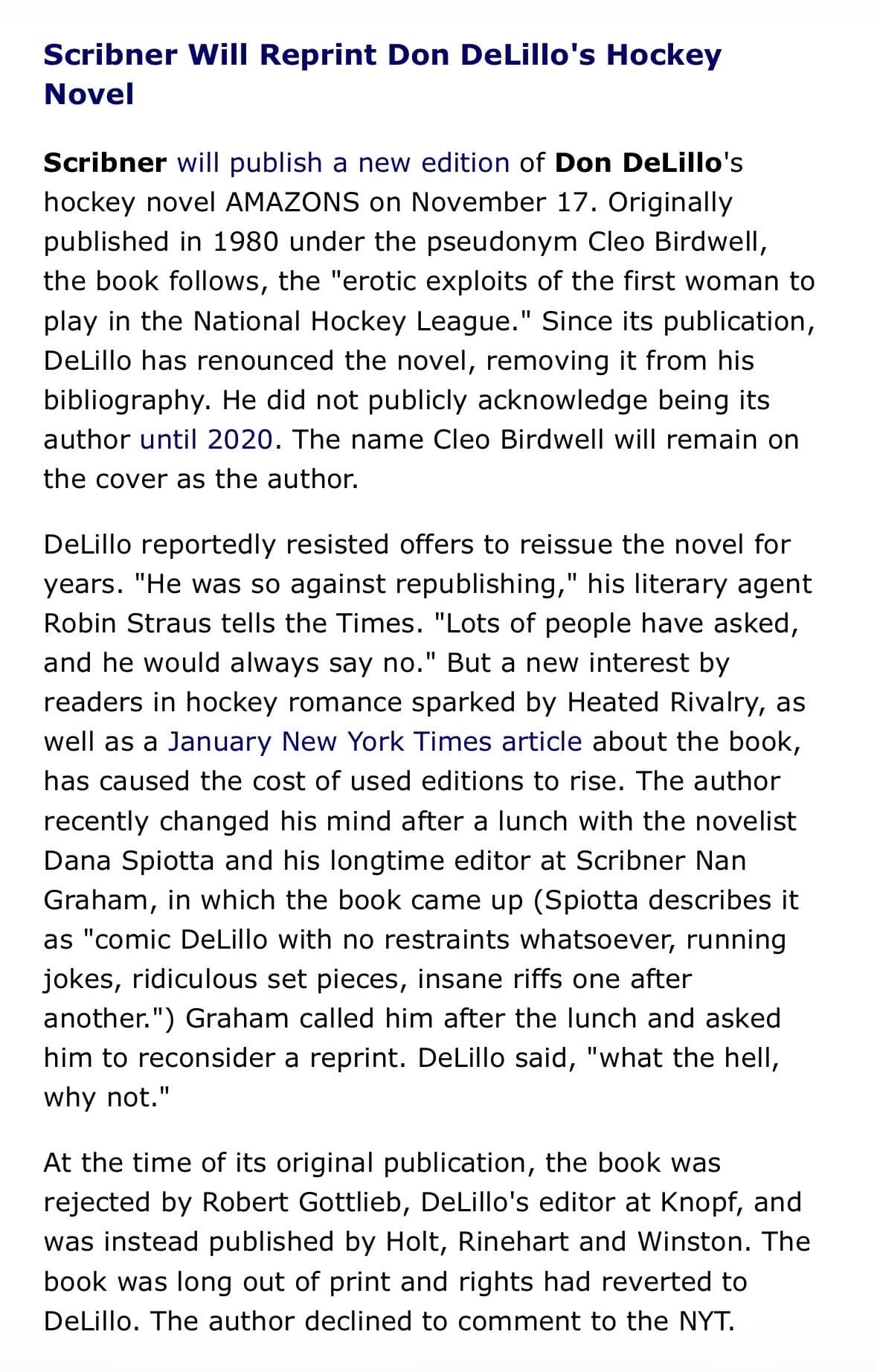
i posted what i felt to be an excessively negative take on a book and deleted it, but after the book club i feel vindicated. people who got through the whole thing corroborated:
- it was written by a well-off person imagining the lives of people they image to be deprived, so they are conceived of mainly as lacking the virtues the author imagines themselves to have
- the material is shlocky but it’s handled in a very mfa writer style and the author ignores ample opportunities for genre hooks that could actually give the plot some momentum
- the dialog is wooden, again because the author imagines all of the characters as simpler and more pure than themself
- the book originated as a series of prose sketches and it really shows in the form of logical inconsistencies and unevenly handled characters
genre as litfic as genre featuring poverty tourism with noble savage overtones. purportedly some of the gore was pretty good
4 Likes
Which book? I’m curious.
1 Like
next time i’m going to go to bat for imajica by clive barker, i had them sold on a thomas ligotti collection this time but it turned out it’s out of print and i didn’t have a backup choice top of mind
5 Likes
I’m officially bailing on The Starless Sea at the halfway point. I have made a promise to myself not to suffer needlessly when I know shit’s not going to change or improve in a book.
This book annoyed theeeeee fuck out of me. It is a book about the act of reading books, a story about storytelling, a universe built on the premise that being into books and interested in narrative is the singular thing that grants one a cosmic destiny. It is remarkably grating to me to have to sit here as the author raves about how magical their artform is, while not being at all interested in showing us why and how that artform is magical.
Now, I did really love her previous book The Night Circus, which also relies on magic and some similar shared-destiny ideas, but it was in service of some meaty drama and enthralling mystery. Here, there is an incredibly off-putting Nothing of a protagonist who just sleepwalks through the book, having things exist for him. His true purpose is given to him, his true love is fated to him, his entire life is just-so because it is written for him. Ugh. Have your characters make choices, have them believe in things, have their actions matter.
Part of it is this frustration where her evocative and beautiful writing is wasted in service of describing places and things that do not have a narrative purpose, not really. You are put into places as effectively as ever, but none of them are places you care to be in. I’m morbidly fascinated as to why the book is like this, but not enough to continue. On to better things.
Further Gripes about The Starless Sea, Some Quotes
So, so, so many parts of this book had me thinking “Fuck youuuuu” as she’d hit me with a completely vapid line like:
There is a door in a forest that was not always a forest. The door is no longer a door, not entirely.
You’d think it’s written this way because there is a point to be made that chapter about the impermanence of all things, but that turns out not to be the case, there place the doors to to may end and renew, but it is always there, forever. So it’s just an annoying way to say this.
A whole whole lot, TSS is so focused on sounding lyrical or mysterious and magical that it ends up saying nothing, like the author wanted to make another magical read and that became her their l entire focus. I can maybe see some people finding its cadence enough, but I needed it to mean anything. The vibe does not take without substance.
At one point it is cold outside, and a character says:
“Sorry it’s so poetry today,” … “It’s like a poem. Where each word is more than one thing at once and everything’s a metaphor. The meaning condensed into rhythm and sound and the spaces between sentences. It’s all intense and sharp, like the cold and the wind.”
Something you could maybe get away with in the description but even then, it’s not a good metaphor for the cold, you clearly just wanted to say this thing about poetry. How annoying you did it this way.
The protagonist makes this particularly tough because he is a college student who is going to school for “narrative game design” and this means that he speaks theoretically to other students about what the stories in games could be, but crucially, he does not state any of his opinions on this, he just fields many different opinions on such as Skyrim or Bioshock, pretty surface-level games that don’t really do anything special with storytelling as an artform, but the author doesn’t seem to care about that, it’s more to name drop a video game that is popular first and foremost. Why? A larger point is made later about how stories, like deaths in Dark Souls, need to end for them to have meaning, but like, how are deaths in games like these the end of a story? You resume from your last save and continue!
I think Erin wanted the book to be a book you didn’t want to end, but then it would be revealed to be about how books need to end, and that would be poignant, but if that’s going to happen, your story has to be good enough that the reader doesn’t want it to end, and you just didn’t do any of that! You gotta actually do the thing!
The name dropping of games also comes with name dropping off popular media, including the nightmare scenario: Harry Potter references. You see, the protagonist loves those books, they think about them a lot, and so people will say shit to him like “2 points to Griffindor” when he guesses something right, and it made me want to actually die every time it came up. I could not believe what I was seeing.
I guess my point is, why include references to absolutely anything if you are not interested in exploring them or tying them to the story? Don’t use references at all! Just make the thing in your universe! Don’t reference Dark Souls to say that the ends of things are good, show how that is the case!
I’m moving on to something else. Maybe Ancillary Justice.
6 Likes
wow, that book sounds like shit
talk about cold
some writers are just up themselves. I think spending all that effort to squirt out a puddle of nonsense is poor writing, ignores the learned observational recording of the casual effortless lyricism in vernacular speech that lots of good writing has done
here, when it’s cold, people say “it’s baltic”; not as a reference to the icy waters of the named sea, but because Baltic St is on the shore and gets battered by freezing winds in winter. a simple evocative two levels
4 Likes
Dark Souls is famously a game about a place where you, the protagonist, cannot die, that is literally its textual meaning. It’s always been frustrating for authors to make arch references to cultures or cultural products they don’t understand but it’s even more frustrating when it’s videogames, which are both the cultural products I know the best and the ones that, overall, deserve the cachet of artistic reference the least.
5 Likes
Hmm I kinda wanna read this. Need a good techno book. The last one I read, about Aphex Twin’s SAW2, sucked. Didn’t really go into how any of the music was made and instead spent pages on whether or not the album was “beatless” which seemed akin to pondering whether 2001 A Space Odyssey had an all-ape cast.
3 Likes
I’m reading the Expanse books. the prose is workmanlike but the world building is good. Reading the mainline novels after watching a few seasons of the show feels almost, but not quite, like reading the novelization of a video game. The short stories are fun tho.
I was almost done with the first book but my loan expired so now I’m catching up on the short stories and novelettes etc.
3 Likes
I haven’t read this yet but this is probably next on my pile once I’m done with the big margaret st clair collection
5 Likes
Lucky Wander Boy is pretty dang good. Especially given that it’s a novel all about videogames since this subject matter tends to just flop over its own legs. In the rush to convince you of its cred with references and the shallowest videogame takes, this kinda thing usually becomes painful to read. Lucky Wander Boy avoids this thankfully by making the unhinged ramblings of someone obsessed with games a major driving focus of the plot. The essays on various games full of pseudo-academic interpretation of their meaning (which resonated with me at least), and eventually going off the deep end into obsession with the titular fictional game are well-realised and work to slowly reveal the main character’s emptiness. There’s even some fun cases where scenes are ‘replayed’, or seemingly meaningless objects are made meaningful based on the main character’s interpretation of things like Frogger.
It’s not long before it becomes sexually perverse underneath the apparently highbrow comparisons to other obsessions with fictional texts (a fictional Chinese novel, a movie adaptation of the titular game, a fictional Mortal Kombat clone). Oriental exoticisation is laced throughout given the MC is only broadly familiar with the cultural specifics of the things they are obsessed with which feels quite ahead of its time in the games space (2003) if intended as satire. Love is rejected at every turn in favour of being a master of a niche interest, though tragically our character doesn’t actually know enough to be a master of their domain. They just buy into a self-obsessed messiah quest to be the advocate of a videogame almost nobody has played. Truly a fable for our time.
Bottom Line Review: Lucky Wander Boy is the pervert’s antidote to Tomorrow and Tomorrow and Tomorrow.
Yellowface, by Rebecca F Kuang, was pretty good but I felt kinda sick reading it. Basically white author protagonist is friends with much more successful Asian author, and one night watches their friend die accidentally. They then proceed to steal their manuscript and become successful which completely ruins their life.
Because we only see the protagonist’s perspective on anything we get occasional snatches of racism out of nowhere as well as unhinged tirades about justifying the plagiarism. The author of the book itself is Asian so it’s clearly reconciling a lot of thoughts on how race comes up in the publishing world, especially post-cancel culture, but also seems to be a meditation on social media (and the drama of it) addiction. The protagonist is completely unlikeable but is made sympathetic as someone who is completely alone. It worked for me but I never want to read it again.
Critical Cities vol. 1 (edited by Deepa Naik & Trenton Oldfield) is a pseudo-academic collection of projects and essays about urban culture and society. It mainly focuses on London which is why I got it. At times it does feel like the book that is in the gift shop at the end of an art exhibition. However it also has some pretty interesting history regarding the factors that led to the prevalence of skyscrapers in London as well as how London has been shaped by pest control.
6 Likes