Heh, oddly enough I finally got around to playing Hiding Spot last week, which is the dev’s prior puzzle game. It may be the most “depression: the game” puzzle game I’ve ever seen, but after having been stuck with some rather long puzzle games recently it was very nice to play one that only asks a couple hours of your time.
1 Like
Played through Stoneman’s Adventure, an odd twist on the block pushing genre. What makes it different is two things: that stones stick together when they come in contact with other ones, and in many puzzles when you walk between two special tiles on the ground you produce a stone every step between them.
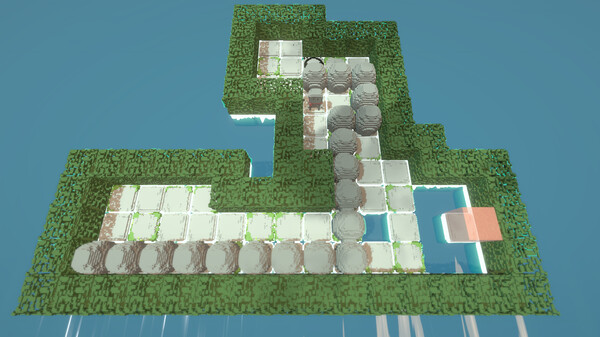
This often ends up with you having to figure out how to manage a big set of stones, having bits fall into water to create a bridge or break them up into smaller sets of stones, that sort of thing. It gives it a bit of a looser feel as since you are the one “drawing” the line of stones the puzzles sometimes can be solved in different ways rather than one true solution.
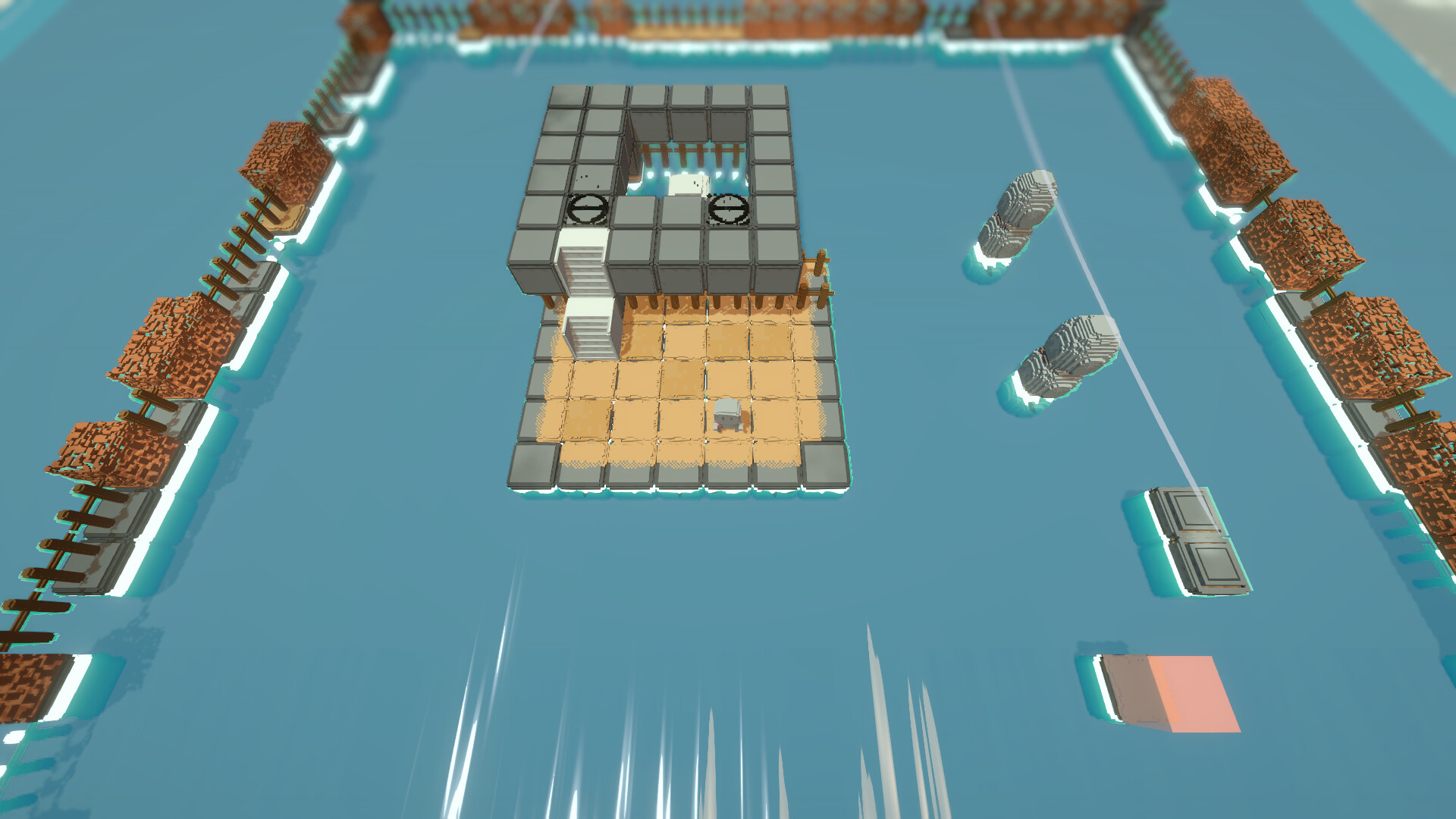
At a certain point it brings in the third z-axis a la Stephen’s Sausage roll (blocks do not “stick” vertically, only horizontally), you need to figure out how to cross some bigger bodies of water, at the end the puzzle design can feel a good bit different than what was offered earlier on but it feels like a reasonable enough exploration of the mechanics that are in play.
I also have to commend it for coming it at a lean 74 (+1) puzzles, a lot of the more notable puzzle games now are clocking in at closer to 300 of them and are designed to last more than 50 hours, in comparison to that this is a breezy 5 hours.
3 Likes
So the thinky folks put up their best puzzle & assorted games for 2025 awards up today, if one can get past their cutesy name and minion-esque mascot it is a rather good summary of the notable games from last year in these genres for anyone who cares. Personally I wish that Öoo had pulled off the upset for game of the year but was glad to see some lesser known creative works get some shine. It also makes me want to try and finally figure out how to even start with 0Player again as a full “playable” game that exists solely as a static image is a ballsy as hell idea (itch page for it is under permanent warning status because itch are dumb, it is 100% safe).
5 Likes
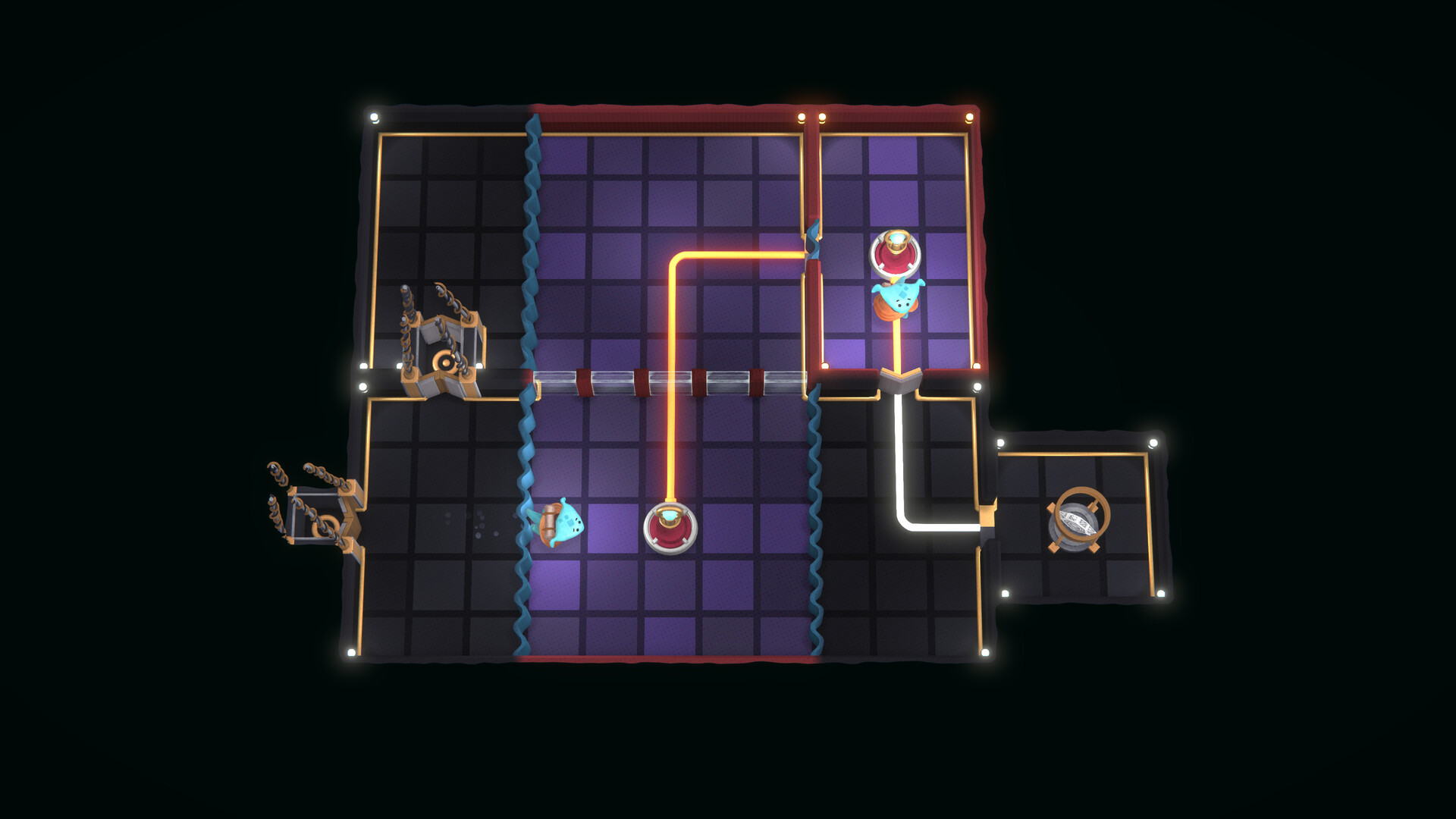
Loophole is a clever little thing that dares to ask the question “Can one make one of those timeloop ‘have several versions of yourself work together to solve a puzzle’ games that doesn’t get overly fiddly and time consuming?” and the answer is… mostly yes!
Playing as a little fella seemingly inspired by the creatures from Outer Wilds, you enter an unknown building, press a button and accidentally cause it to start exploding. As you run away you have to pass through several chambers that reset said explosion and you shortly realize that you can see your former selves running from one chamber to the next, and hey if you had stepped on the button that opens this next door that previous time you could get to the next chamber. After a somewhat interconnected opening stretch to set the mood/concept it becomes much more stage based, make best use of the time between chambers to set your paths to reach the exit one, etc.
This is all standard enough, but the one choice that really makes this take standout is that you cannot cause a time paradox or else progress is immediately halted (until you undo or reset). A time paradox in this setting means that you cannot change anything that your prior selves see, at least not as far as they can tell. They cannot be allowed to see a future you (they will know if you are in the same room as them) but more so if say there is a doodad in there when they walk by that later you grabs to weigh down a button elsewhere they will notice it is gone and boom, paradox.
This often results in puzzles feeling almost like comedy routines. To use a specific example there is one puzzle where the explosion is right on your tail on your first pass as you run through a series of three rooms that each have one of those doodads behind a window, doodads future you can access from the other side and need to take to three buttons elsewhere in order to open the way out. The problem is time is limited and while there is a bit of a run-up before initial you gets to them there won’t be enough time to grab them if you wait until after he passes by. The solution? You grab two of them first, then after prior you runs through the first room you grab the doodad from there and drop it in each of the next two rooms right before other you runs through them so that it appears they never moved. Almost as much of your time and energy will be spent keeping earlier you unaware as it will be spent actually getting out, giving the proceedings a bit more personality.
That said the game does have some… quirks. When you first start a puzzle you have no idea the layouts of any other rooms in it beyond the one you start in, so you often find yourself just running around to reveal all of them, then resetting back to the start where they stay revealed. Makes sense from a character perspective (until you see them why would you know what they looked like?), in practice is a minor bother. Similarly the time until the explosion reaches your location, from which direction it comes and how quickly it spreads once it gets there varies from puzzle to puzzle and won’t be known until it occurs so you sometimes will do a similar “see how long it takes, then reset back to the start” song and dance. Fortunately the explosion usually isn’t the main obstacle in a puzzle, and when it is it generally pops up earlier.
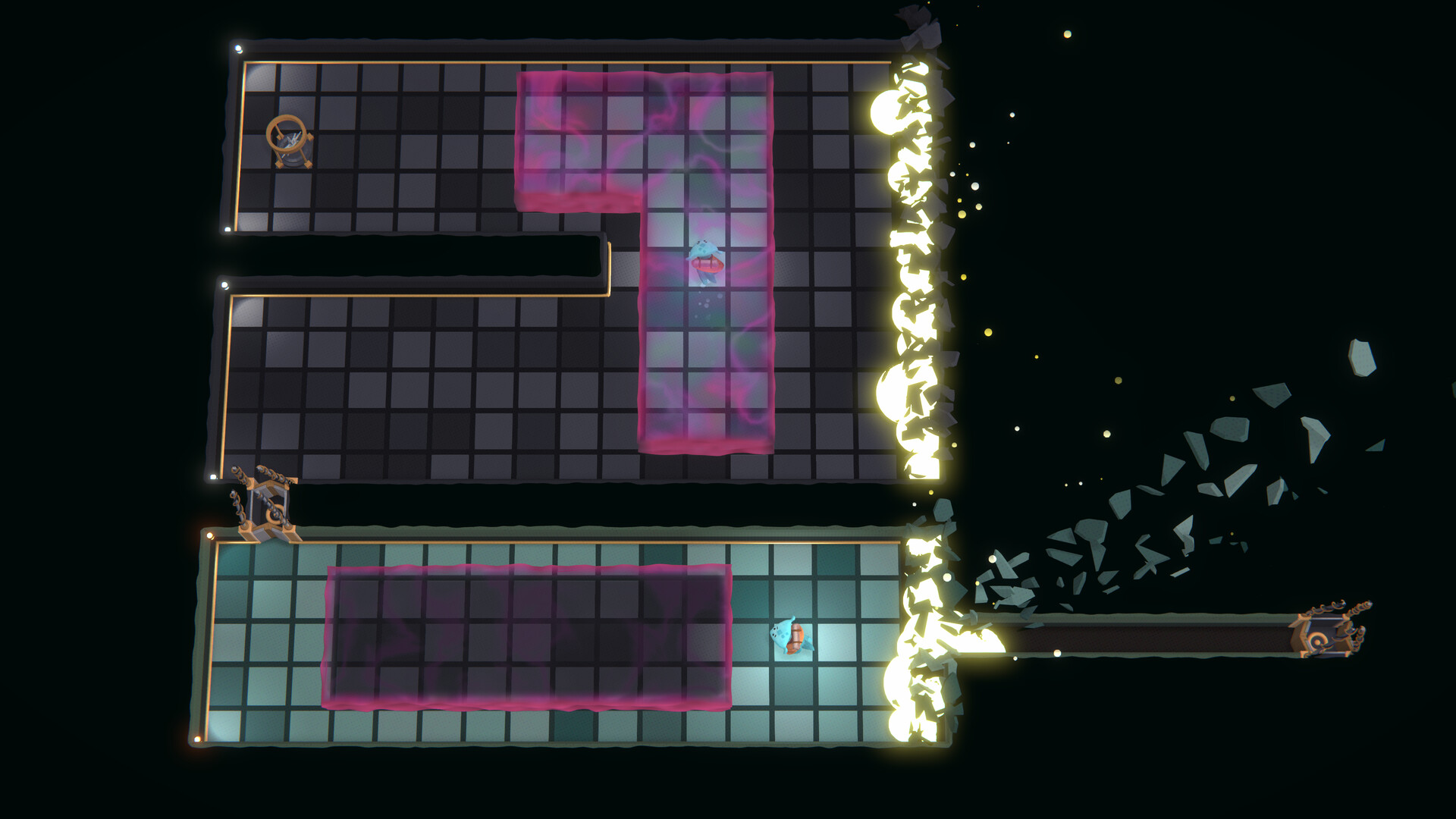
As I mentioned when I started these type of games often end up being a good bit fiddly and time consuming with regards to having to set up all the versions of you’s paths and such, but this game does a good job pushing that off for as long as possible. Later versions of you always have the prior version(s) running around so you can see in real time how things will have to interact, you will have to either undo back to tweak things or simply reset a decent amount but it usually is brief enough to sort out; much of the mental effort still ends up spent on solving the puzzle and not being devoured by the implementation of solutions. It is only at the final quarter of the game where the added mechanics finally start to tip things into occasional bouts of fiddliness, where in a bunch of puzzles it feels like you are having to count individual tiles and basically program your original self in very particular, almost unnatural ways. It isn’t suddenly bad, but the quality does dip a bit. If it helps the final run is clever as heck and put a big ol’ smile on my face 
I’ve lamented before the maximalist trend in modern puzzle games, containing hundreds of puzzles or lasting dozens of hours. Loophole in contrast sets its stage, runs through a bunch of very well thought out twists and turns the concept allows and is done in about six hours. How very pleasant! It ain’t perfect but it is rather good, you keep putting puzzle games of this scope and quality in front of me and I’ll be more than satisfied.
5 Likes
https://steven-miller.itch.io/pull-chain
A sokoban where you are a lizard attached to a light that trails your movement, and moths attracted to the light
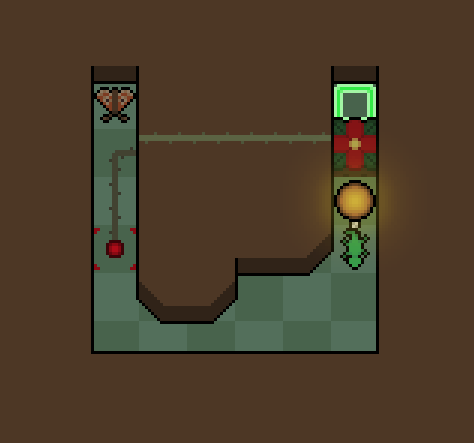
I have gotten far enough that I now have to consider the 8 different positions the lizard can be in relative to the light (with rotational symmetry). elegant in the mechanisms, each very simple. puzzle designs are ok, difficulty varies wildly as you have to consider new interactions
standard stuff, but nice. there were a couple of early levels that I struggled with (Wall) and the rest have been pretty cosy
6 Likes
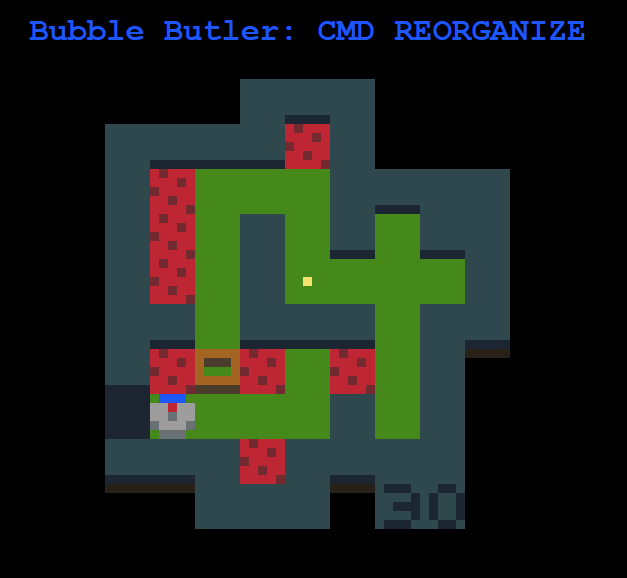
Since I’ve got nothing if not a one track mind, I’ve been playing another one of Gate’s games, Bubble Butler. It’s just something to do in between yelling at my job and then doing it so I’ve been on and off. It’s a sokoban where the main novelty is blowing bubbles that pop after a certain amount of turns, which push adjacent items. Some neat tricks in there! And it does the things I like in puzzle games where it says “remember that level you did five levels ago? It’s back but slightly different so now you have to do a completely new thing”
I have about 50 puzzles left in Artisan of Glimmith and to be honest at this point I wouldn’t be surprised if I have 50 hours left to finish it. They’re all 5-7 difficulty (I think) and many of them are just nasty. I’m a bit offer 100 hours now. Well see how it goes, but I so kind of think that is maybe a mistake for 50 puzzles to take half the time to solve as another thousand, but what do I know
1 Like
Bubble Butler is a lot of fun, by the end you really need to internalize the various quirks of the bubble inflating/popping timing in order to have a chance.
1 Like
HERE we go
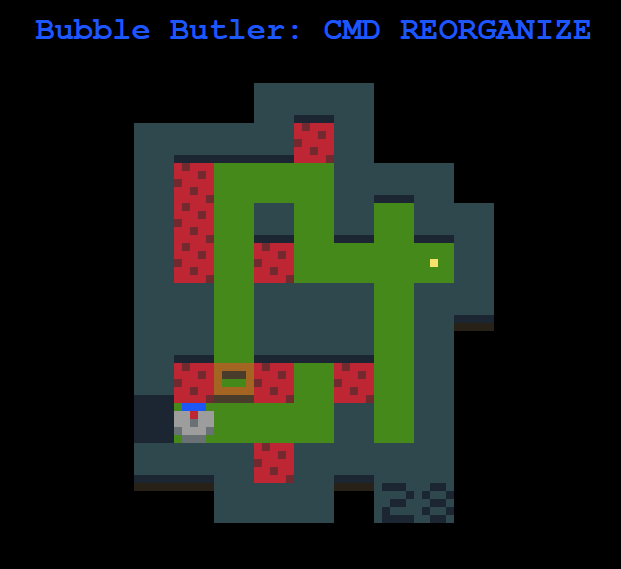
And as always happens with puzzles like this, immediately upon posting it I am pretty sure I know what I have to do
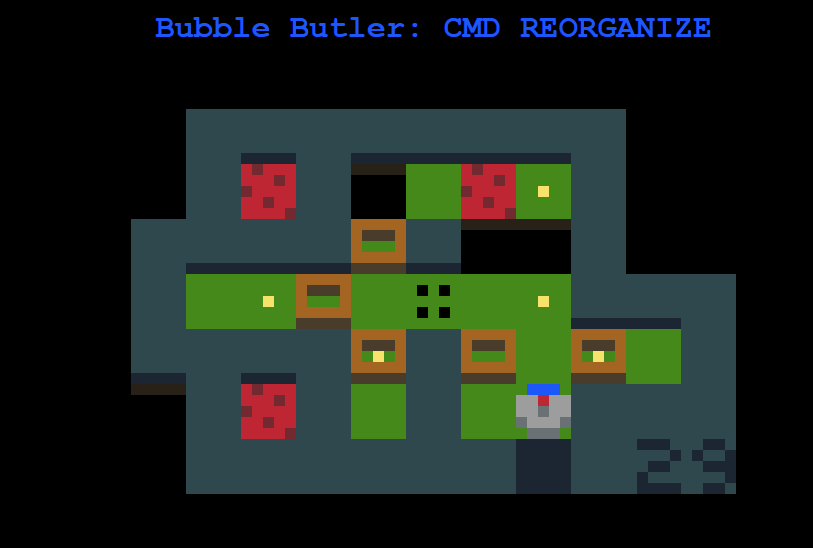
oh this one is extra tricky. I think I know what I have to do first but after that I don’t know how to keep all the plates spinning
@username you ever played or familiar with Magicube?
Magicube on Steam
Got recommended this as a very hard block pusher type game and I’ve not done much but I’m into it so far. A little stumped only 4 levels in, which is exactly what I was hoping for.
I am familiar with it and played through the first few levels or so (technically I played through the first few levels of the early demo version, but I think they are mostly the same), but have not dipped my toes into the full version yet. I know it has been talked up by several puzzle people I know as a very good if almost absurdly hard one and I’ll get to it at some point, but my personal backlog is long and treacherous so who knows when. Based on the limited amount of it I personally played it seemed like a keeper and I am very thankful for a modern puzzle game that only asks me to complete 50 puzzles as opposed to 500.
2 Likes
128 hours in Artisan of Glimmith. The final puzzles are a mix of really clever and interesting (most of them) and way too big and/or annoying. I have about 17/18 left and they’re all 7s (except there might be 1 or 2 sixes that are kind of hidden).
One thing that I have trouble telling with a game like this is how much filler should be cut and how much of it is significant for people who want to play a puzzle game but need little examples of the various kinds of logic. There are a LOT of rules available in this game and a lot of ways to combine them, and sometimes combinations of rules create really clever ideas and logic, but man. I dunno. I still wish they’d trimmed it some, somehow.
What’s really carrying me right now is simply that I play one or two puzzles a day, maybe finishing one but maybe not depending on how I feel/what I want to do.
I’m pretty much not playing any other puzzle games because of this, and I will hit 100%, but man. It’s a lot.
For information, the only other game from this team I’ve played is Islands of Insight, and that has a similar quantity issue, with the bonus concern of them making a bunch of puzzles that respawn with some randomness to them so you can just like. farm puzzles. And a bunch of different puzzle types to boot, that you navigate in a first person view. This game is purely abstracted but it still includes a world navigation that wants you to hunt for puzzles in the environment. When you unlock the final space you can highlight “hidden” puzzles which basically makes their light marker shine into the sky strongly so you can track where they are. I don’t feel like them hiding the puzzles in this way really adds anything to the game, but I still feel like I want to engage with it. probably just because the puzzles are never that hidden and it lets you know when there are puzzles left in an area.
1 Like
Artisan is my “play for a bit every so often” PC puzzle game, I just golden cleared my 15th area earlier today (think I’m at like 500ish puzzles solved?). I’m only at 17 hours so it is terrifying to ponder that there could be a hundred hours of it left (I’d likely quit before then), but this sort of grid-based logic puzzle is one of my types of comfort gaming so who knows.
I think I grabbed a free copy of Island of Insight, not sure I’ll ever load it up as it sounds like just everything was going wrong with it at one point or another.
I started up ChromaGun today (Portal-like with a paint gun) and my initial impression is that the demo for the sequel seemed markedly better.
1 Like
There were some very privacy concerns over it when it was all online, and they extremely reluctantly released an offline version and let you convert your save to offline as well. The online really didn’t make any sense - you could see cosmetics of other characters but you didn’t solve puzzles together or really interact in any meaningful way, it ultimately felt like you were just using it to show off, which is /fine/ but also who cares. I can show off by telling people I solved some crazy hard puzzles. I do kind of wonder if they intended to do more with it but time ran out or they didn’t find a way to make it work or the puzzles were too hard to create, but that’s all speculation. It just seems like there should be a compelling reason for the online features and I couldn’t find one.
It’s more of a novelty than anything else. Could be fun to poke around at, I got some time out of it, but in many ways it falls short of many more compelling puzzle games, Glimmith included.
I remember when they first made the offline version and did it in such a way that people were terrified it was gonna kill their hard drives, it just could not catch a break.
2 Likes
Haven’t played Artisan of Glimmith in ages, came back and got one more 7 puzzle (five left).
Haven’t played Isles of Sea and Sky in ages, came back and got the remaining stars. Still missing a few pyramidions but hey, what can you do
What other puzzles out there haven’t I finished I wonder? 
1 Like
You never mentioned if you finished Magicube… >_>
1 Like
oooh, I didn’t. I got to one that was completely incomprehensible to me. I need to go back to that but it slipped my mind because I was truly surprised how much I didn’t understand that one. Guess it’s time for a return!
1 Like
Well it took four years but I finally got around to trying this and it is definitely neat, neat and short!
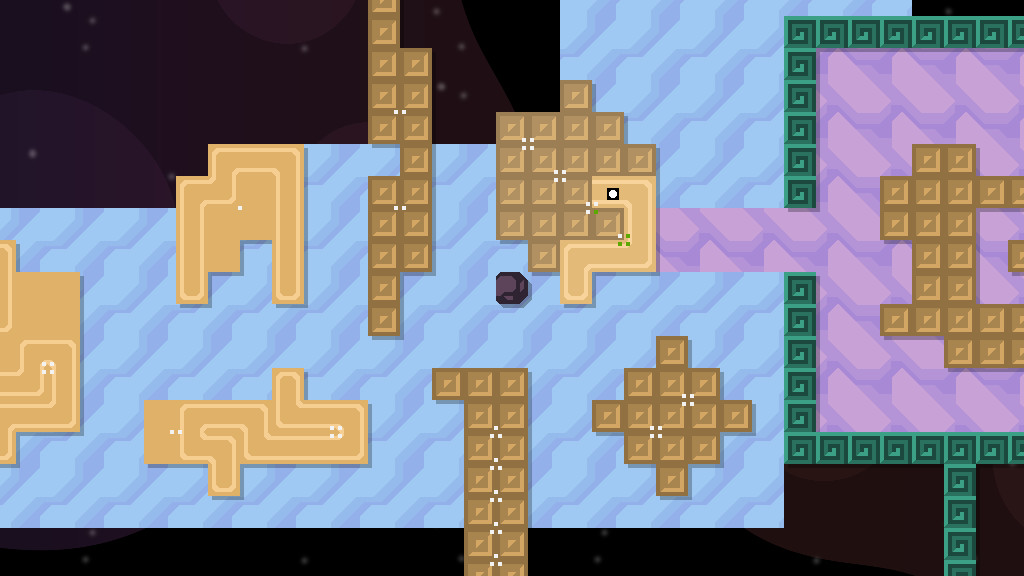
I don’t want to write too much about it as… well it is an hour long game with a few “a-ha, that’s neat!” moments in it. At its core it is a line tracing game, you walk around and see there blocky structures and quickly figure out that you have to trace a line through it from an entrance point to an exit one (you can generally pick whichever you prefer as long as it meets a few rules it establishes early on). As you go through them you notice a few that are… curious, you figure out why they are and that gives you an idea, this repeats a few times until you have fully puzzled. Definitely worth the time and getting caught by the way things develop.
Quick spoiler bit for those who will never ever play the game and want to know what is up with it (do not read if slightest chance you’ll ever give it a shot): Eventually you find clusters of rocks the same shade as your player character and you basically have to stand next to them to become a piece of it in order for them to be solvable. You then see some curious dots on bits of all and the floor leading you to the eventual realization that you can draw a line through everything as long as it meets the specific rules for it, eventually leading to you eventually drawing lines through the floor, walls and culminating with the very outer space backdrop surrounding everything. As noted, it’s very neat!
4 Likes